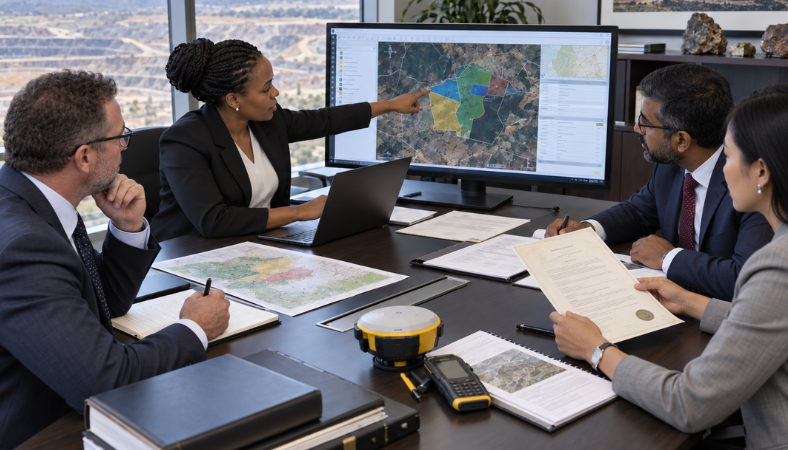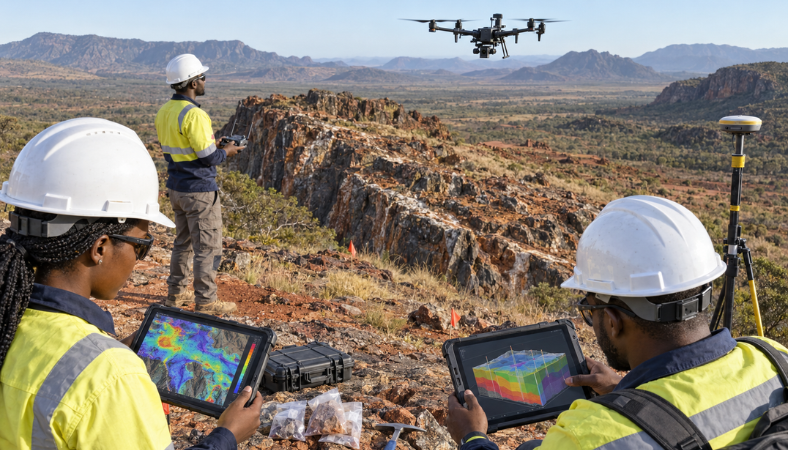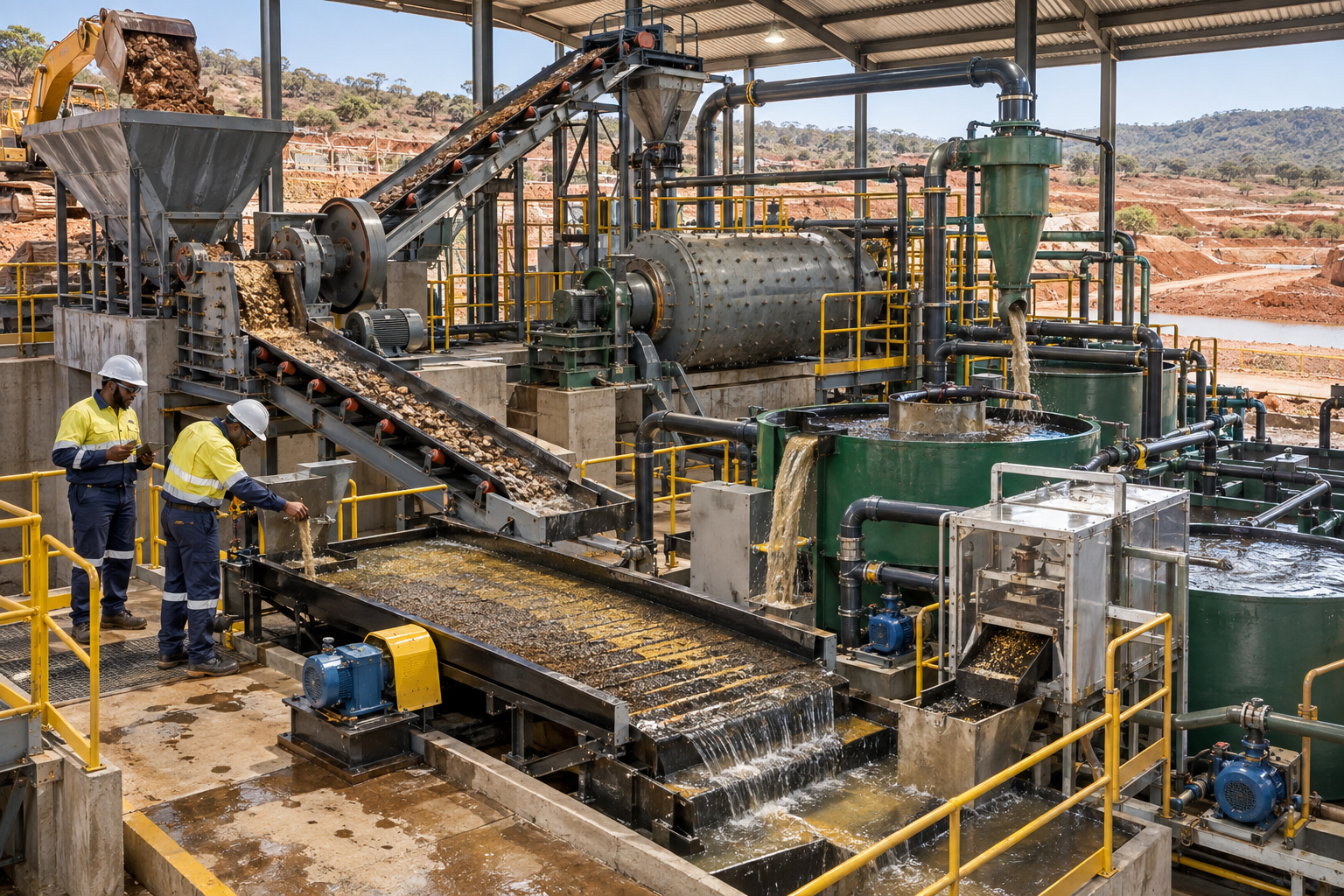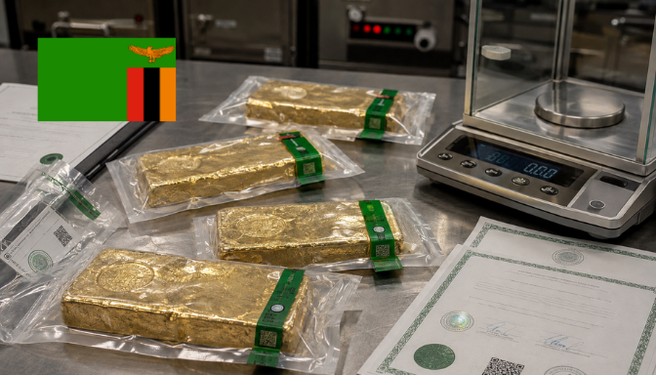
Africa contains extraordinary mineral potential, but geology alone does not finance a mine. Capital moves when an opportunity is converted into an investable proposition: lawful title, credible technical evidence, a realistic development plan, disciplined economics, manageable environmental and social risk, and a transaction structure that gives investors a credible path to returns.
For project sponsors, the most important shift is to stop presenting capital as the missing ingredient that will solve every problem. Investors generally see money as the final input into a risk-reduction plan. They want to know exactly what their funds will achieve, what evidence will exist after the money is spent and how that milestone will increase or protect value.
That means the right question is not simply, “Who will fund my mine?” It is: “What stage is the project, which risks have been removed, what is the next investable milestone, and which type of capital is designed to finance it?”
This AFRINOMICS guide explains how to raise capital for an African mining project—from early exploration and resource definition to feasibility, construction, production and expansion.
1. Begin with the project stage, not the funding amount
The project stage determines the risk, suitable investors, expected return and appropriate financial instrument. Asking a commercial bank to fund greenfield exploration is usually a mismatch. Offering a controlling equity stake to finance short-term working capital may be equally inefficient.
Define the project honestly within one of the following stages.
Concept and licence stage
The sponsor may hold an exploration right and a geological thesis but have limited field evidence. Capital is needed for licence maintenance, mapping, geochemistry, geophysics, community engagement and initial drilling.
This is high-risk capital. Likely sources include founders, specialist angel investors, high-net-worth mining investors, family offices, junior exploration companies and strategic partners willing to fund an earn-in.
Early discovery and drilling stage
Initial results indicate mineralisation, but continuity, scale, grade and metallurgy remain uncertain. Funding is required for additional drilling, laboratory work, modelling and preliminary metallurgical tests.
Equity, convertible instruments, private placements and farm-in or joint-venture funding are usually more realistic than secured project debt.
Resource-definition stage
The project has enough verified data to work toward a mineral resource estimate under an appropriate reporting standard. Capital is used for infill and extension drilling, quality control, density work, metallurgy, geotechnical studies and resource modelling.
At this point, specialist mining funds, listed juniors, larger strategic miners and private-equity investors may become interested—provided the technical information is independently credible.
Study and permitting stage
The project is progressing through scoping, preliminary economic assessment where applicable, pre-feasibility or feasibility work. Funding supports mine design, process engineering, environmental and social studies, infrastructure planning, pilot testwork and permitting.
Strategic investors, mining private equity, development finance institutions, offtakers and prospective project lenders may begin engaging, although construction debt normally requires substantially more certainty.
Construction-ready stage
The project has defined reserves or an equivalent financeable mine plan, key permits, a feasibility-level technical basis, cost estimates, implementation capacity and a credible route to market.
The capital stack may now combine sponsor equity, project debt, development finance, equipment finance, offtake-linked funding, royalties, streams, guarantees and government or infrastructure participation.
Producing or expansion stage
An operating mine can demonstrate production, costs, recoveries, sales and cash flow. It may raise working capital, expansion capital, acquisition finance, equipment leases, revolving facilities, prepayments or corporate debt.
Production lowers some risks but introduces others. Investors will test reserve life, reconciliation, maintenance backlog, environmental liabilities, working capital and whether the operation can service debt through commodity-price cycles.
2. Raise enough capital to reach a value-changing milestone
A weak funding request says, “We need USD 10 million to develop the project.” A strong request explains the programme, budget, timetable, contingency and measurable result created by every tranche.
Examples of financeable milestones include:
Confirming legal title and completing baseline fieldwork.
Drilling a defined number of prioritised targets.
Producing an independently reviewed mineral resource estimate.
Completing representative metallurgical testwork.
Delivering a pre-feasibility or definitive feasibility study.
Securing environmental and mining approvals.
Building and commissioning a defined processing module.
Achieving first production or commercial production.
Expanding throughput or reducing operating costs.
The amount should be built from the bottom up. Include direct work costs, technical consultants, owner’s costs, regulatory fees, community obligations, insurance, tax, financing costs, foreign-exchange exposure and contingency.
Avoid raising an amount that leaves the project stranded just before a decisive milestone. Equally, do not attempt to raise the entire life-of-mine requirement at an early stage when the evidence cannot support the valuation or financing structure.
Staged capital protects both sides. The investor limits exposure, while the sponsor has an opportunity to raise later tranches at a higher valuation after risk has been removed.
3. Make legal title the foundation of the capital raise
No serious investor should fund a project whose mineral rights have not been independently verified.
The data room should establish:
The exact licence holder and beneficial owners.
Licence number, category, minerals, area and official coordinates.
Grant date, duration, expiry and renewal status.
Annual fees, surface rents and statutory payments.
Work programmes, minimum expenditure and reporting compliance.
Existing royalties, options, joint ventures, liens or security interests.
State participation, local ownership and local-content obligations.
Transfer, change-of-control and foreign-investment approvals.
Surface, environmental, water and community rights required by the development plan.
Confirm these points through official registries and the competent authorities rather than relying only on seller-provided certificates. The African Mining Legislation Atlas can help sponsors and investors compare legal frameworks, but current local law and qualified counsel remain essential.
If the company raising capital does not directly hold the licence, explain the full corporate chain and how investors obtain enforceable economic exposure to the project.
4. Present geology that can survive independent scrutiny
Investors do not merely fund a commodity story. They fund evidence concerning grade, tonnes, continuity, geometry, mineralogy and the prospects for economic extraction.
The technical package should include original drill data, laboratory certificates, quality assurance and quality control, chain of custody, geological interpretations, density measurements, coordinate systems, models and the credentials of the responsible professionals.
Clearly distinguish:
Exploration results from a mineral resource.
An exploration target from a mineral inventory.
A mineral resource from a mineral reserve.
Historical estimates from estimates prepared under a recognised current standard.
In-situ metal from recoverable and saleable product.
The SAMCODES framework emphasises materiality, transparency and competence in public reporting of Exploration Results, Mineral Resources and Mineral Reserves. Internationally, CRIRSCO provides a framework for aligned national reporting standards.
A private African project may not be legally required to publish under a stock-exchange code, but investor-grade reporting still creates credibility. An independent Competent Person or appropriately qualified professional should state what the data supports and identify the work required to increase confidence.
Do not promote “billions in mineral value” by multiplying assumed underground tonnes by the current commodity price. That ignores recovery, dilution, mining loss, capital, operating costs, taxes, royalties, financing and time.
5. Prove a viable processing and operating route
A deposit is not a mine until the mineral can be extracted, processed and sold safely and profitably.
Investors will examine:
Mineralogy and representative metallurgical testwork.
Recovery variability across ore types, grades and weathering profiles.
Throughput, grind size, reagent consumption and power demand.
Deleterious elements and product penalties.
Mining method, dilution, recovery and production schedule.
Geotechnical, hydrogeological and water risks.
Plant design, capital cost and operating cost.
Tailings, waste, water balance and closure.
Roads, rail, ports, grid power, fuel and logistics.
Product specifications, marketability and route to customers.
For an existing operation, reconcile mined tonnes and grades with plant feed, recovery, final product, invoices and bank receipts. A persuasive production photograph is not a substitute for metal accounting.
For a development project, cost estimates must match the maturity of the engineering. Early-stage estimates should carry appropriate contingency and should not be presented with feasibility-level certainty.
6. Build a financial model investors can interrogate
The model must connect the technical plan to cash. It should allow investors to see what drives value, when capital is needed, when revenue begins and how downside conditions affect liquidity.
At minimum, include:
Production by period, grade, recovery and saleable units.
Commodity pricing and payable terms.
Initial, deferred and sustaining capital.
Mining, processing, administration and logistics costs.
Royalties, taxes, duties and state participation.
Working capital and inventory.
Financing costs and debt service.
Rehabilitation, closure and post-closure costs.
Inflation, foreign exchange and repatriation assumptions.
Contingency and schedule risk.
Net present value, internal rate of return, payback and cash balance.
The base case should be accompanied by credible downside scenarios. Test lower grade, lower recovery, higher dilution, construction delay, capital overrun, cost inflation, power interruptions, exchange-rate movement and weaker commodity prices.
Combined downside cases matter because mining risks rarely occur one at a time. A project that shows an attractive internal rate of return but becomes insolvent after a modest delay is not finance-ready.
Every number in the investor presentation should trace to the technical report, legal record, market assumption or model. Inconsistencies between the pitch deck, financial model and data room weaken trust immediately.
7. Choose the right form of capital
Mining projects rarely rely on one funding source from discovery through production. A strong capital strategy combines instruments whose risk and repayment profile fit the project stage.
Founder, angel and family-office capital
This capital can move quickly and fund early technical work. It is flexible but often expensive in equity terms because the project is still high risk.
Use it to create verifiable evidence—not to sustain indefinite corporate overhead. Sponsors should document subscription terms, shareholder rights and future dilution from the beginning.
Equity investment
Equity absorbs project risk without fixed repayment. It may come from private investors, mining funds, private-equity firms, strategic corporates or public markets.
The trade-off is ownership and control. Investors may require board seats, veto rights, anti-dilution protection, liquidation preferences, information rights and an agreed exit route.
Joint venture, farm-in or earn-in
A strategic partner funds exploration or development in exchange for an interest earned through defined expenditure or milestones. This can bring capital, technical expertise, operating systems and market credibility.
The agreement must define operatorship, budgets, cash calls, milestone tests, data ownership, dilution, default, decision-making, change of control and exit. A headline percentage means little without understanding how it is earned and protected.
Private equity
Mining private-equity investors typically seek projects where active governance, technical intervention, consolidation or accelerated development can create value.
They will scrutinise management capability, entry valuation, capital required to exit, control rights and the likely route to sale, recapitalisation, production cash flow or public listing.
Public-market equity
A listing or reverse takeover can open access to a wider investor base, but it adds cost, disclosure obligations, governance requirements and exposure to market cycles.
The project must satisfy the relevant exchange and securities rules, including technical reporting. Public markets are not a shortcut around weak title, poor disclosure or incomplete data.
Debt and project finance
Debt avoids some equity dilution but requires confidence in repayment. Lenders will focus on reserves, construction readiness, completion risk, cash-flow coverage, security, permits, contracts and sponsor support.
Greenfield exploration is rarely suitable for conventional project debt because there is no predictable cash flow. Construction-ready and producing assets are better candidates.
Debt documents may impose conditions precedent, financial ratios, reserve accounts, hedging, cash sweeps, restrictions on distributions and lender control over material project decisions.
Offtake and prepayment finance
A customer, trader, smelter or refiner may provide advance funding in exchange for future production. This can validate the route to market and reduce the funding gap.
The sponsor must test pricing, treatment charges, penalties, minimum deliveries, security, exclusivity, default and the opportunity cost of committing future product. A funding offer may be expensive if it captures too much of the project’s future margin.
Royalty and streaming finance
A royalty investor provides capital in return for a percentage of revenue or another defined economic interest. A streaming investor typically receives the right to purchase a portion of future production at an agreed price.
These structures can reduce near-term cash repayment pressure but burden the project for many years. Model their effect across the full mine life and ensure future lenders will accept them.
Equipment and vendor finance
Manufacturers, dealers, leasing companies or banks may finance mobile equipment, generators, processing units or other identifiable assets.
This is useful when the equipment has recoverable value, but it does not solve every construction cost. Check deposits, currency exposure, maintenance, warranties, repossession rights and whether the financed equipment matches the mine plan.
Development finance and blended finance
Development finance institutions may provide loans, equity, guarantees, mobilisation or blended-finance structures where projects meet commercial, development-impact, governance and environmental requirements.
The IFC’s financing platform, for example, includes loans, equity, trade and commodity finance, structured finance and blended finance. Eligibility is institution- and project-specific; sponsors should not assume that strategic importance alone guarantees funding.
Development financiers often require stronger environmental, social, integrity and disclosure systems than local law alone. Preparing for those standards early can widen the future lender pool.
8. Treat environmental and social readiness as a financing issue
Environmental and social performance is not a paragraph to add at the end of a pitch deck. It can determine whether a bank, development institution, insurer or strategic investor can participate at all.
The project should have a credible plan covering:
Environmental and social impact assessment.
Water use, discharge and downstream users.
Tailings and waste management.
Biodiversity and ecosystem services.
Land access, compensation and resettlement.
Community engagement and grievance mechanisms.
Indigenous Peoples where applicable.
Labour, health, safety and contractor management.
Security and human rights.
Rehabilitation, closure and financial provision.
Climate and physical-risk exposure.
The IFC Performance Standards are designed to help clients identify, avoid, mitigate and manage environmental and social risks and impacts. They are widely influential in international project finance.
The Equator Principles provide a common environmental and social risk-management framework used by participating financial institutions. Their published scope includes qualifying project finance, project-related corporate loans, bridge loans and certain acquisition or refinancing transactions.
Meeting national law remains mandatory. International standards may add further requirements. A project that waits until financing to identify resettlement, water or tailings problems may face delay, redesign or loss of the investor.
9. Assemble a management team capable of delivering the plan
Investors back people as much as deposits. A credible team must cover the risks of the project’s current stage.
The sponsor should demonstrate:
Mining and project-development leadership.
Geological and resource expertise.
Metallurgy and process engineering.
Environmental and social management.
Finance, tax, legal and governance capability.
In-country regulatory and stakeholder experience.
Construction and operational execution where relevant.
Do not fill every role with impressive titles and undefined responsibilities. State who is full-time, who is an adviser, what each person has delivered before and how they are compensated.
Disclose past project failures, litigation, insolvencies and related-party relationships before investors discover them independently. Credibility survives a difficult fact more easily than a hidden fact.
10. Prepare the five core fundraising documents
The blind teaser
This is a short, non-confidential introduction designed to test investor interest without exposing sensitive project identity or data. It should explain the commodity, jurisdiction or region, stage, investment thesis, capital sought, use of proceeds and transaction type.
The investor presentation
The presentation tells the investment story clearly: problem, asset, geology, development plan, economics, team, impact, capital request, milestones, risks and return pathway.
It should not overwhelm readers with raw data or hide material risks in small print.
The information memorandum
The memorandum gives serious investors a fuller account of ownership, title, geology, studies, permits, infrastructure, market, development schedule, financials, risks and proposed terms.
The financial model
The model should be dynamic, transparent and consistent with the technical plan. Separate inputs, calculations and outputs, identify sources and avoid unexplained hard-coded figures.
The controlled data room
The data room substantiates the story. It should be indexed, permission-controlled, versioned and supported by a question-and-answer process.
Do not send confidential licence documents, personal information, raw databases or commercially sensitive contracts indiscriminately. Use a staged disclosure process, confidentiality agreement and controlled access.
11. Build an investor-grade data room
The minimum folders should cover:
Corporate and ownership
Incorporation documents, group structure, directors, shareholders, beneficial owners, cap table and shareholder agreements.
Mineral title and land
Licence certificates, cadastral extracts, official coordinates, renewal history, compliance, surface rights and material regulator correspondence.
Geology and resources
Raw drilling and assay databases, quality control, laboratory certificates, models, resource reports and professional sign-offs.
Mining, metallurgy and infrastructure
Mine plans, testwork, process design, geotechnical and hydrogeological studies, equipment, utilities and logistics.
Environment and communities
Impact assessments, permits, baseline studies, stakeholder records, grievances, water, tailings, rehabilitation and closure.
Finance and tax
Historical accounts, budgets, financial model, tax records, debt, creditors, capital expenditure and funding history.
Commercial and market
Product specifications, market studies, offtake discussions, customer tests, transport, refining and sales contracts.
Legal and compliance
Litigation, material contracts, anti-bribery controls, sanctions and know-your-counterparty records, insurance and related-party transactions.
Funding transaction
Use of proceeds, proposed instrument, valuation support, investor rights, approvals, conditions precedent and closing timetable.
Mark documents as draft, final, expired or superseded. Missing information should appear on an exceptions list rather than being concealed.
12. Price the opportunity realistically
Valuation is one of the fastest ways to lose a credible investor. Early-stage sponsors often value conceptual underground metal as though it were produced inventory. Investors instead price evidence, control, risk, capital still required and the probability of reaching cash flow.
Depending on project maturity, valuation may consider:
Comparable transactions.
Market capitalisation of comparable listed companies.
Historic exploration expenditure, adjusted for relevance and quality.
Value per attributable resource or reserve unit, used carefully.
Discounted cash flow for sufficiently advanced projects.
Option or probabilistic methods for high-uncertainty assets.
Strategic value to a neighbouring operator, processor or customer.
Use an independent mineral-asset valuation professional where appropriate. Explain all adjustments for jurisdiction, stage, metallurgy, infrastructure, ownership, royalties, permitting and financing risk.
A lower valuation that funds a decisive milestone can create more sponsor wealth than an inflated valuation that prevents the transaction.
13. Target investors whose mandate matches the project
Sending the same deck to hundreds of unrelated investors is not a capital strategy. Build a qualified target list based on:
Commodity and deposit type.
Country and regional appetite.
Project stage.
Minimum and maximum cheque size.
Equity, debt, royalty, offtake or joint-venture mandate.
Control and operatorship preferences.
Development-impact or responsible-mining criteria.
Time horizon and return target.
Ability to provide follow-on capital.
Conflicts with neighbouring assets or competitors.
Prioritise investors that add something the project genuinely needs: technical skill, processing capacity, logistics, local execution, customer access, credibility with lenders or capacity to fund later stages.
Use controlled outreach. Establish authority to raise capital, agree adviser fees in writing and avoid multiple intermediaries approaching the same institution with conflicting terms.
14. Structure terms that can survive the next funding round
The highest headline valuation is not always the best offer. Analyse the complete economics and control package.
Key terms may include:
Pre-money and post-money valuation.
Percentage ownership and dilution.
Board representation and reserved matters.
Liquidation preference and return priority.
Anti-dilution and pre-emption rights.
Convertible valuation cap, discount and maturity.
Milestone tranches and drawdown conditions.
Security, guarantees and sponsor support.
Interest, fees, repayment and cash sweeps.
Royalties, streams or offtake discounts.
Information, inspection and audit rights.
Exclusivity and no-shop periods.
Default, step-in and enforcement rights.
Exit rights, drag-along, tag-along and change of control.
Governing law and dispute resolution.
Model every instrument through the expected mine life and at the next financing event. A small early cheque with aggressive anti-dilution or a permanent royalty can become far more expensive than it first appears.
15. Use a disciplined capital-raising process
Phase 1: investment readiness
Verify title, define the project stage, identify the next milestone, complete the budget, appoint advisers and close fatal technical or legal gaps.
Phase 2: materials and data room
Prepare the teaser, presentation, information memorandum, financial model and controlled supporting evidence. Reconcile every material statement across the documents.
Phase 3: investor mapping and outreach
Rank suitable investors, confirm contact authority and release the blind teaser. Track responses centrally to avoid duplicate or inconsistent approaches.
Phase 4: confidentiality and management access
Sign an appropriate confidentiality agreement before releasing sensitive information. Hold structured management presentations and maintain a written question log.
Phase 5: indicative proposals
Request written, comparable indications covering amount, instrument, valuation, conditions, governance, timetable and proof of funding capacity.
Phase 6: site visit and due diligence
Provide controlled access to management, advisers, original data, core or samples, project sites, communities and regulators where appropriate.
Phase 7: term sheet and exclusivity
Negotiate the commercial principles before entering a costly documentation process. Exclusivity should have a defined period, investor obligations and clear termination rights.
Phase 8: definitive agreements and closing
Complete technical, legal, tax, environmental, social, integrity and financial diligence. Satisfy regulatory approvals and conditions precedent before funds are released.
The process may take longer than sponsors expect. Start before cash becomes critical; desperation weakens negotiating power and encourages poor terms.
16. Match the playbook to project scale
Small and early-stage projects
Concentrate on title, a focused technical thesis and one affordable milestone. Consider founder capital, specialist angels, local investors, convertible instruments or a carefully structured earn-in.
Keep corporate overhead low and make each dollar produce information that improves the next financing decision.
Medium-sized development projects
Strengthen independent technical reporting, metallurgy, permitting, governance and the financial model. Target mining funds, private equity, strategic operators, offtakers, equipment financiers and development institutions whose cheque size fits the programme.
Build the capital stack early and preserve enough equity for construction.
Large projects and expansions
Prepare for extensive lender diligence, independent technical review, environmental and social standards, completion support, security packages, hedging and syndication.
Large projects may require sponsor equity, strategic partners, project debt, development finance, export-credit or equipment support, offtake and risk mitigation working together.
17. Avoid the fundraising red flags
Investors lose confidence when a sponsor:
Cannot prove ownership or authority over the licence.
Calls exploration results “reserves” without competent reporting.
Values all underground metal at the spot commodity price.
Has no defined use of proceeds or milestone.
Presents different numbers in the deck and model.
Hides royalties, debts, commissions or related parties.
Uses unrealistic commodity prices or exchange rates.
Claims environmental approval is automatic.
Promises guaranteed returns or risk-free mining.
Refuses independent due diligence or controlled sampling.
Cannot explain historic spending.
Pays unrecorded introducer or government-related fees.
Has several agents circulating conflicting terms.
Demands investor funds before regulatory and closing conditions are met.
Avoids difficult questions about communities, water, tailings or closure.
A serious sponsor does not need to claim that the project has no risk. The stronger position is to identify the risks, show how they will be managed and price the capital accordingly.
Capital follows credible evidence
To raise capital for an African mining project, sponsors must convert mineral potential into a sequence of investable decisions. Verify the right. Prove the geology. Demonstrate recoverability. Engineer the project. Secure approvals. Build honest economics. Assemble the right team. Then choose capital whose cost, control and repayment profile match the risk.
Projects that do this well become easier to understand, easier to diligence and easier to finance. Projects that skip the work remain dependent on promotional claims, misaligned intermediaries and expensive emergency capital.
AFRINOMICS is designed to move serious African mining opportunities into controlled transaction pathways—connecting project owners with investors, strategic partners, operators and qualified advisers.
Raising capital, seeking a joint-venture partner or structuring development finance for an African mining project? Enter the AFRINOMICS Deal Room to present controlled mandates and engage qualified counterparties.
Editorial note: This article provides general information and does not constitute investment, legal, geological, tax or financial advice, an offer of securities or a promise of funding. Project sponsors and investors should obtain qualified advice and comply with all applicable securities, mining, exchange-control and foreign-investment laws.
Authoritative reference points
SAMCODES: SAMREC, SAMVAL and related reporting guidance
CRIRSCO: International mineral-reporting framework
IFC Products and Services
IFC Performance Standards on Environmental and Social Sustainability
Equator Principles
African Mining Legislation Atlas