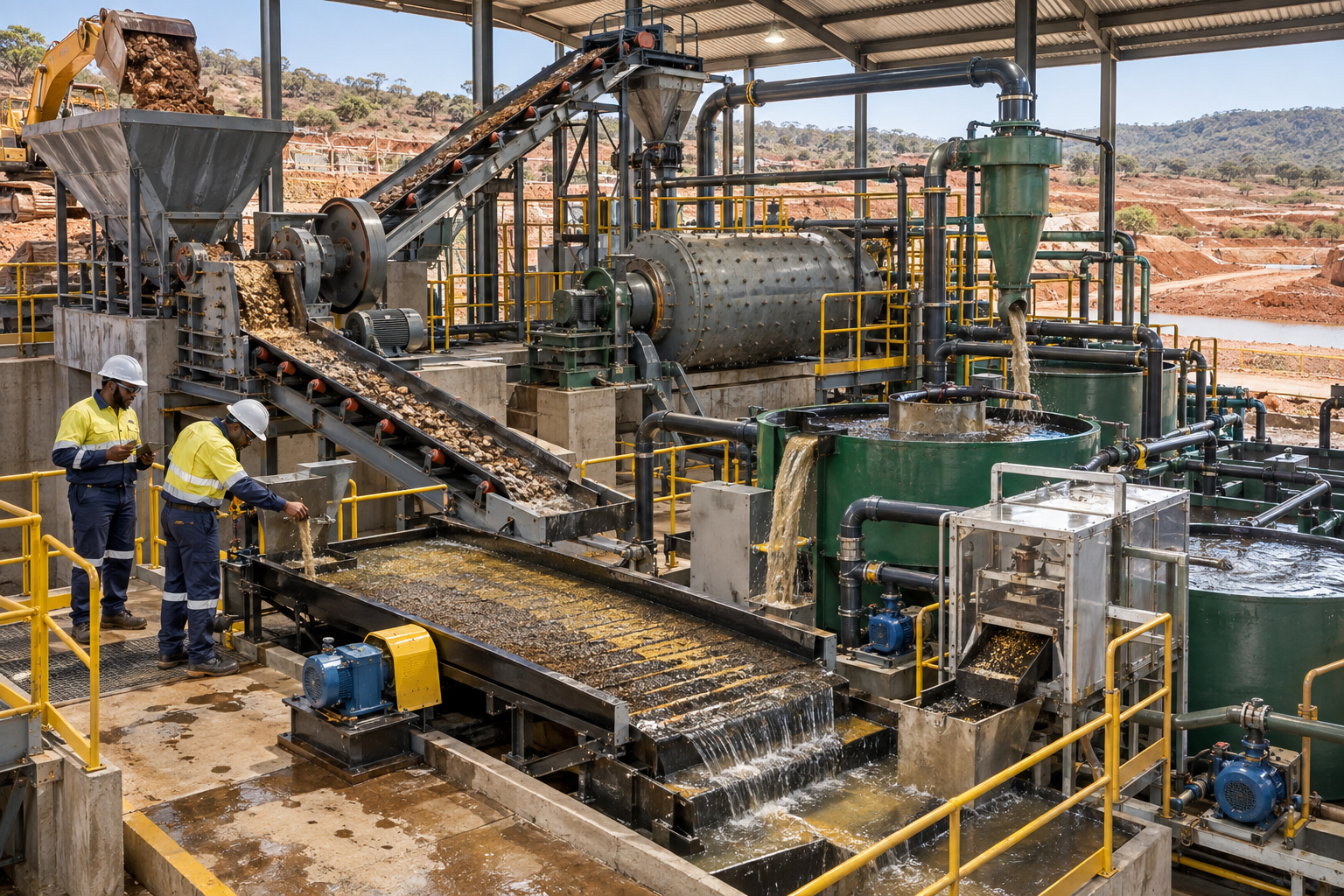
JOHANNESBURG — The search for affordable gold processing methods in Africa is too often presented as a choice between recovery and environmental protection. It is not. The strongest processing strategy is usually the one that recovers valuable gold as early as possible, grinds only what must be ground, limits chemical treatment to the smallest practical stream, recirculates water and designs waste controls before production begins.
There is, however, no honest zero-impact processing method. Every gold operation consumes energy, produces residue and requires land, water and safety management. The practical goal is therefore not a miracle machine labelled “green”, but a site-specific flowsheet that prevents avoidable pollution while remaining commercially viable.
For African miners, that can mean a gravity-first plant at a small hard-rock operation, a gravity–flotation–leach circuit at a growing mine, or sensor-based ore sorting and tightly controlled hydrometallurgy at industrial scale. The correct choice depends on how the gold occurs in the ore—not on the size or popularity of the equipment catalogue.
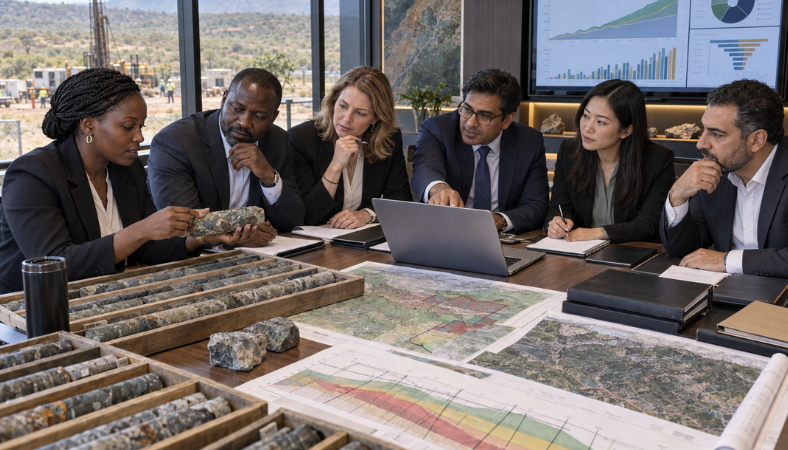
The cheapest environmental intervention is good testwork
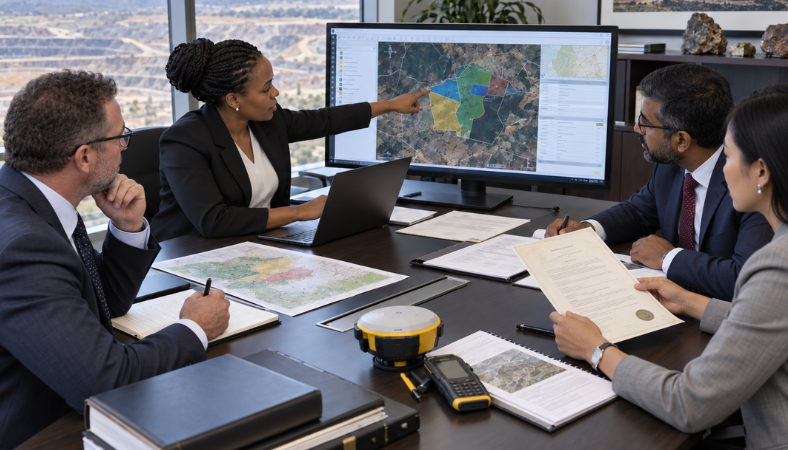
Before purchasing a mill, concentrator, leach plant or “non-toxic” reagent, an operator should obtain representative samples and commission mineralogical and metallurgical testwork. The programme should establish gold grade and variability, particle size, liberation, gravity-recoverable gold, sulphide association, preg-robbing carbon, arsenic and other penalty elements, acid-generating potential, reagent consumption and the behaviour of the final residue.
This work determines whether gold can be physically separated, whether flotation can create a saleable or treatable concentrate, whether leaching is justified, and which contaminants must remain contained. Skipping it may save money at the beginning, but it can lock a mine into poor recovery, excessive grinding, high reagent bills and a tailings problem that lasts beyond closure.
The principle is simple: characterise first, concentrate second and apply chemistry only where the ore requires it.
Small-scale mines: gravity first, mercury out
For many small hard-rock and alluvial operations containing liberated or partly liberated free gold, gravity concentration is the most practical starting point. After controlled crushing, milling and sizing, devices such as well-designed sluices, jigs, shaking tables, spirals or centrifugal concentrators use the density difference between gold and waste minerals to produce a much smaller, higher-grade concentrate.
The US Environmental Protection Agency’s guidance on artisanal and small-scale gold mining without mercury stresses that crushing, liberation and consistent particle sizing are essential before concentration. That detail matters: a gravity unit cannot recover gold that remains locked inside rock, and poorly classified feed can send fine gold to tailings.
Where testwork shows that a sufficiently clean, high-grade concentrate can be produced, direct smelting in a properly ventilated facility may complete the route without mercury. Borax and other fluxes can help separate molten gold from remaining minerals, but borax is not itself a gold-extraction technology. planetGOLD cautions that direct smelting depends on improved concentration, suitable ore and operator training; it is not a one-for-one chemical substitute for mercury.
A responsible small-scale circuit should combine:
Controlled crushing and staged grinding instead of repeatedly overgrinding the entire feed.
Screening or classification before gravity recovery.
More than one cleaning stage where fine gold losses justify it.
Lined settling ponds or tanks and recirculation of process water.
Dust capture, machine guarding, ventilation and safe fuel storage.
Routine weighing and sampling of feed, concentrate and tailings so recovery is measured rather than guessed.
Shared, licensed processing hubs can make this package more affordable for cooperatives and smaller companies by spreading the cost of laboratory services, secure gold rooms, water systems, skilled operators and compliant residue management across several ore suppliers. Commercial terms must be transparent: independently witnessed samples, agreed assays, recorded weights and a reconciled metallurgical balance protect both miners and plant owners.
The practices to eliminate are clear. Whole-ore amalgamation, open burning of amalgam and cyanide leaching of mercury-contaminated ore or tailings are identified among the sector’s worst practices under the Minamata Convention framework. Mercury-free processing is therefore not only a health objective; when the ore is suitable and the circuit is operated correctly, it can also recover gold that inefficient amalgamation leaves behind.
Medium-scale mines: build a modular hybrid plant
Medium-scale producers often benefit from a hybrid flowsheet rather than relying on a single recovery method. Gravity recovery can remove coarse liberated gold early. If much of the remaining gold is associated with sulphide minerals, flotation may then concentrate those minerals into a smaller mass for sale, further treatment or controlled leaching.
That smaller treatment stream is commercially important. It can reduce the amount of material requiring fine grinding, chemical contact and specialised residue controls. Flotation still uses water and reagents, and its tailings still require engineered management, but selective pre-concentration can reduce the overall processing burden when mineralogy supports it.
For suitable ores, a contained carbon-in-leach or carbon-in-pulp circuit may deliver stronger overall recovery. Cyanide, however, should never be described as harmless. It is a hazardous industrial reagent that can be used responsibly only within a designed management system. The International Cyanide Management Code calls for controls covering production, transport, storage, operations, decommissioning, worker safety, emergency response, training and public reporting.
At a minimum, a responsible leach operation requires secure reagent storage; trained and medically prepared personnel; pH and dosing control; secondary containment; leak detection; a site-wide water balance; residue detoxification or cyanide recovery where required; wildlife protection; groundwater and surface-water monitoring; emergency response capacity; and compliance with national permits. Code benchmarks do not replace national law, and a local licence may impose stricter requirements.
Heap leaching may be an economical option for certain low-grade, permeable oxide ores, but only after column tests and water-balance modelling. A heap requires an engineered lined pad, solution collection, leak detection, storm capacity, controlled application and a funded closure plan. In high-rainfall regions, uncontrolled water accumulation can turn an apparently cheap project into a serious operational and environmental liability.
No medium-scale company should leach historical tailings until it knows whether mercury was previously used. Where mercury is present, it must be removed and managed in an environmentally sound manner before cyanidation is considered. Mixing the two systems can mobilise mercury and spread contamination beyond the original site.
Large-scale mines: reject waste early and control every circuit
Large producers can justify more sophisticated technology, but the same low-cost principle applies: do not spend energy and reagents on material that can be rejected safely before fine grinding.
Sensor-based ore sorting can identify and separate particles where the ore and waste display a measurable difference in density, colour, atomic density, mineral chemistry or other sensor response. Peer-reviewed research describes its potential to raise feed grade and reduce the mass sent into downstream crushing, milling and treatment, with possible savings in water and energy. It is not suitable for every deposit, so bulk testwork across representative ore domains is essential before investment. See the research review on sensor-based ore sorting in mineral processing.
The most efficient industrial plants then combine complementary stages: early gravity recovery for liberated gold, flotation where gold follows sulphides, optimised grinding for the selected stream and leaching only where it adds economic recovery. Real-time density, flow, pH, dissolved oxygen, reagent and recovery data allow operators to detect losses before they become months of wasted power and chemicals.
Alternative lixiviants also deserve testing, especially for ores that respond poorly to conventional cyanidation. A 2024 laboratory study on carbonaceous gold-bearing ore from Ethiopia found that thiosulphate showed promise relative to cyanide for that specific material. The result is relevant to African metallurgy, but it is not a universal recipe: thiosulphate chemistry, reagent control and gold recovery from solution can be more complex, and every ore must be tested. Read the Ethiopian thiosulphate study.
For refractory sulphide ores, large operations may compare flotation followed by bio-oxidation, pressure oxidation or another tested pre-treatment route. Bio-oxidation operates at lower temperatures than roasting, while pressure oxidation can achieve strong sulphide breakdown in a closed vessel; both demand skilled control and responsible management of acidic solutions, arsenic and other mobilised elements. The cleaner option is the one proven by full mineralogical, environmental and pilot-scale evidence—not simply the process with the most attractive label.
Tailings remain the final test of any large plant. Dewatering, paste or filtered tailings may improve water recovery and reduce certain storage risks at suitable sites, but none is automatically best everywhere. Climate, seismicity, foundation conditions, geochemistry, topography, closure and downstream communities must govern the choice. The Global Industry Standard on Tailings Management provides a lifecycle framework aimed at preventing catastrophic failure and strengthening accountability.
A practical processing map by mine size
Small-scale operations
Strong cleaner starting point: Classified gravity concentration followed by direct smelting where testwork supports it.
First spending priority: Representative sampling, liberation control, trained operators and water recirculation.
Principal warning: Never assume borax replaces mercury. Avoid whole-ore amalgamation and uncontrolled tailings discharge.
Medium-scale operations
Strong cleaner starting point: Gravity recovery combined with flotation and, where necessary, a contained and selective leach circuit.
First spending priority: Metallurgical testing, secure reagent systems, process control, detoxification and engineered residue storage.
Principal warning: Do not install a generic modular plant without testing the actual ore and modelling the seasonal water balance.
Large-scale operations
Strong cleaner starting point: Ore sorting or another pre-concentration method followed by an integrated gravity–flotation–leach route.
First spending priority: Ore-domain testwork, automation, efficient comminution, water recovery and lifecycle tailings governance.
Principal warning: Do not scale a laboratory result until ore variability, by-products, closure risk and complete project economics have been proven.
These are technical starting points, not legal definitions. African jurisdictions classify artisanal, small, medium and large mines differently, and every project must comply with the laws, licences and environmental approvals of its host country.
Seven rules that protect both recovery and the environment
1. Recover free gold early. Every recoverable gram removed by gravity before the main plant reduces downstream load.
2. Reduce mass before adding chemistry. Sorting, screening, gravity and flotation can keep barren rock out of expensive circuits where the ore permits.
3. Grind to liberation, not habit. Undergrinding loses locked gold; overgrinding consumes power and can make fine particles harder to recover.
4. Close the water loop. Separate clean stormwater from contact water, maximise safe process-water reuse, monitor make-up and discharge water, and design for droughts as well as extreme rainfall.
5. Treat tailings as a production unit. Characterise them, account for residual gold and sulphides, control seepage, monitor stability and fund closure from the start.
6. Measure performance in units investors can verify. Track recovery, mass pull, fresh water per tonne, energy per tonne, reagent consumption, residue chemistry, spill events and closure provisions.
7. Pilot before scaling. Test representative ore from different zones and seasons, not one unusually rich sample supplied to a vendor.
What buyers should demand from processing-plant suppliers
Before committing capital, a mine owner or investor should require an independently reviewable metallurgical basis of design, a complete mass and water balance, expected recovery ranges across ore variability, reagent and energy estimates, residue characterisation, local spare-parts and training plans, environmental-control specifications, performance guarantees tied to validated feed assumptions, and realistic capital and operating-cost contingencies.
Any supplier promising high recovery from every ore, zero waste or a “completely non-toxic” chemical process without representative testwork should be treated with caution. A credible vendor explains the limits of its technology as clearly as its advantages.
The African opportunity is shared infrastructure, not imported dependency
The next generation of African gold processing does not need to begin with oversized plants. It can begin with regional assay laboratories, mobile sampling teams, local concentrator fabrication, accredited training, shared mercury-free processing hubs, independent metallurgical accounting and equipment finance linked to measured performance.
That model can give small producers access to systems they could not finance alone, help medium mines expand in modules and allow large operators to source more expertise and equipment locally. It also creates investable opportunities around water treatment, tailings retreatment, plant optimisation, laboratory services and responsible closure.
The most bankable affordable gold processing methods in Africa will therefore be those that connect geology, metallurgy, environmental engineering and disciplined operations. Cleaner production is not achieved by replacing one bottle of chemical with another. It is achieved by designing out waste, containing what remains and proving recovery through data.
From orebody to investable processing partnership
African mine owners, licensed processors, investors, equipment suppliers and technical partners can use the AFRINOMICS Deal Room to pursue controlled mandates, acquisitions, processing opportunities and project partnerships. A strong opportunity should enter the market with verified ownership or authority, representative testwork, clear permitting status, realistic funding requirements and a defensible route to responsible production.
The future of African gold is not gold at any cost. It is more value recovered from every tonne, with less pollution left for workers, communities and future generations.
Editorial note: This article provides general industry information, not a plant design, environmental approval or investment recommendation. Every project requires site-specific metallurgical testwork, engineering, health and safety controls, legal review and environmental authorisation.
Authoritative references and further reading
US EPA: Artisanal and Small-Scale Gold Mining Without Mercury
planetGOLD: Technical Solutions
UNIDO/UNEP: Reducing Mercury Use in Artisanal and Small-Scale Gold Mining — A Practical Guide
Minamata Convention: Artisanal and Small-Scale Gold Mining
International Cyanide Management Code
UNEP: Global Industry Standard on Tailings Management
Scientific Reports: Thiosulphate Leaching in Carbonaceous Gold-Bearing Ores in Ethiopia