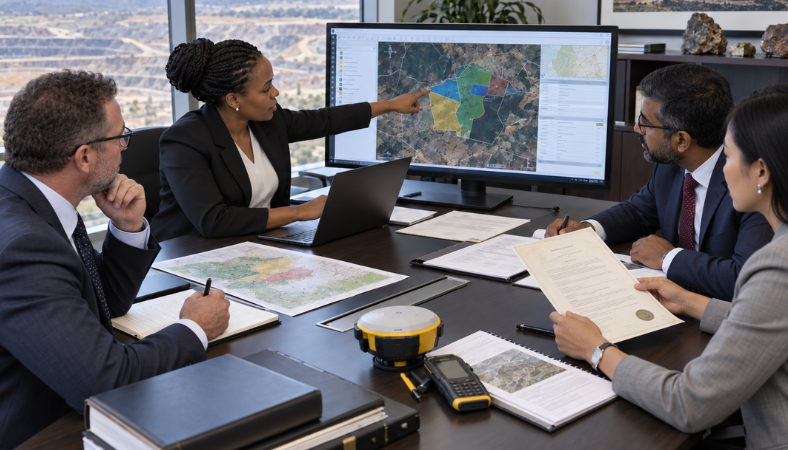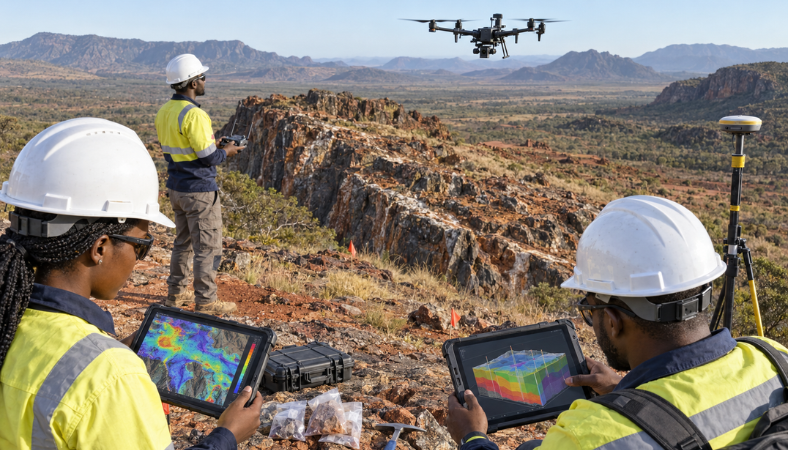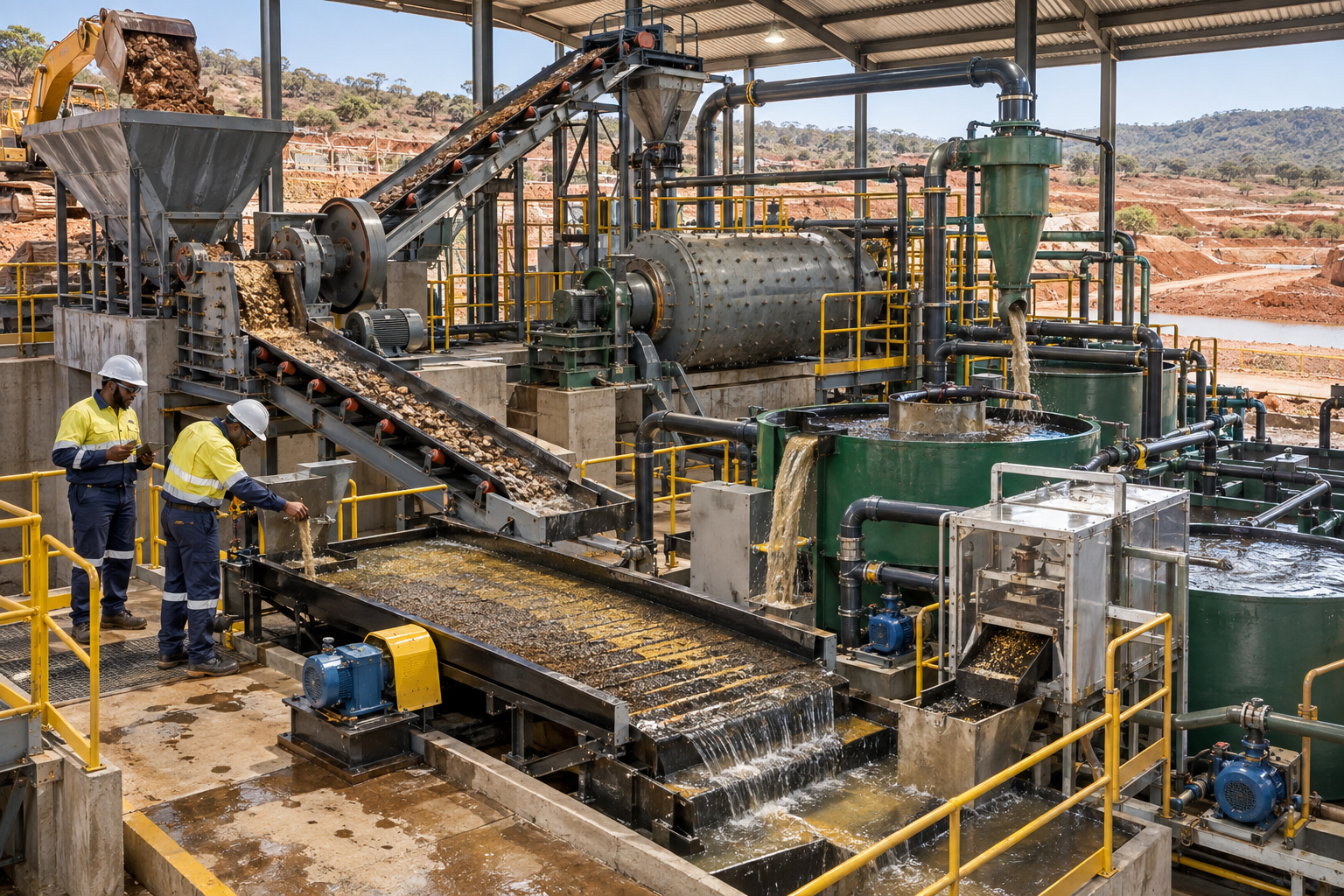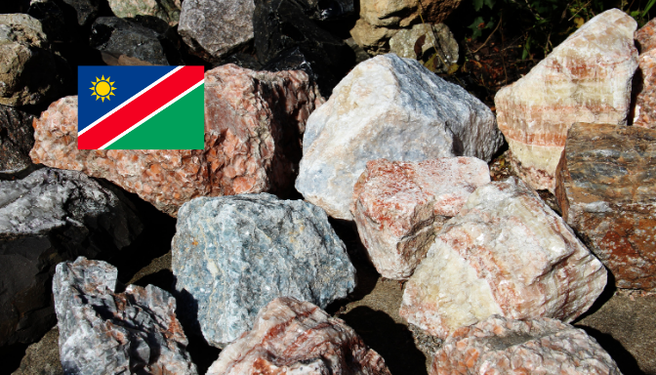
To mine minerals legally in Namibia, an applicant must obtain the correct mineral right from the Ministry of Industries, Mines and Energy, normally through the Mining Commissioner, and secure an Environmental Clearance Certificate before the authorised work begins.
There is no single universal authorisation formally called a mineral mining permit. A small-scale operation may qualify for registered mining claims, but mining claims are reserved for Namibian citizens and qualifying citizen-owned companies. A commercial mine normally requires a Mining Licence. If the deposit has not yet been adequately defined, the applicant will usually need an Exclusive Prospecting Licence first.
A Mining Licence application should be supported by a credible mineral-resource and reserve report, mine design, processing plan, mining programme, project budget, proof of funding, qualified technical personnel, a pre-feasibility or more advanced technical study, environmental approval and evidence that land-access and community issues have been addressed.
The principal legislation is the Minerals (Prospecting and Mining) Act 33 of 1992, as amended. Namibia is reviewing parts of its mineral framework, so applicants must confirm the current law, forms, fees, online filing process and licence conditions at the date of submission.
This article provides general information and is not legal, tax, environmental or investment advice. Every project should obtain advice based on its mineral, location, ownership structure, land tenure, water demand, processing method and proposed market.
What Does a Mineral Mining Permit Mean in Namibia?
The phrase mineral mining permit is commonly used online, but Namibian law separates mineral activities into different rights and licences.
The correct authorisation depends on what the applicant intends to do:
• Regional remote-sensing or geophysical investigation may require a Reconnaissance Licence.
• Detailed exploration usually requires an Exclusive Prospecting Licence.
• Eligible small-scale mining may be conducted under registered mining claims.
• A discovered deposit that cannot yet be mined economically may be protected through a Mineral Deposit Retention Licence.
• Commercial extraction normally requires a Mining Licence.
• Trading, transporting or exporting minerals may require separate permits.
• Diamonds, uranium, radioactive minerals and certain other commodities trigger additional regulatory controls.
Registering a business with the Business and Intellectual Property Authority does not give that business the right to explore or mine. Owning the surface land also does not transfer ownership of the minerals to the landowner. Namibia vests rights in its natural resources in the State, and mineral activities must be authorised under the national mineral-rights system.
Who Regulates Mining in Namibia?
The principal mining regulator is the Ministry of Industries, Mines and Energy. The ministry continues to use the mme.gov.na domain, and older legislation, forms and guidance may still refer to the Ministry of Mines and Energy or MME.
The Mining Commissioner receives and administers mineral-right applications, maintains the mineral-rights register, monitors compliance and supports the technical evaluation process.
The Environmental Commissioner administers the Environmental Clearance Certificate process under the Environmental Management Act 7 of 2007 and the Environmental Impact Assessment Regulations.
Other authorities may become involved, including:
• The Business and Intellectual Property Authority for company registration and beneficial-ownership filings.
• The Namibia Revenue Agency for income tax, VAT, employee taxes, customs and export compliance.
• The ministry responsible for water for abstraction, borehole, wastewater or discharge authorisations.
• The relevant landowner, lawful occupier, Traditional Authority and Communal Land Board.
• The Diamond Commissioner for diamond-related licences, permits, security and restricted areas.
• The National Radiation Protection Authority for uranium and other radioactive material.
• Heritage, forestry, parks, local-authority, roads, electricity and explosives regulators where applicable.
Step 1: Choose the Correct Mineral Right
Choosing the correct right is the first major decision. A Mining Licence application is not a substitute for early-stage exploration, and an exploration licence does not automatically authorise ordinary commercial production.
Non-Exclusive Prospecting Licence
A Non-Exclusive Prospecting Licence, commonly called an NEPL, is the gateway to pegging mining claims.
It does not provide exclusive rights over a particular mineral group or broad area. It is generally issued for one year. A person seeking small-scale mining claims must hold a valid NEPL before pegging the claims.
An NEPL should not be confused with an Exclusive Prospecting Licence. The NEPL supports the mining-claim route, while the EPL is used for defined, exclusive and more substantial exploration programmes.
Mining Claims
Mining claims are intended for eligible small-scale prospecting and mining.
Important features include:
• They are reserved for Namibian citizens or qualifying companies owned by Namibian citizens.
• A claim holder may contract a foreign person or foreign-owned company to perform work, but that arrangement does not remove the citizen-ownership requirement for the claim itself.
• An individual or company may hold no more than ten mining claims at a time.
• Each claim generally covers no more than 18 hectares and is normally pegged as a 600 metre by 300 metre rectangle, subject to the Act and site conditions.
• A valid NEPL is required before pegging.
• The registration application must be lodged within 21 days after pegging.
• Registration is subject to an Environmental Clearance Certificate.
• A mining claim is generally valid for three years and may be renewed if the legal requirements are met.
• A renewal application should be filed no later than 90 days before expiry.
Mining claims are not a shortcut for a large foreign-owned or commercial mining project. The regulator will consider the actual ownership, area, mineral, operating plan and scale.
Reconnaissance Licence
A Reconnaissance Licence is used for regional investigations, including airborne geophysical work, remote sensing and satellite-image analysis.
It can cover a large area and is generally issued for six months. It is appropriate where the applicant needs broad regional information before selecting a smaller exploration target. It does not replace an EPL for drilling, trenching and detailed physical exploration.
Exclusive Prospecting Licence
An Exclusive Prospecting Licence, commonly called an EPL, gives the holder exclusive prospecting rights for the approved mineral group within a defined area.
An EPL may authorise activities such as:
• Geological mapping.
• Geochemical and geophysical surveys.
• Soil, rock and stream-sediment sampling.
• Trenching and test pits.
• Drilling and core sampling.
• Bulk sampling and authorised trial work.
• Metallurgical testing.
An EPL is generally granted for an initial period of three years. Renewal depends on compliance with the licence, performance of the approved programme, expenditure, reporting, technical and financial capacity, and the proposed next-stage programme. Area reductions may apply on renewal unless the ministry approves otherwise on proper grounds.
An EPL does not authorise unrestricted commercial mining. If exploration proves an economically mineable deposit, the holder must apply for a Mining Licence before normal production begins.
Mineral Deposit Retention Licence
A Mineral Deposit Retention Licence may be appropriate where a deposit has been discovered but cannot currently be developed because of adverse market, infrastructure, technical or economic conditions.
It allows the holder to preserve tenure without immediately carrying out a full mining programme. It is generally valid for up to five years and may be renewable.
The applicant must justify why the deposit cannot presently be mined economically and why the conditions preventing development are expected to improve.
Mining Licence
A Mining Licence is the principal authorisation for a commercial mineral mine in Namibia.
It gives the holder exclusive rights, subject to the licence and other laws, to mine the approved mineral or mineral group within the defined mining area. It may also cover approved processing and accessory works described in the mining programme.
A Mining Licence may be granted for the period reasonably required for the approved mining programme, up to a maximum of 25 years. It may be renewed, with ministry guidance indicating renewal periods of up to 15 years at a time.
The licence term is not automatic. It depends on the size and life of the deposit, development schedule, production plan, economics and the Minister's decision.
Simple Licence Decision Test
Use the mining-claim route only if the project is genuinely small-scale and the applicant satisfies the Namibian citizen-ownership rules.
Apply for an EPL if the deposit still requires detailed exploration, drilling, resource definition or metallurgical testing.
Consider a Mineral Deposit Retention Licence if a deposit has been found but cannot yet be developed economically.
Apply for a Mining Licence when a technically and financially credible commercial mining project has been defined.
Step 2: Establish an Eligible Applicant
A mineral licence may generally be held by an adult Namibian citizen or by an eligible company or other juristic person with legal personality in Namibia.
Foreign investors commonly use one of two structures:
• A Namibian-incorporated subsidiary.
• An external company registered in Namibia.
Mining claims are different. They are reserved for Namibian citizens and qualifying citizen-owned companies. A foreign-owned company cannot avoid this restriction by using a nominee or undocumented side agreement.
A commercial applicant should normally complete the following before filing:
1. Register the company or external company with BIPA.
2. Ensure that its constitutional documents permit mineral exploration, mining, processing and related activities.
3. Establish a registered address and principal place of business in Namibia where required.
4. Appoint directors, officers, an auditor and other required corporate officials.
5. Prepare an accurate shareholder register and group ownership chart.
6. File the required beneficial-ownership information.
7. Pass a board resolution authorising the mineral-right application and named representatives.
8. Register for the applicable taxes with NamRA.
9. Keep annual returns, beneficial-ownership declarations and tax affairs current.
BIPA states that beneficial-ownership information must be supplied at registration, after relevant material changes and through the required year-end compliance process. A company with incomplete or inaccurate beneficial-ownership filings may encounter problems with corporate applications and regulatory due diligence.
Local Ownership and Participation
Namibia does not currently impose one fixed statutory local-shareholding percentage on every mineral licence. Foreign ownership of a Namibian subsidiary or registered external company can be permitted for mineral licences.
However, the Minister has broad powers to impose conditions, and local participation, local procurement, employment, skills development, community benefits and domestic value addition are active policy areas. Applicants should not assume that a legally possible 100 percent foreign-owned structure will receive a licence without project-specific conditions.
Mining-law reform has also been under discussion. Applicants should obtain current advice before fixing their ownership, State participation, financing or local-content structure.
Step 3: Identify the Mineral Group and Exact Area
An application cannot simply request permission to mine anywhere in Namibia.
The applicant must identify:
• The mineral or mineral group.
• The coordinates and boundaries of the application area.
• The region, district, farm, communal area or other land description.
• Existing mineral rights and pending applications.
• Surface ownership and lawful occupation.
• Environmental, heritage, water and land-use constraints.
Use the Namibia Mines and Energy Cadastre Map Portal to conduct an initial spatial check. The public portal provides a map view of mining-cadastre information.
Cadastre research should be supported by professional due diligence. A public map may not disclose every legal defect, pending update, dispute, restriction or non-spatial condition.
Before filing, confirm:
• That the intended area is available for the required mineral group.
• Whether an earlier application has priority.
• Whether the proposed coordinates overlap an existing valid right.
• Whether the project is in a national park, conservancy, forest, restricted diamond area, townlands or another controlled zone.
• Whether roads, power lines, pipelines, farms, settlements, graves, heritage sites, watercourses or protected habitats affect the design.
• Whether the mineral is subject to additional commodity-specific controls.
Mineral applications are assessed in the order required by the Minerals Act. A complete and accurate application area is therefore commercially important.
Step 4: Obtain the Exploration Evidence
A Mining Licence is normally the result of successful exploration, not the starting point for an untested prospect.
The applicant should assemble reliable evidence covering:
• Regional and local geology.
• Historical exploration and mining.
• Mapping, sampling and geophysical results.
• Drill-hole collars, logs, assays and quality-control records.
• Geological and structural models.
• Mineral-resource estimates.
• Mineral-reserve estimates where the project stage supports them.
• Metallurgical and mineralogical test work.
• Geotechnical and hydrogeological investigations.
• Mining, processing and infrastructure options.
The ministry's published assessment guidance refers to credible resource and reserve reporting using accepted standards such as SAMREC or JORC. The reporting framework should be suitable for the project, consistently applied and signed off by qualified professionals.
An applicant should not exaggerate exploration results or present an exploration target as a proven reserve. Technical claims in the licence application, investor documents and environmental studies must be consistent.
Step 5: Prepare a Credible Mine and Processing Plan
A Mining Licence application must explain how the deposit will be developed safely, efficiently and economically.
The technical package should normally address:
• Proposed mining method.
• Open-pit, underground, quarry, dredging or other design.
• Pit shells, underground layouts or extraction blocks.
• Production schedule and life of mine.
• Ore and waste movement.
• Cut-off grades, dilution and recovery assumptions.
• Processing method and expected metallurgical recovery.
• Plant design and capacity.
• Tailings, waste rock, residue and hazardous-material management.
• Roads, power, water, fuel, workshops and accommodation.
• Product handling, transport and export route.
• Capital and operating costs.
• Staffing, contractors and specialist expertise.
• Closure, rehabilitation and post-closure monitoring.
The regulator's application guidance identifies a pre-feasibility study as an important Mining Licence requirement. Larger or finance-ready projects may need a full feasibility study, bankable engineering and more detailed environmental and social work.
If the applicant does not have qualified in-house mining personnel, it should identify a reputable mining contractor and the professionals responsible for geology, mine planning, processing, tailings, water, environment and safety.
Step 6: Prove Financial Capacity
A technically attractive deposit will not support a strong application if the applicant cannot fund development and operations.
The financial case should include:
• A detailed capital budget.
• Operating-cost estimates.
• Working-capital requirements.
• Commodity price and exchange-rate assumptions.
• Production, recovery and sales forecasts.
• Sensitivity analysis.
• Funding structure and timing.
• Equity commitments.
• Debt term sheets or lender support where available.
• Audited financial statements.
• Bank statements, guarantees or other evidence of available funds.
• Contingency funding.
• Rehabilitation and closure costing.
Proof of vague fundraising intentions is weaker than documentary evidence showing that funds are available or can realistically be raised in line with the development schedule.
The applicant should also ensure that its corporate, technical and environmental documents use the same production rate, capital figure, project schedule and ownership structure.
Step 7: Address Surface Rights, Communities and Land Access
A mineral right does not automatically give the holder unrestricted surface access.
The applicant should identify the landowner, lawful occupier and every community or authority affected by the proposed work.
For private land, operations should not commence until the required written compensation and access arrangements have been concluded. The agreement should address matters such as access routes, gates, livestock, water, crop loss, disturbance, infrastructure, security, rehabilitation and compensation.
On communal land, applicants should notify and engage the relevant Traditional Authority and Communal Land Board in accordance with the applicable requirements. The ministry's evaluation guidance specifically identifies Traditional Authority notification for communal land.
Consultation should be genuine and properly documented. It should explain:
• The application area.
• The proposed mineral and activities.
• Likely land disturbance.
• Water and infrastructure needs.
• Employment and procurement opportunities.
• Environmental and social risks.
• Grievance procedures.
• Compensation and access arrangements.
The licence holder may be liable for loss or damage caused to land, water sources, buildings, structures and lawful use. If a surface-access or compensation dispute cannot be resolved, the Minerals Ancillary Rights Commission can determine certain disputes between mineral-right applicants or holders and surface-right holders.
Do not wait until construction to address access. An unresolved surface-right dispute can make an otherwise granted mineral right commercially unusable.
Step 8: Obtain an Environmental Clearance Certificate
Mining and prospecting are listed activities under the Environmental Management Act 7 of 2007. They require an Environmental Clearance Certificate, commonly called an ECC, before the approved activity may begin.
The process is administered by the Environmental Commissioner. Mining applications must also be coordinated with the mining ministry as the sector authority. Namibia provides an online environmental assessment portal for ECC applications, project records and certificate verification.
Depending on the project's scale and impacts, the environmental process may include:
1. Registration and screening.
2. Appointment of a competent environmental assessment practitioner.
3. Project description and alternatives.
4. Baseline environmental and social studies.
5. Identification of interested and affected parties.
6. Public notices and consultation.
7. Environmental scoping or impact assessment.
8. Specialist studies.
9. An Environmental Management Plan.
10. Submission to the competent authority and Environmental Commissioner.
11. Review, requests for additional information and a decision.
A mining environmental assessment may need to address:
• Biodiversity and protected species.
• Surface water and groundwater.
• Acid mine drainage and geochemistry.
• Tailings and waste-rock stability.
• Dust, noise, vibration and blasting.
• Air emissions.
• Hazardous substances and fuel storage.
• Heritage sites and graves.
• Traffic and road safety.
• Community health and safety.
• Worker accommodation and social impacts.
• Cumulative and climate-related risks.
• Progressive rehabilitation.
• Final closure and post-closure monitoring.
An ECC is generally valid for three years unless withdrawn or subject to a different lawful condition. Track the expiry date and begin the renewal process early. Renewal is not automatic, and monitoring or audit information may be required.
The ECC and Environmental Management Plan must match the actual mine design. If the project changes materially, the holder may need an amendment, new assessment or new clearance before implementing the change.
Step 9: Prepare the Mining Licence Application Package
The exact form and supporting documents must be confirmed with the ministry at the time of filing.
A well-prepared Mining Licence package will commonly include:
Corporate and legal documents
• Completed prescribed application form.
• Proof of payment of the application fee.
• Certified applicant identity documents.
• Certificate of incorporation or external-company registration.
• Constitutional documents.
• Registered office and principal business address.
• Director and officer information.
• Share register and ownership chart.
• Beneficial-ownership documents.
• Board resolution and authorised representative.
• Tax registration and evidence of good standing where requested.
Mineral-right and land documents
• Details of the preceding EPL or other relevant right.
• Mineral or mineral-group description.
• Coordinates and cadastral plans.
• Area calculations and land descriptions.
• Surface-owner and lawful-occupier information.
• Traditional Authority and Communal Land Board notices where applicable.
• Access, lease or compensation agreements where required or available.
Technical documents
• Geological report.
• Exploration database and summary results.
• Resource and reserve statement under an accepted reporting code.
• Pre-feasibility or feasibility study.
• Mining programme and production schedule.
• Mine design drawings.
• Processing-flow sheet and plant design.
• Metallurgical test work.
• Tailings and waste-management concept.
• Water and power strategy.
• Infrastructure and transport plan.
• Equipment and contractor plan.
• Qualified-person and technical-team credentials.
Financial and commercial documents
• Capital and operating budgets.
• Financial model and sensitivities.
• Proof of funding and financial resources.
• Market, offtake and product specifications.
• Procurement, employment and local-content plan.
• Beneficiation or in-country value-addition proposal where relevant.
Environmental and social documents
• Environmental Clearance Certificate.
• Environmental assessment report.
• Environmental Management Plan.
• Public-participation record.
• Specialist reports.
• Rehabilitation and closure plan.
• Closure-cost estimate and proposed funding mechanism.
• Community engagement and grievance plan.
• Health, safety and emergency-response framework.
The regulator may request further documents or impose project-specific requirements. A document checklist is not a substitute for the current prescribed form and formal pre-application guidance.
Step 10: Submit Through the Current Mining Cadastre Process
Namibia uses a digital mining-cadastre system to register, evaluate and monitor mineral rights. The public Landfolio portal provides a spatial view, while the ministry's current e-government functions may support applications, payments, reports and communication.
Because digital procedures can change, confirm whether the relevant application must be filed online, physically or through a combination of both.
At submission:
• Use the applicant's exact registered legal name.
• Select the correct mineral group and application type.
• Upload clear, complete and consistently named documents.
• Verify coordinates, map projection, area and plans.
• Pay the exact current fee using the approved method.
• Keep the payment receipt and application acknowledgement.
• Record the submission date and application reference.
• Preserve a complete copy of everything filed.
• Monitor portal messages and official correspondence.
Do not rely only on an agent's informal confirmation. The applicant should have direct access to the application record, deadlines and regulator communications.
Step 11: Understand How the Application Is Evaluated
The Mining Commissioner receives the application. Technical staff within the Department of Mines conduct a preliminary evaluation and prepare recommendations.
The application may then be considered by the Mineral Prospecting and Mining Rights Advisory Committee, an interministerial body. The committee makes a recommendation to the Minister, who takes the final decision.
The evaluation of a Mining Licence application may consider:
• Legal eligibility of the applicant.
• Availability and accuracy of the application area.
• Mineral-resource and reserve evidence.
• Mine and processing design.
• Quality of the mining programme and budget.
• Technical experience and personnel.
• Financial capacity.
• Track record and compliance history.
• Environmental clearance and management measures.
• Land access and Traditional Authority notification.
• Community, employment and procurement benefits.
• Beneficiation and local value addition.
• Tax, royalty and State-revenue implications.
• Whether the proposed operation will develop the mineral resource efficiently and responsibly.
The ministry may request clarification, revised coordinates, a stronger financial case, additional technical work or changes to the proposed programme. Respond accurately and within the stated deadline.
Step 12: Review the Grant and Licence Conditions
A favourable decision is not permission to ignore the details of the licence.
Before accepting or acting on the grant, review:
• The approved mineral group.
• The exact area and coordinates.
• The commencement and expiry dates.
• The approved mining and expenditure programme.
• Production and reporting obligations.
• Environmental conditions.
• Local procurement, employment or participation conditions.
• Beneficiation or domestic-processing conditions.
• Royalty, fee and security requirements.
• Restrictions on transfer, cession, assignment or joint holding.
• Relinquishment, renewal and closure conditions.
If a condition is technically impossible or inconsistent with the application, address it before major expenditure is committed. Do not assume that a verbal conversation changes a written licence condition.
Transfers and Changes in Ownership
A mineral licence should not be treated as an ordinary asset that can be sold or assigned without approval.
Prior ministerial approval is generally required for:
• Transfer of a mineral licence.
• Grant, cession or assignment of an interest in the licence.
• Joining another person as a joint holder.
Corporate transactions, financing security and restructuring should be reviewed before signing. Even where a share sale is not expressly treated in the same way as a direct licence transfer, licence conditions, beneficial-ownership filings, competition rules, exchange-control issues and the Minister's discretionary powers may still be relevant.
Step 13: Obtain the Other Approvals Needed Before Mining
A Mining Licence and ECC are central approvals, but they are rarely the only approvals required.
Depending on the project, additional permissions may include:
Water authorisations
Mining projects may require approval to drill or alter boreholes, abstract and use water, build water works, discharge wastewater or manage mining effluent under the Water Resources Management Act 11 of 2013.
Water demand should be tested early. A Mining Licence does not guarantee that a sufficient water allocation will be available.
Land-use and building approvals
Processing plants, offices, camps, roads, power infrastructure and waste facilities may require local-authority, planning, building or land-use approval.
Heritage approval
Archaeological sites, graves, fossils, historic structures and other heritage resources may require permits or mitigation under the National Heritage Act.
Explosives approvals
The purchase, storage, transport, import, export and use of explosives and blasting materials are separately controlled. Suitable magazines, competent persons and permits may be required.
Roads and heavy transport
New road connections, abnormal loads, rail interfaces and heavy-haul routes may require approvals and agreements with road, rail or local authorities.
Electricity and fuel
Grid connections, generation, fuel storage and hazardous installations may require technical and environmental permissions.
Waste, emissions and hazardous substances
Waste disposal, hazardous chemicals, air emissions, sewage and contaminated-water management may trigger further approvals.
Forestry, parks and biodiversity
Work affecting protected trees, forests, national parks, conservancies or specially protected species may need additional authorisation.
Uranium and radioactive minerals
Uranium and other radioactive-material projects require authorisation from the National Radiation Protection Authority in addition to the mineral right and ECC.
Diamonds
Diamond mining remains subject to the Minerals Act, but the Diamond Act 13 of 1999 adds controls over possession, dealing, valuation, security, restricted areas, processing and export. Separate diamond licences and permits may be required.
Petroleum
Petroleum and natural gas are not licensed under the mineral-right process described in this article. They are regulated under the separate petroleum legislation.
Step 14: Establish Mine Health and Safety Systems
Before operations start, the holder must establish a functioning health-and-safety management system that complies with Namibia's current labour and mining requirements.
This should cover:
• Appointment of competent managers and supervisors.
• Hazard identification and risk assessment.
• Safe operating procedures.
• Contractor management.
• Training and competency records.
• Personal protective equipment.
• Ground-control and geotechnical safety.
• Mobile-equipment and traffic management.
• Blasting and explosives controls.
• Ventilation, dust and occupational hygiene.
• Electrical and mechanical safety.
• Emergency preparedness, rescue and medical response.
• Incident notification and investigation.
• Safety representatives and committees where required.
• Inspection, maintenance and statutory records.
Namibia has been reviewing its mine-health-and-safety framework. Applicants should obtain current confirmation from the mining and labour authorities instead of relying on an old compliance manual.
Step 15: Register for Taxes, Royalties and Customs
A mining company should establish its NamRA registrations and accounting systems before production.
Potential obligations include:
• Corporate income tax.
• Provisional tax.
• Value Added Tax.
• Pay As You Earn and other employee taxes.
• Withholding taxes.
• Customs registration.
• Export levies where applicable.
• Mineral royalties.
• Transfer-pricing documentation for related-party sales, services, loans and offtake.
• Social Security Commission and employment registrations.
The royalty is separate from corporate income tax. Ministry guidance has listed mineral-group royalty rates including 10 percent for precious stones, 5 percent for dimension stone, 3 percent for base and rare metals, precious metals and nuclear-fuel minerals, and 2 percent for non-nuclear fuel minerals, industrial minerals and semi-precious stones.
These published figures should be treated as a starting point, not a substitute for current written confirmation. Royalty rates, concessions, valuation rules, export levies and special commodity arrangements can change. The Minerals Act was amended to permit adjustments to royalty structures, and diamond or strategic-mineral projects may require specific treatment.
The company should design its production measurement, sampling, invoicing, allowable-deduction and related-party pricing systems before the first sale.
Step 16: Obtain Transport, Trading and Export Permits
The right to mine does not automatically authorise every movement or sale of the product.
The mining ministry's permit framework includes:
Mineral transportation permit
A transportation permit may be required to transport minerals within Namibia.
High Value Mineral permit
A High Value Mineral permit may be required for a person trading in high-value minerals such as gold, silver or platinum. The correct requirement depends on whether the person is the authorised producer, buyer, dealer, processor or exporter.
Mineral export permit
Permission is required to export minerals for sale, disposal or scientific examination. Section 127 of the Minerals Act is reflected in the ministry's mineral-export application process.
The exporter may also need:
• A commercial invoice.
• Assay or valuation information.
• Proof of lawful origin.
• A valid mineral right or trading permit.
• Evidence of royalty compliance.
• Customs export entry and NamRA clearance.
• Export-levy compliance.
• Commodity-specific certificates or permits.
• Destination-country documentation.
Critical Minerals and Beneficiation
Namibia has imposed and adjusted controls affecting the export of certain unprocessed critical minerals, including lithium, cobalt, manganese, graphite and rare-earth minerals. Limited quantities may require ministerial approval, and licence conditions may also require local processing or beneficiation.
This policy area has evolved. A project involving critical minerals should obtain current written confirmation of:
• The minimum processing level.
• Whether sample or test-work exports are allowed.
• Quantity limits.
• Ministerial approval requirements.
• Local-beneficiation conditions in the licence.
• Customs and export-levy treatment.
An export permit should never be assumed merely because the mine has a buyer outside Namibia.
What Happens After the Mining Licence Is Granted?
A licence holder must continuously comply with the Act, licence, ECC, Environmental Management Plan and other approvals.
Core obligations normally include:
• Carrying out the approved mining programme.
• Meeting approved expenditure commitments.
• Paying annual licence fees and mineral royalties.
• Submitting production, sales, technical and environmental reports.
• Keeping accurate mineral, survey and financial records.
• Allowing lawful inspections.
• Preventing waste of mineral resources.
• Protecting land, water and the environment.
• Maintaining safe operations.
• Reporting material discoveries, incidents and changes.
• Maintaining access and compensation arrangements.
• Implementing progressive rehabilitation and closure measures.
• Obtaining approval before a regulated transfer or material programme change.
Ministry guidance indicates that Mining Licence and mining-claim holders submit quarterly and annual reports. Current reporting templates, portal deadlines and licence-specific requirements must be checked directly.
Failure to perform the programme, pay fees, file reports or comply with environmental conditions can place the mineral right at risk.
Mine Closure and Rehabilitation
Closure planning should begin before the Mining Licence application, not after the ore is exhausted.
The application should explain how the operator will:
• Rehabilitate disturbed land.
• Stabilise pits, underground workings, waste rock and tailings.
• Protect surface water and groundwater.
• Remove unsafe or unnecessary infrastructure.
• Manage contaminated materials.
• Monitor the site after closure.
• Address workforce and community transition.
• Fund premature and planned closure.
The Minerals Act requires environmental damage to be remedied when operations are discontinued or areas are abandoned. The ECC and Environmental Management Plan can create further binding closure obligations.
Namibian policy and mine-closure frameworks support a funded closure plan, but the exact form and amount of financial assurance may depend on the licence and project. Confirm the required funding mechanism with the ministry and Environmental Commissioner before financial close.
How Long Does It Take to Get a Mining Licence in Namibia?
There is no guaranteed universal timeline.
An older official ministry guide gives the following indicative feedback periods:
• Reconnaissance Licence: approximately three to four months.
• Exclusive Prospecting Licence: approximately three to four months.
• Mineral Deposit Retention Licence: approximately three to four months.
• Mining Licence: approximately six to twelve months.
These are guidance periods, not guaranteed current service standards. They may exclude the time required for exploration, resource definition, feasibility work, environmental studies, public consultation, land agreements, water investigations and responses to information requests.
In practice, a new commercial mine can take several years to move from first exploration to lawful production.
Delays commonly arise from:
• An unavailable or overlapping area.
• Incomplete corporate documents.
• Weak exploration data.
• An unsupported resource or reserve.
• An unrealistic mining programme or budget.
• Insufficient proof of funding.
• Environmental-assessment deficiencies.
• Landowner or community disputes.
• Water-supply constraints.
• Requests for additional information.
• Commodity-specific approvals.
• Changes to the mine design during assessment.
How Much Does a Mining Licence Cost in Namibia?
The application fee is only a small part of the true cost.
Official fees can depend on the licence type, area, projected turnover and current fee schedule. Older ministry guidance has listed annual Mining Licence fees based on whether projected annual turnover is below or above N$10 million, but applicants should not rely on old figures when budgeting a current application.
Request the current fee schedule and payment instructions directly from the ministry.
The larger costs may include:
• Company incorporation and legal advice.
• Cadastral and land due diligence.
• Geological mapping, sampling and drilling.
• Laboratory analysis and quality control.
• Resource and reserve estimation.
• Metallurgical testing.
• Mining, processing and infrastructure engineering.
• Pre-feasibility and feasibility studies.
• Environmental and specialist studies.
• Public consultation.
• Land access and compensation.
• Water investigations and applications.
• Closure planning and financial assurance.
• Permit, licence and annual fees.
• Tax, customs and royalty systems.
• Construction and operating capital.
A cheap application with no credible technical and financial foundation is rarely economical if it is refused, delayed or granted on an unworkable basis.
Common Reasons Mining Applications Fail or Stall
Applying for the wrong right
The applicant seeks a Mining Licence before proving the deposit, or tries to use mining claims for a project that does not meet the small-scale and ownership rules.
Incorrect applicant structure
The applicant lacks Namibian legal personality, has incomplete BIPA filings or uses a non-compliant ownership arrangement.
Area overlap
Coordinates overlap an existing right, a prior application or a restricted area.
Weak geological evidence
The application relies on informal sampling, unverified assays or an exploration target presented as a reserve.
Unrealistic mine plan
Production, recovery, water, power, capital and schedule assumptions do not agree.
Insufficient funding evidence
The applicant submits an aspirational investor presentation instead of documentary proof of financial capacity.
Incomplete environmental process
The ECC is missing, expired, issued for a different activity or based on a mine design that has materially changed.
Poor consultation
Landowners, lawful occupiers, Traditional Authorities, Communal Land Boards or affected communities are identified late or consulted inadequately.
No practical surface access
The mineral right may be available, but roads, water, land agreements or compensation remain unresolved.
Ignoring post-grant costs
The applicant budgets for the application fee but not annual fees, reports, royalties, environmental monitoring, safety, rehabilitation, water, customs and export compliance.
Inconsistent documents
The technical report, financial model, environmental assessment and corporate application describe different production rates, footprints, ownership or timelines.
Failure to respond
The applicant misses a regulator deadline, portal message, renewal date or request for additional information.
Final Mining Licence Readiness Checklist
Before submitting a commercial Mining Licence application, confirm that:
• The applicant is legally eligible and properly registered in Namibia.
• BIPA annual-return and beneficial-ownership records are current.
• The mineral group and exact coordinates are correct.
• The cadastre search shows the area can lawfully be applied for.
• The exploration right and work history are in order.
• The resource and reserve work is credible and professionally signed off.
• The mining and processing designs are technically coherent.
• A pre-feasibility or appropriate feasibility study is complete.
• The project budget and financial model are realistic.
• Proof of funding is documented.
• Landowners, lawful occupiers and communities have been identified.
• Traditional Authority and Communal Land Board requirements have been addressed.
• The environmental assessment and consultation are complete.
• A valid ECC and Environmental Management Plan are available.
• Water supply and water-authorisation requirements are understood.
• Closure and rehabilitation are designed and costed.
• Health, safety and emergency systems are planned.
• Commodity-specific rules have been checked.
• Current forms, fees and submission procedures have been confirmed.
• Secondary transport, trading, export and customs permits are included in the schedule.
• Renewal, reporting, royalty and tax compliance systems are ready.
Frequently Asked Questions
What licence do I need to mine minerals in Namibia?
A commercial operation normally needs a Mining Licence. An eligible small-scale operation may use registered mining claims. If the deposit has not been adequately explored, an Exclusive Prospecting Licence is usually required first.
Is there a document called a mineral mining permit in Namibia?
Not as one universal licence category. The formal right may be a mining claim, Mining Licence, Exclusive Prospecting Licence, Reconnaissance Licence or Mineral Deposit Retention Licence. Separate transport, trading and export permits may also be required.
Can a foreigner own a mining company in Namibia?
A foreign investor may generally hold a mineral licence through a Namibian-incorporated company or an external company registered in Namibia. Project-specific local-participation and licence conditions may apply. Mining claims remain reserved for Namibian citizens and qualifying citizen-owned companies.
Can a foreign-owned company register mining claims?
No. Mining claims are reserved for Namibian citizens and qualifying companies owned by Namibian citizens. A claim holder may contract a foreign person or company to perform work, but the claim's ownership requirements still apply.
How many mining claims may one person hold?
An individual or qualifying company may generally hold a maximum of ten mining claims at a time.
How large is a mining claim in Namibia?
A claim generally may not exceed 18 hectares and is commonly pegged as a 600 metre by 300 metre rectangle, subject to the Act and site-specific constraints.
Do I need an NEPL before registering a mining claim?
Yes. Only the holder of a valid Non-Exclusive Prospecting Licence may peg a mining claim.
How quickly must a mining claim be registered after pegging?
The application must generally be lodged within 21 days after the claim is pegged.
Do I need an ECC for a mining claim?
Yes. Registration of a mining claim is subject to an Environmental Clearance Certificate.
How long is an EPL valid?
An Exclusive Prospecting Licence is generally issued for an initial period of three years. Renewal depends on compliance, work performed, expenditure, reporting, technical and financial capacity, and the next-stage programme.
Can I start mining with an EPL?
An EPL authorises approved prospecting operations. It does not provide unrestricted permission for normal commercial production. Commercial extraction normally requires a Mining Licence.
How long is a Mining Licence valid in Namibia?
A Mining Licence may be granted for the period reasonably required by the approved mining programme, up to 25 years. Renewals are possible, subject to compliance and approval.
Do I need to own the land before applying?
No. Surface ownership and mineral rights are separate. However, the holder must lawfully secure access, address compensation and respect the rights of landowners, lawful occupiers and communities.
Can a landowner stop all mining activity?
Surface access and compensation must be handled lawfully. On private land, a written compensation arrangement is generally required before operations begin. If negotiations fail, certain disputes may be referred to the Minerals Ancillary Rights Commission.
Do all mining projects need environmental approval?
Yes. Reconnaissance, prospecting and mining are listed activities that require environmental clearance before the approved work begins. The scope of assessment depends on the activity and its potential impacts.
How long is an ECC valid in Namibia?
An ECC is generally valid for three years unless it is withdrawn or subject to a different lawful condition. Renewal should be started before expiry.
Do I need a separate water permit?
Possibly. Borehole drilling, water abstraction, impoundment, mine dewatering, wastewater discharge and mining effluent may require separate water authorisations. A mineral right does not guarantee water availability.
Can I export minerals after receiving a Mining Licence?
Not automatically. A mineral export permit, NamRA customs clearance, royalty compliance and commodity-specific documents may be required. Unprocessed critical minerals and diamonds are subject to additional controls.
Do I need a permit to transport minerals inside Namibia?
A mineral transportation permit may be required. Confirm the current requirement for the mineral, holder, route and consignment with the mining ministry.
Do I need a special permit to trade gold or platinum?
A High Value Mineral permit may be required for trading in gold, silver, platinum and other designated high-value minerals. The need depends on the person's role and existing mineral rights.
Are diamonds covered by the ordinary Mining Licence process?
The underlying mineral right is issued under the Minerals Act, but the Diamond Act imposes additional licences, permits, possession controls, security requirements, restricted-area rules and export procedures.
Is uranium treated like an ordinary mineral?
The mineral right is obtained under the Minerals Act, but uranium and radioactive-material activities also require radiation-protection authorisation.
Can a Mining Licence be transferred to another company?
Not freely. Prior ministerial approval is generally required to transfer the licence, assign or cede an interest, or add a joint holder.
What reports must a Mining Licence holder submit?
Ministry guidance identifies quarterly and annual reporting for Mining Licence holders. The licence, portal and ministry may require additional production, sales, royalty, environmental and incident reports.
What is the biggest mistake applicants make?
The most serious mistake is treating the application as a form-filling exercise. The regulator expects a legally eligible applicant, available area, credible geology, workable mine plan, financial capacity, environmental approval, land access and a team capable of operating the mine.
Conclusion
Getting a mineral mining permit in Namibia is a coordinated legal, technical, environmental, land, financial and operational process.
For an eligible small-scale project, the correct route may be an NEPL followed by pegging and registration of mining claims. For a commercial project, the normal route is exploration under an EPL, definition of a mineable resource and reserve, completion of technical and financial studies, environmental clearance and application for a Mining Licence.
The strongest applications are consistent from beginning to end. The company structure, cadastral area, technical study, financial model, environmental assessment, land-access plan and funding evidence should describe one realistic project.
Because Namibia is modernising parts of its mining framework, applicants should verify the current law, ministry name, forms, fees, digital portal, local-participation policy, beneficiation conditions and export controls immediately before filing.
How AFRINOMICS Can Help
AFRINOMICS can support investors and project developers with:
• Mining and mineral-right application planning.
• Namibian company and ownership-structure coordination.
• Cadastral and application-area due diligence.
• Regulatory document checklists.
• Business plans and financial models.
• Technical-team and specialist coordination.
• Environmental and community-engagement planning.
• Investor-ready project documentation.
• Tax, royalty, customs and export-compliance planning with qualified advisers.
• Post-grant reporting and compliance systems.
Early professional planning can prevent an applicant from spending money on an unavailable area, an ineligible structure or a project that lacks environmental, land, water or export approval.
Official and Authoritative Sources
Ministry of Industries, Mines and Energy
https://www.mme.gov.na/
Mineral Rights and Resources Development Division
https://www.mme.gov.na/mineral-rights-and-resources-development-division/
Namibia Mines and Energy Cadastre Map Portal
https://portals.landfolio.com/namibia/
Environmental Clearance Certificate Portal
https://eia.meft.gov.na/
Namibia Trade Information Portal: Licences, Rights and Permits Guide
https://namibiatradeportal.gov.na/download_file/view/00cf6b32-47e1-4ae6-a480-238ea687cf43/335
Business and Intellectual Property Authority
https://www.bipa.na/
Namibia Revenue Agency
https://www.namra.org.na/
Legal Assistance Centre: Namibian Statutes
https://www.lac.org.na/index.php/laws/statutes/