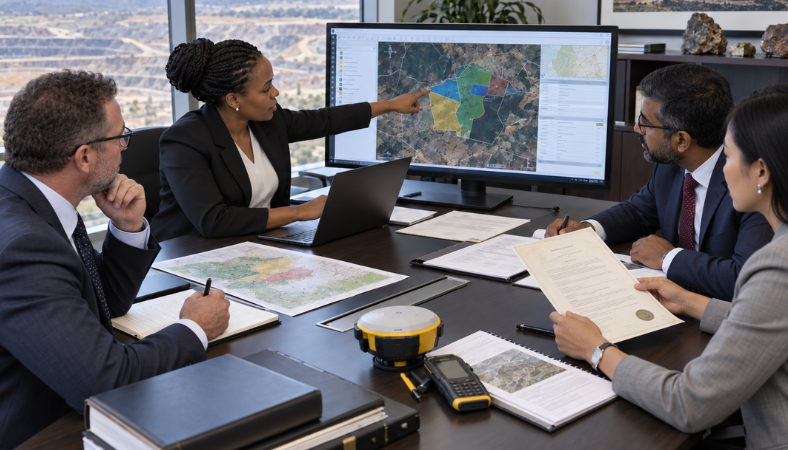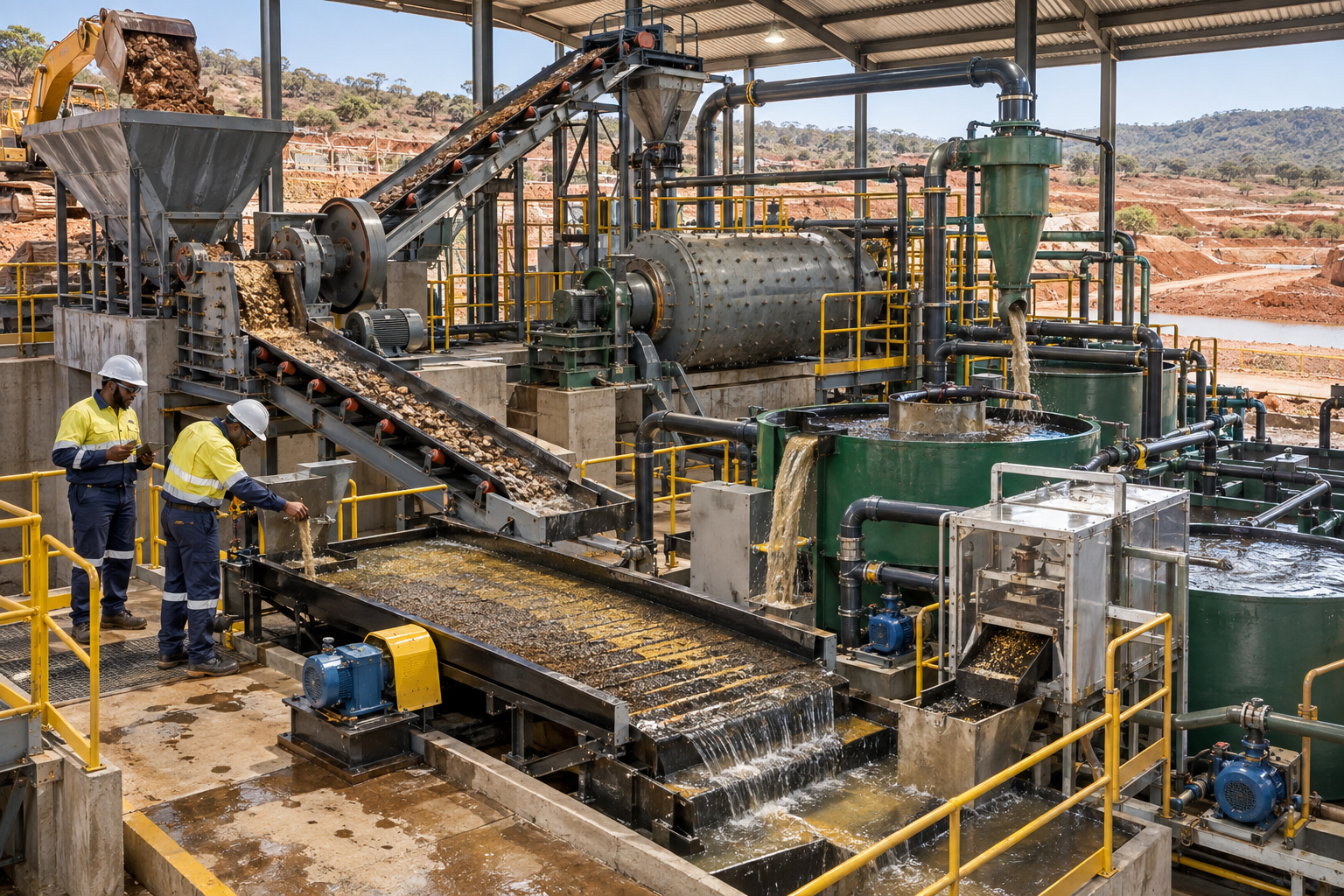
The application is lodged through the online system operated by the Department of Mineral and Petroleum Resources, commonly called the DMPR. An application for environmental authorisation must normally be submitted at the same time.
If a mining right is granted, it must be executed and registered with the Mineral and Petroleum Titles Registration Office. Before mining begins, the project may also require water-use authorisation, rehabilitation funding, municipal approvals, mine-health-and-safety compliance, tax and royalty registration, and gold-related registration or licensing through the South African Diamond and Precious Metals Regulator.
There is no single form officially called “gold mine registration”. Registering a company does not give that company the legal right to prospect for or mine gold.
This guide provides general information and should not be treated as legal advice. Mining, environmental, water, land and precious-metals requirements depend on the location and design of each operation. Applicants should confirm current forms, fees and submission procedures with the relevant authorities before applying.
What Does Registering a Gold Mine Actually Mean?
Registering a gold mine in South Africa involves several connected processes:
1. Establishing the person or company that will hold the mineral right.
2. Identifying the land and confirming whether gold rights are available over that area.
3. Applying for the correct mineral authorisation under the Mineral and Petroleum Resources Development Act 28 of 2002, commonly called the MPRDA.
4. Applying for environmental authorisation.
5. Consulting landowners, lawful occupiers, communities and other interested and affected parties.
6. Making financial provision for rehabilitation and mine closure.
7. Obtaining any required water, heritage, waste, air-quality, municipal and infrastructure approvals.
8. Executing and registering the granted mineral right or recording the mining permit.
9. Establishing mine-health-and-safety systems before operations begin.
10. Completing the applicable SARS royalty and precious-metals registrations.
The South African Government confirms that permission from the mineral-resources department is required before a person or company may mine a mineral within a defined area.
The responsible authority is currently the Department of Mineral and Petroleum Resources. Some older government documents and online pages may still refer to the DMR, DMRE or Department of Mineral Resources and Energy.
Step 1: Choose the Correct Gold Mining Authorisation
The first decision is whether the project needs a prospecting right, mining permit or mining right.
Choosing the wrong application can waste time, professional fees and priority over the intended area.
Prospecting Right
A prospecting right is appropriate when the existence, size, grade or economic value of the gold deposit has not been adequately established.
It allows the holder to investigate a defined area for an actual or probable mineral deposit.
A prospecting right may generally be granted for up to five years. It may be renewed once for a period of up to three years.
A prospecting right does not provide unrestricted permission to begin ordinary commercial gold production. Activities must remain within the approved prospecting programme and the conditions of the right and environmental authorisation.
Mining Permit
A mining permit is designed for a genuinely small, short-life mining operation.
Under the current consolidated MPRDA, the mining area may not exceed five hectares, and the mineral must be capable of being mined optimally within two years.
A mining permit may be renewed for up to three additional periods of no more than one year each.
Mining permits are not transferable.
A mining permit may allow commercial production, but only within the approved area, duration, production plan and environmental conditions.
Mining Right
A mining right is normally required for a commercial gold mine that covers more than five hectares, requires substantial infrastructure or will operate for longer than two years.
A mining right may be granted for up to 30 years and may be renewed.
A mining right can authorise commercial production, but the holder must comply with the mining right, Environmental Management Programme, Social and Labour Plan, Mining Charter requirements and all other applicable approvals.
Simple Decision Test
Apply for a prospecting right if the gold deposit has not been adequately proved.
Investigate a mining permit if the entire operation is genuinely no more than five hectares and can be mined optimally within two years.
Apply for a mining right if the project covers a larger area, has a longer mine life or requires substantial infrastructure.
Do not divide one commercial project into artificial small areas to avoid the mining-right process. The DMPR will assess the actual substance, scale and economics of the proposed operation.
Step 2: Establish the Applicant
An individual or company may apply for a mineral right. However, a South African private company is commonly used for a commercial gold mine.
A private company provides a clearer structure for ownership, investment, governance, contracting, taxation and future transactions.
A typical company applicant should:
1. Register a private company with the Companies and Intellectual Property Commission.
2. Obtain the company registration certificate and Memorandum of Incorporation.
3. Appoint the directors and establish a registered office.
4. Prepare a shareholder register.
5. Pass a directors’ resolution authorising the mineral-right application.
6. Complete the applicable beneficial-ownership filing with CIPC.
7. Register with the South African Revenue Service.
8. Keep annual returns and beneficial-ownership information current.
Company registration should normally be completed before the mineral-right application is submitted unless the named applicant will be an individual.
The identity of the applicant is important. A mining right cannot simply be sold, transferred or moved to another company after it has been granted. Ministerial approval under section 11 of the MPRDA may be required.
Ownership and Mining Charter Planning
The official mining-right requirements state that a proposed mining operation must be aligned with the Mining Charter.
The applicant should address ownership, transformation, employment equity, procurement, enterprise development, human-resource development and mine-community participation before applying.
The legal status and application of certain Mining Charter provisions have been the subject of court proceedings. Applicants should obtain current mining-law and transformation advice before finalising their shareholder and empowerment structures.
Do not rely on an informal BEE partnership, nominee arrangement or generic certificate without obtaining professional advice.
The ownership structure, financing arrangements and Mining Charter plan should be commercially genuine, properly documented and consistent with the mineral-right application.
Step 3: Identify the Land and Confirm Mineral Availability
A company cannot apply for “gold in South Africa” generally.
The application must identify gold as the mineral and define a specific area of land.
Before applying:
• Obtain the complete farm, portion, erf or property description.
• Confirm ownership and registered title information through the relevant deeds records.
• Prepare accurate coordinates for the proposed application area.
• Obtain the prescribed survey plan or diagram.
• Use the available DMPR cadastral systems to identify existing applications, prospecting rights, mining rights, mining permits and restrictions over the same land and mineral.
• Search available Council for Geoscience data.
• Investigate historical exploration, drilling and mining information.
• Determine whether the land contains protected areas, wetlands, rivers, critical biodiversity, graves, archaeological resources or heritage sites.
• Identify communities, lawful occupiers and people holding informal or customary land rights.
• Investigate existing servitudes and conflicting land uses.
• Confirm road, electricity, water and surface-access requirements.
• Check municipal zoning and land-use restrictions.
The DMPR currently provides access to SAMRAD and its newer Mining Licensing System. Because South Africa is transitioning between licensing and cadastral systems, applicants should use the submission platform specified by the DMPR for the relevant province and application type at the time of filing.
Does Owning the Land Give You the Right to Mine the Gold?
No.
Ownership of the surface land does not automatically give the owner the right to prospect for or mine the gold beneath it.
Mineral resources are regulated under the MPRDA, and the State acts as custodian of South Africa’s mineral resources.
The reverse is also important. An applicant does not always have to own the land to apply for a mineral right.
However, the applicant must consult the landowner, lawful occupiers, affected communities and other interested and affected parties.
Surface access, compensation, relocation, customary rights and informal land rights may create additional legal requirements.
A prospecting or mining right should never be treated as permission to ignore existing surface rights.
Step 4: Prove That the Gold Project Is Technically and Financially Credible
The DMPR will not grant a mining right merely because gold may be present.
The applicant must demonstrate that the deposit can be mined optimally, that the applicant has access to the required expertise and that the financing plan is compatible with the proposed operation.
A commercial gold mining application should be supported by credible information covering:
• The geological model.
• Exploration and drilling results.
• Mineral-resource and reserve information appropriate to the project’s development stage.
• The proposed mining method.
• Whether the operation will be open-pit, underground or based on the retreatment of residues.
• Metallurgical test work.
• The proposed gold-recovery process.
• Expected recovery rates.
• The planned production rate.
• The expected life of the mine.
• Mine design and production scheduling.
• Required roads, power, water and surface infrastructure.
• Tailings-storage facilities.
• Waste-rock and residue management.
• Capital expenditure.
• Operating costs.
• Gold-price and recovery assumptions.
• Financial forecasts and sensitivity analysis.
• Funding sources.
• Proof of access to sufficient funding.
• The experience and qualifications of the technical team.
• Rehabilitation, closure and post-closure risks.
An early-stage concept with no credible geology, mine plan, processing route or financing plan is unlikely to support a strong mining-right application.
Step 5: Appoint a Professional Application Team
A commercial gold mining application normally requires input from several professionals.
Depending on the project, the team may include:
• A mining lawyer or mineral-rights specialist.
• A professional geologist.
• A mining engineer.
• A surveyor experienced in MPRDA plans.
• A metallurgist or mineral-processing engineer.
• A registered Environmental Assessment Practitioner.
• Biodiversity and wetland specialists.
• Groundwater and surface-water specialists.
• Air-quality, noise, blasting and traffic specialists.
• A heritage specialist.
• A socio-economic specialist.
• A Social and Labour Plan specialist.
• A public-participation practitioner.
• Tax, royalty and financial-modelling advisers.
• Mine-health-and-safety specialists.
The applicant remains legally responsible for the information submitted, even when consultants prepare the documents.
The Mining Work Programme, environmental reports, water application, financial model and Social and Labour Plan must all describe the same project.
The production rate, mine footprint, infrastructure, workforce, capital requirements and operating period should remain consistent across every submission.
Step 6: Prepare the Core Mining-Right Documents
The exact online checklist can change. However, a full gold mining-right application will normally require documents covering the applicant, land, technical plan, financial capacity, social commitments and environmental effects.
Applicant and Authority Documents
Prepare:
• CIPC registration documents or the individual applicant’s identity documents.
• The company’s Memorandum of Incorporation.
• A directors’ resolution authorising the application.
• Identity documents or passports of the relevant directors and representatives.
• A power of attorney if a consultant or attorney will submit the application.
• Ownership and empowerment information.
• Relevant Mining Charter information.
• The applicant’s registered address and contact details.
Land and Survey Documents
Prepare:
• Complete property descriptions.
• Coordinates for the application area.
• The prescribed application-area plan.
• A Regulation 42 plan or diagram where applicable.
• Landowner information.
• Lawful-occupier information.
• Details of affected communities and traditional authorities.
• Information on servitudes, access routes and proposed surface infrastructure.
Technical and Financial Documents
Prepare:
• A Mining Work Programme.
• Geological and mineral-resource information.
• The proposed mining method.
• The production schedule.
• The gold-processing and recovery plan.
• The infrastructure and services plan.
• Capital and operating budgets.
• A financing plan.
• Proof of financial capacity.
• Evidence of technical ability and expertise.
Social and Transformation Documents
Prepare:
• A Social and Labour Plan.
• A human-resource development programme.
• Employment and skills-development commitments.
• Local economic development projects.
• Commitments aligned with genuine community and municipal needs.
• Measures for managing downscaling and retrenchment.
• Procurement and enterprise-development information.
• Relevant transformation commitments.
The Social and Labour Plan becomes a binding compliance document once the mining right is granted.
It should contain funded, measurable and time-bound commitments. It should not consist of generic promises that cannot be implemented or monitored.
Environmental Documents
Prepare:
• The environmental-authorisation application.
• The required scoping report.
• The environmental impact assessment report.
• The Environmental Management Programme.
• Specialist studies required by the project and location.
• Public-participation records.
• An issues-and-responses report.
• A rehabilitation and closure plan.
• A calculation of the financial provision required for rehabilitation, closure and residual environmental impacts.
Step 7: Submit the Mineral-Right and Environmental Applications
Create the required applicant profile on the active DMPR licensing system.
Select gold as the mineral and capture the exact land area.
Upload the required documents and pay the prescribed non-refundable application fees.
The environmental-authorisation application must normally be submitted at the same time as the mining-right application.
This forms part of South Africa’s One Environmental System. Under this system, the mineral-resources minister is the competent authority for environmental authorisations and waste-management licences connected to mining and related activities.
Acceptance of an online application is not the same as the grant of a mining right.
Acceptance means the application has passed an initial administrative assessment and may proceed to the substantive assessment stage.
The official government process states that the Regional Manager should notify the applicant in writing within 14 days if a compliant mining-right application has been accepted.
The acceptance notice should instruct the applicant to consult the landowner, lawful occupiers and other affected parties.
Applicants must follow the deadlines and instructions contained in the actual acceptance notice.
Step 8: Conduct Public Participation and Land Consultation
After the application has been accepted, the applicant must notify and consult the landowner, lawful occupiers and other interested and affected parties.
Depending on the location, this may include:
• Surrounding landowners.
• Residents.
• Lawful occupiers.
• Traditional leaders.
• Traditional councils.
• People holding informal or customary land rights.
• Mine communities.
• Labour-sending communities.
• Municipalities.
• Provincial government departments.
• Water users.
• Catchment-management stakeholders.
• Environmental organisations.
• Heritage bodies.
• Civil-society organisations.
• Local businesses.
Public participation may include:
• Written notices.
• Site notices.
• Newspaper advertising where required.
• Access to application and environmental documents.
• Public meetings.
• Open days.
• Comment periods.
• An issues-and-responses register.
• Evidence showing how material concerns influenced the project assessment.
Consultation is not a box-ticking exercise.
Weak land identification, failure to consult affected rights holders, inadequate notice, language barriers or ignoring objections can delay the application.
A defective consultation process can also expose a granted right to an administrative appeal or judicial review.
Step 9: Complete the Environmental Assessment
A gold mining operation cannot begin merely because the mineral-right application has been accepted.
The applicant must obtain environmental authorisation for all listed activities and comply with the approved Environmental Management Programme.
Important gold-mine environmental issues may include:
• Groundwater drawdown.
• Mine dewatering.
• Acid mine drainage.
• Metal contamination.
• Cyanide and other process chemicals.
• Tailings-storage facilities.
• Residue deposits.
• Waste rock.
• Contaminated soil.
• Dust.
• Noise.
• Blasting and vibration.
• Biodiversity loss.
• Wetland disturbance.
• Worker health.
• Community health.
• Energy use.
• Greenhouse-gas emissions.
• Concurrent rehabilitation.
• Final mine closure.
The applicant must calculate and provide the required financial provision for rehabilitation, closure and relevant residual environmental impacts.
This is a genuine funding obligation. It should not be treated as a theoretical figure included only to complete an application form.
The appointed Environmental Assessment Practitioner should be properly registered with the Environmental Assessment Practitioners Association of South Africa.
The practitioner must identify all applicable listed activities, the correct competent authority and the required specialist studies before construction or mining begins.
Step 10: Apply for Water-Use Authorisation
Gold mines frequently trigger one or more regulated water uses under section 21 of the National Water Act.
These may include:
• Abstracting surface water.
• Abstracting groundwater.
• Mine dewatering.
• Storing water.
• Diverting or impeding a watercourse.
• Altering the bed, banks, course or characteristics of a watercourse.
• Discharging water or effluent.
• Disposing of waste in a manner that may detrimentally affect a water resource.
A water specialist should determine whether each activity is covered by an existing lawful use, a General Authorisation or a Water Use Licence.
Where a Water Use Licence is required, the application is submitted through the Department of Water and Sanitation’s electronic Water Use Licence Application and Authorisation System, commonly called e-WULAAS.
A mining right does not replace a required water-use authorisation.
The mine, processing plant, tailings facility and water balance should be designed early enough for the mining, environmental and water applications to remain consistent.
Step 11: Secure Other Site-Specific Approvals
A mineral right and environmental authorisation may not be the only approvals required.
Municipal Land-Use Approval
Municipal zoning, land-use approval and building plans may be required for:
• Processing plants.
• Offices.
• Workshops.
• Employee facilities.
• Housing.
• Access roads.
• Surface infrastructure.
A mining right should not be assumed to override municipal planning law.
Heritage Approval
Heritage approval or comment may be required where the project affects:
• Graves.
• Archaeological sites.
• Historic mine workings.
• Fossils.
• Cultural landscapes.
• Structures or areas protected under heritage legislation.
The responsible authority may be the South African Heritage Resources Agency or the relevant provincial heritage authority.
Waste-Management Licence
A waste-management licence may be required for listed waste activities that are not already covered by the mining environmental process.
Atmospheric-Emission Licence
An atmospheric-emission licence may be required if the project includes a listed processing, roasting, smelting or other emissions-producing activity.
Biodiversity or Forestry Permits
Additional permits may be required before clearing or disturbing:
• Protected vegetation.
• Protected trees.
• Threatened species.
• Critical ecosystems.
Explosives and Blasting Compliance
The storage, transport and use of explosives may require additional approvals, competent appointments and compliance with applicable police, labour and mine-safety requirements.
Roads, Railways, Electricity and Servitudes
Approvals or agreements may be required for:
• New road access.
• Road crossings.
• Railway connections.
• Electricity connections.
• Pipelines.
• Transmission lines.
• Surface servitudes.
The relevant authority may include a municipality, roads agency, Eskom, Transnet, landowner or other infrastructure owner.
Nuclear Authorisation
Some gold ores and mining residues may contain radioactive material.
Where radiation risks are present, authorisation or oversight from the National Nuclear Regulator may be required.
Step 12: Receive, Execute and Register the Mining Right
If the mining right is granted, the applicant will be called to execute the right.
A full mining right is a formal legal instrument. It must be lodged for registration with the Mineral and Petroleum Titles Registration Office within the prescribed period.
The DMPR’s current Mining Titles procedure states that new prospecting and mining rights must be lodged within 60 days.
Documents required for registration may include:
• Executed copies of the right.
• The prescribed plan or diagram.
• A power of attorney.
• The Prospecting or Mining Work Programme.
• The Social and Labour Plan.
• Empowerment documents for a mining right.
Use an experienced notary and mineral-title practitioner to manage execution and registration.
Missing the lodgement deadline, using an incorrect diagram, changing the applicant or submitting inconsistent documents can jeopardise the project.
A mining permit follows a different recording process and is not transferable.
Step 13: Complete Pre-Commencement Mine Compliance
Before site establishment, construction or production begins, confirm that every legal commencement condition has been satisfied.
Confirm that:
• The mineral right or permit has been granted and brought into effect correctly.
• The mining right has been registered or the permit recorded as required.
• The environmental authorisation is in force.
• Any environmental appeal implications have been assessed.
• The rehabilitation financial provision has been accepted.
• The required water-use authorisation is in force.
• At least 21 days’ written notice has been given to the landowner or lawful occupier where required by section 5A of the MPRDA.
• Surface-access arrangements have been completed.
• Compensation and relocation arrangements are lawful and documented.
• Municipal approvals are in place where required.
• Heritage, waste, air-quality, road and electricity approvals are in place where required.
• Mine-health-and-safety appointments have been made.
• Risk assessments have been completed.
• Required mandatory codes of practice have been prepared.
• Employee training systems are operating.
• Occupational-health systems are operating.
• Emergency plans have been implemented.
• The relevant DMPR Mine Health and Safety Inspectorate office has received the required notices and appointment information.
• Contractors are properly appointed and managed.
• Gold production-measurement systems are ready.
• Gold security and chain-of-custody controls are operational.
The Mine Health and Safety Act places extensive duties on mine employers.
Employers must protect employees and other people, identify hazards, control risks, train workers and comply with inspection and reporting requirements.
Step 14: Complete Gold-Specific Registrations
Gold is a regulated precious metal.
A mining right should not be treated as an unrestricted licence to buy, possess, refine, beneficiate, trade, import or export gold from any source.
Before production and sale:
1. Confirm and complete the applicable producer registration with the South African Diamond and Precious Metals Regulator.
2. Establish the required precious-metals registers and record-keeping systems.
3. Confirm which buyers are legally authorised to receive the mine’s unwrought gold.
4. Obtain a separate refining licence if the company will conduct activities requiring that licence.
5. Obtain any other required SADPMR licence, permit or certificate.
6. Implement secure weighing, sampling and assay procedures.
7. Establish secure storage and transportation systems.
8. Maintain production, recovery, inventory and sales reconciliations.
9. Check exchange-control requirements.
10. Check customs and export requirements before moving gold across South African borders.
The exact licence requirements depend on the gold business model.
Producing gold from the company’s own mine, purchasing third-party gold, refining gold, manufacturing gold products and exporting gold are not necessarily covered by the same authorisation.
The business model should be confirmed directly with the South African Diamond and Precious Metals Regulator.
Step 15: Register for Mining Taxes and Royalties
A gold-mine operator must address South African tax and royalty obligations.
The Mineral and Petroleum Resource Royalty is administered by the South African Revenue Service.
The royalty is generally triggered by the transfer of a mineral resource extracted within South Africa.
Qualifying mineral-right holders, permit holders and extractors must register for the royalty system.
SARS guidance states that qualifying persons must generally register within 60 days after meeting the registration criteria.
Depending on the business, additional registrations may include:
• Corporate income tax.
• Value-added tax.
• Pay As You Earn.
• Unemployment Insurance Fund contributions.
• Skills Development Levy.
• Customs registrations.
• Relevant import or export registrations.
The company should appoint an accountant or tax adviser who understands mining taxation, mineral royalties, rehabilitation funding and gold transactions.
Gold Mine Registration Document Checklist
Corporate Documents
Prepare:
• CIPC registration certificate.
• Memorandum of Incorporation.
• Director information.
• Shareholder information.
• Beneficial-ownership filing.
• Directors’ resolution authorising the application.
• Power of attorney for the submitting representative.
• Tax registration details.
• Mining Charter and transformation strategy.
Mineral Right and Land Documents
Prepare:
• The correct mineral-right application.
• Confirmation that gold is the mineral being applied for.
• Complete farm, portion or property descriptions.
• Coordinates.
• The prescribed plan or diagram.
• Cadastral search results.
• Information on competing applications or mineral rights.
• Landowner information.
• Lawful-occupier information.
• Community and traditional-authority information.
• Surface-access and infrastructure plans.
Technical and Financial Documents
Prepare:
• Geological information.
• Mineral-resource information.
• Mining Work Programme or mining-permit work plan.
• Mine design.
• Production schedule.
• Metallurgical test work.
• Gold-recovery flowsheet.
• Tailings design.
• Waste-rock management plan.
• Water-management design.
• Capital-cost estimate.
• Operating-cost estimate.
• Financing plan.
• Proof of funding.
• Evidence of technical competence.
Social and Environmental Documents
Prepare:
• Social and Labour Plan.
• Environmental-authorisation application.
• Scoping report.
• Environmental impact assessment.
• Environmental Management Programme.
• Required specialist studies.
• Public-participation report.
• Issues-and-responses report.
• Rehabilitation plan.
• Mine-closure plan.
• Financial-provision calculation.
• Water-use assessment.
• Water Use Licence application where required.
• Heritage assessment.
• Municipal land-use assessment.
Documents and Systems Required Before Operations
Confirm:
• The mining right has been executed.
• The mining right has been registered.
• The mining permit has been recorded where applicable.
• Environmental conditions have been satisfied.
• Water-use conditions have been satisfied.
• Landowner or occupier notice has been served.
• Surface-access agreements are complete.
• Mine-health-and-safety appointments are active.
• Mine-health-and-safety systems are operational.
• SADPMR producer registration is complete.
• Other required precious-metals licences are complete.
• SARS mineral-royalty registration is complete.
• Gold security and chain-of-custody systems are operational.
How Long Does It Take to Register a Gold Mine in South Africa?
There is no reliable single completion time for every gold project.
The official process distinguishes between acceptance of an application and the eventual grant of a mineral right.
The government mining-right process refers to a 14-day period for the Regional Manager to notify an applicant whether a compliant application has been accepted.
This is only an initial administrative stage. It is not permission to begin mining.
The overall timeline will depend on:
• The completeness of the application.
• Existing rights or competing applications over the area.
• The quality of the geological information.
• The credibility of the mine plan.
• The applicant’s financial capacity.
• The environmental assessment process.
• Seasonal specialist studies.
• Landowner and community consultation.
• Objections.
• Administrative appeals.
• Water-use licensing.
• Requests for additional information.
• Execution of the right.
• MPTRO registration.
• Completion of pre-commencement conditions.
A credible project schedule should treat the mineral-right application, environmental authorisation, water licensing, land access, title registration and construction readiness as separate but connected workstreams.
Applicants should not rely on anyone promising a guaranteed mining-right approval date.
How Much Does a Gold Mining Licence Cost?
The government application fee is only one part of the total cost.
Applicants should confirm the current application fees through the live DMPR system or directly with the Department.
The larger expenses usually arise from developing a legally and technically defensible project.
These expenses may include:
• Company-registration and legal work.
• Mineral-title work.
• Cadastral and land due diligence.
• Geological exploration.
• Drilling.
• Sampling and laboratory analysis.
• Mineral-resource estimation.
• Survey plans.
• Mining engineering.
• The Mining Work Programme.
• Metallurgical testing.
• Processing-plant design.
• Environmental assessment.
• Specialist environmental studies.
• Public participation.
• Community engagement.
• Water-use studies.
• Water licensing.
• Social and Labour Plan preparation.
• Social and Labour Plan financial commitments.
• Rehabilitation financial provision.
• Surface-access costs.
• Compensation and servitudes.
• Mine-health-and-safety systems.
• Pre-production infrastructure.
A quotation that covers only the completion and submission of application forms is not a realistic estimate of the amount required to develop a lawful gold mining operation.
Common Reasons Gold Mining Applications Fail or Stall
Applying for the Wrong Authorisation
A project may apply for a mining permit even though its footprint or operating life requires a mining right.
Cadastral Conflicts
The applicant may fail to identify an existing application, prospecting right, mining right or permit over the same mineral and land.
Weak Geological Evidence
The applicant may claim to have a commercial gold mine without presenting sufficient geological, drilling, sampling or resource information.
Inconsistent Documents
Different production rates, mine footprints, workforce numbers or operating periods may appear in the mining, environmental, water and financial documents.
Unrealistic Funding
The financing plan may not cover mine development, processing infrastructure, rehabilitation funding and Social and Labour Plan commitments.
Defective Consultation
Landowners, lawful occupiers, communities, traditional authorities or informal-rights holders may be missed or inadequately consulted.
Generic Social and Labour Plans
Community projects may be uncosted, unmeasurable, locally irrelevant or inconsistent with the actual mine plan.
Environmental Gaps
The application may underestimate water, tailings, acid mine drainage, cyanide, blasting, biodiversity or closure risks.
Corporate Non-Compliance
The applicant may have outdated CIPC information, unclear corporate authority, undisclosed beneficial owners or an unsuitable ownership structure.
Premature Mining
The operator may begin mining after the application has been accepted but before the necessary rights and approvals have been granted and brought into effect.
Failure to Register the Right
The applicant may fail to execute or lodge the granted right correctly with the Mineral and Petroleum Titles Registration Office.
Failure to Address Gold Regulation
The operator may incorrectly assume that the mining right automatically authorises refining, buying third-party gold or exporting gold.
Frequently Asked Questions
Can Anyone Register a Gold Mine in South Africa?
An individual or juristic person may apply, but a mining right is not granted automatically.
The applicant must satisfy the MPRDA requirements, including mineral availability, technical ability, financial capacity, environmental acceptability and the applicable social, labour and transformation requirements.
Can a Foreigner Own a Gold Mine in South Africa?
Foreign investment is not automatically prohibited.
However, the investment and application structure must comply with South African company, tax, exchange-control, mining, transformation and beneficial-ownership requirements.
Foreign investors should obtain South African mining-law and tax advice before finalising the ownership and funding structure.
Do I Need to Own the Land?
Not necessarily.
Surface-land ownership and the State-regulated mineral right are legally distinct.
However, the applicant must identify and consult landowners, lawful occupiers and other affected parties.
Surface access, compensation, customary rights and informal land rights must also be addressed lawfully.
Does Buying a Farm Mean I Own the Gold Beneath It?
No.
Buying the land does not grant a prospecting right, mining permit or mining right under the MPRDA.
Do I Need a Prospecting Right Before Applying for a Mining Right?
A prospecting right is not necessarily a universal procedural requirement in every possible situation.
However, a mining-right applicant must provide credible geological, technical and financial evidence.
In practice, a prospecting right is normally required when the deposit has not already been adequately and lawfully investigated.
What Is the Difference Between a Mining Permit and a Mining Right?
A mining permit is intended for a small area of no more than five hectares that can be mined optimally within two years.
A mining right is appropriate for a larger or longer-term commercial operation and may be granted for up to 30 years.
Can I Begin Mining When the DMPR Accepts My Application?
No.
Acceptance is not the grant of a mining right or mining permit.
Mining may begin only after the required mineral authorisation, environmental authorisation and other applicable approvals are legally in force and all commencement conditions have been satisfied.
Is a Mining Right Enough to Refine and Sell Gold?
Not for every activity.
A right holder may have producer permissions relating to gold lawfully recovered from its own mine.
However, refining, beneficiation, acquisition, possession, dealing, import and export activities may require separate SADPMR licences, permits or certificates.
Must a Gold Mine Pay Royalties?
Yes.
Qualifying extractors and mineral-right holders must comply with the Mineral and Petroleum Resource Royalty regime administered by SARS.
The royalty is linked to the transfer of an extracted mineral resource and is calculated according to the applicable legislation.
Can a Mining Right Be Sold or Transferred?
A mining right cannot simply be transferred like an ordinary business asset.
A change of holder or certain changes in control may require prior ministerial consent under section 11 of the MPRDA.
The transaction may also require formal registration through the Mineral and Petroleum Titles Registration Office.
Final Takeaway
The correct way to register a gold mine in South Africa is to build one coordinated compliance application around the same applicant, land, gold resource, mine design, production schedule and financing plan.
The mineral right, environmental authorisation, water application, Social and Labour Plan, public-participation process, rehabilitation provision and operational licences must tell one consistent and credible story.
Registering a company is only the beginning.
A gold project becomes legally investable and operational when its mineral title, environmental position, water requirements, land access, safety systems, precious-metals controls and tax obligations have been properly addressed.
Connect Through AFRINOMICS
Looking for a gold project, exploration partner, mining investor, technical service provider, processing plant or equipment supplier?
AFRINOMICS connects mining opportunities and counterparties across Africa.
A listing on AFRINOMICS does not replace government licensing, regulatory approval or independent legal and technical due diligence.
Explore Gold Mining Opportunities
List a Mining Project
Official Sources
Department of Mineral and Petroleum Resources — Online Systems:
https://www.dmpr.gov.za/Services/Online-Systems
South African Government — Apply for a Mining Right:
https://www.gov.za/services/services-organisations/permits-licences-and-rights/mining-and-water/apply-mining-right
South African Government — Apply for a Prospecting Right:
https://www.gov.za/services/mining-and-water/apply-prospecting-right
Mineral and Petroleum Resources Development Act — Consolidated Text:
https://www.saflii.org/za/legis/consol_act/maprda2002452/
DMPR — Mineral and Petroleum Titles Registration Office:
https://www.dmpr.gov.za/Services/Mineral-Petroleum-Regulations/Mining-Titles
Department of Water and Sanitation — e-WULAAS:
https://ewulaas.dws.gov.za/ewulaasprod/
South African Government — Mine Health and Safety Act:
https://www.gov.za/documents/mine-health-and-safety-act
South African Diamond and Precious Metals Regulator — Licences and Permits:
https://www.sadpmr.co.za/licenses-and-permits/
South African Revenue Service — Mineral and Petroleum Resource Royalty:
https://www.sars.gov.za/types-of-tax/mineral-and-petroleum-resource-royalty/
Companies and Intellectual Property Commission — Beneficial Ownership Guidance:
https://www.cipc.co.za/wp-content/uploads/2023/08/USER-GUIDELINES-BO-LEGISLATIVE-REQUIREMENTS_Aug-23.pdf