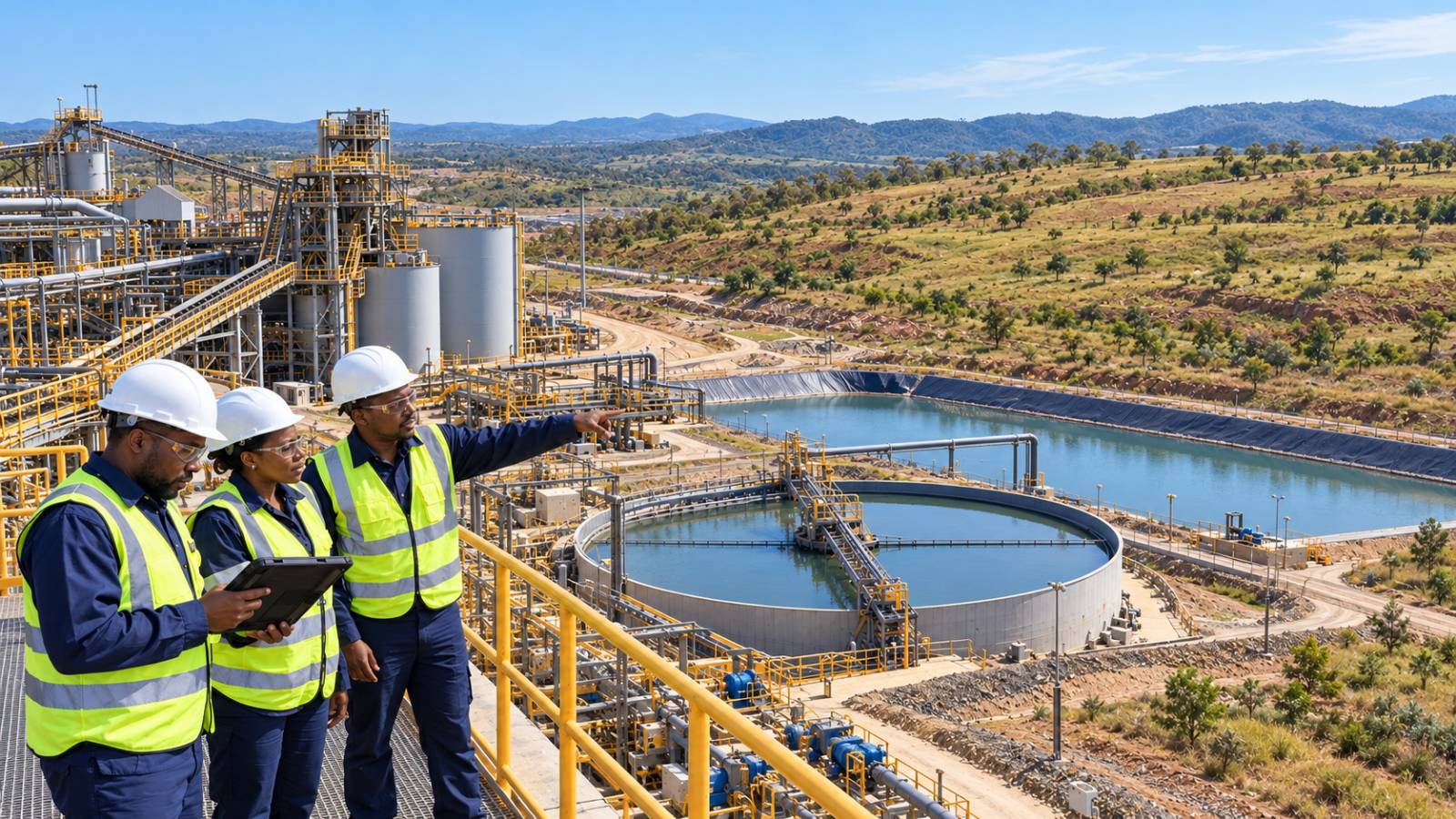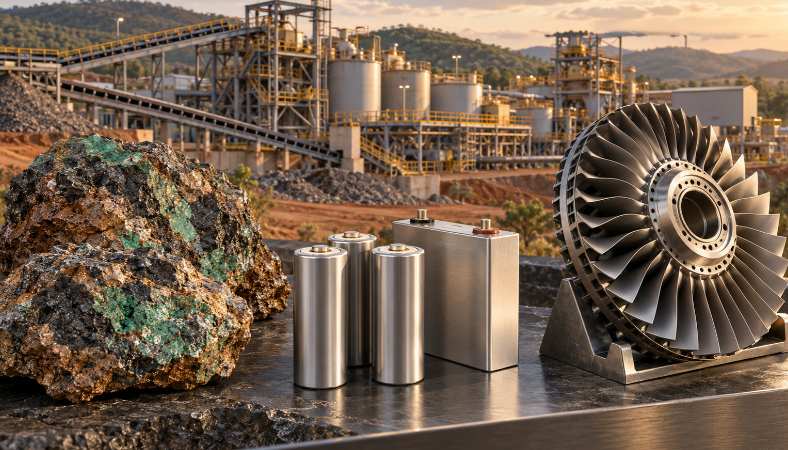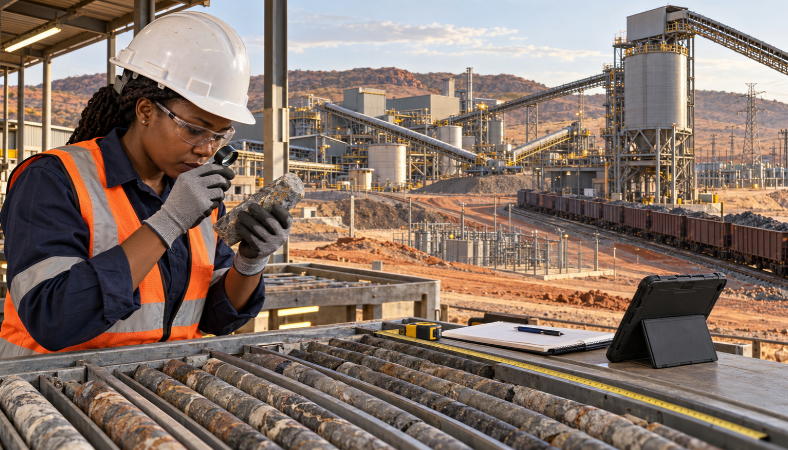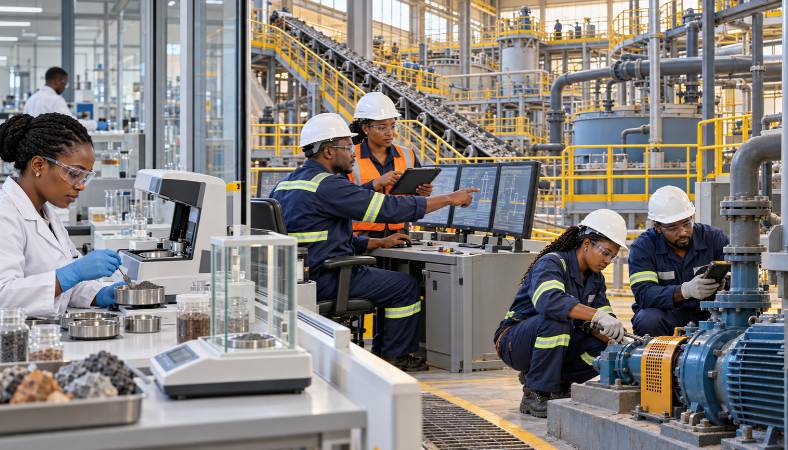
An affordable manganese beneficiation plant starts with understanding the ore, defining a saleable product and selecting equipment that can produce it consistently. For small and medium-sized mining enterprises in Africa, washing, screening and gravity separation may offer a practical starting point where testwork supports them. Modular construction can help stage investment, while recovery, infrastructure and delivery costs determine commercial viability.
Imagine an emerging miner comparing two plant quotations. The first offers a straightforward washing and jigging circuit. The second includes finer grinding, magnetic separation and additional automation, with the promise of a higher manganese grade. The better investment depends on how much saleable product each option delivers and what it costs to produce and sell it.
An affordable plant must do more than fit the purchase budget. It must fit the ore, the operating conditions and the customer's requirements.
Define the manganese product before buying equipment
Manganese beneficiation upgrades mined ore by separating manganese-bearing material from unwanted material, known as gangue. For the SME projects considered here, the objective is an upgraded ore product. Smelting alloys or producing purified manganese chemicals requires a different project scope.
Start by obtaining written specifications from prospective buyers. Confirm manganese content, acceptable iron levels, limits for silica and phosphorus, particle-size requirements and moisture limits. Establish the minimum shipment quantity, delivery point, sampling method and payment terms before committing to a processing plant.
Treat “export grade” as an incomplete description. A concentrate needs to satisfy the intended buyer's specification and commercial terms. A higher manganese assay offers limited commercial benefit if the product is too fine, contains unacceptable impurities or costs too much to deliver.
Match the processing plant to the ore
An assay measures manganese content, while mineralogy identifies the minerals carrying that manganese and their association with impurities. Two samples with similar manganese grades can require different processing approaches.
ALS's mineralogy guidance explains how mineral characterisation helps focus metallurgical testing. Its assessments include mineral abundance, grain size, and mineral locking and liberation, which describe how valuable minerals are attached to or separated from surrounding material.
For an SME manganese project, arrange representative sampling across the ore types expected during mining. Ask the laboratory to investigate whether washing removes low-value clay, whether gravity separation produces an acceptable product, and whether magnetic separation adds sufficient recovery or quality to justify its cost.
Request results for product grade, mass yield and manganese recovery. Mass yield is the proportion of feed mass reporting to the product. Manganese recovery is the proportion of the feed's manganese captured in that product. Both are needed to evaluate the proposed flowsheet, meaning the sequence of processing stages and material streams through the plant.
Test washing and scrubbing for clay-bearing ore
Washing and scrubbing deserve early investigation when manganese-bearing particles are mixed with removable clay. Scrubbing applies mechanical action to disperse clay agglomerates that water alone may not break apart.
ALS's scrubbing and beneficiation guidance describes rotary drum scrubbers and twin-shaft logwashers among the available options. The choice depends on feed characteristics and the amount of mechanical action required, rather than the mineral's name alone.
A washing plant should be judged by dry product mass and assay results. Cleaner-looking ore does not automatically represent better economics. Assay the removed fines as well as the washed product, because manganese lost into the fines stream may require further recovery or a separate sales route.
Consider gravity separation where density differences support it
Gravity separation can be a practical option when manganese minerals are sufficiently liberated and behave differently from the associated gangue. Jigs use pulsating water to separate material, with density central to the process, as described in allmineral's jigging equipment information.
A documented African example shows why testwork matters. A 2016 ERAMET research paper, in the context of its Gabon manganese operations, reported pilot jigging of approximately 35% Mn ore in the 1–10 mm fraction. The published abstract reported a marketable product and 53% mass recovery for the jigging stage, together with losses of manganese-bearing minerals to waste. Buyer-related particle-size constraints also limited further grinding.
The study supports evaluating jigging, while showing that improved product quality can involve valuable mineral losses. Its results should not be used as a performance forecast for another mine, and its mass-recovery figure should not be confused with manganese recovery.
Add magnetic separation when test results justify it
High-intensity or high-gradient magnetic separation may be useful for some weakly magnetic manganese minerals, including certain carbonate ores. Results depend on particle size, mineral associations and operating conditions.
A 2023 study of Qianbei manganese carbonate ore reported a concentrate containing 19.06% Mn at 76.85% recovery under one tested condition. Fine mineral distribution, complex associations and agglomeration complicated separation. This illustrates why the decision to install magnetic equipment does not establish the final product grade.
Require suppliers to demonstrate the proposed equipment's response to representative ore. Additional separation stages should earn their place through measurable improvements in saleable output or product value. The same principle applies to flotation or other complex processing: invest when the ore response and commercial model support it.
Use modular plant design to stage capital spending
Modular construction assembles processing equipment into transportable units, allowing developers to consider staged installation and expansion. This can be useful when a smaller initial operation can generate reliable operating data before further investment.
Multotec's account of its modular spiral plants, identified as appearing in Modern Mining in April 2021, describes skid-mounted systems intended to let smaller operators start at limited scale and expand as cash flow develops. Its African examples include chrome and copper applications. These illustrate the construction approach, rather than proving manganese performance or a particular saving for every project.
For manganese processing, first establish a buyer-accepted product and a tested flowsheet. Then commission the simplest complete circuit that meets the specification, including water recovery and waste handling. Expand after actual production, recovery, maintenance costs and sales support the additional commitment.
Check exactly what a supplier means by “plug and play”. The quotation should identify foundations, lifting requirements, electrical connections, drainage, installation labour and commissioning. Any claimed reduction in civil works or setup time needs to be supported by the site design and supply scope.
Calculate the full manganese plant setup cost
The purchase price of crushers, screens and separators is only part of the funding requirement. A credible budget also includes sampling, metallurgical testwork, engineering, freight, applicable import charges, foundations, installation and commissioning.
Allow for power supply, water storage, water recovery, access roads, product stockpiles and waste facilities. Include operator training, initial spare parts, maintenance tools and quality-control arrangements. Environmental studies, monitoring and rehabilitation obligations also belong in the project budget.
Working capital needs separate attention. Wages, fuel, repairs and transport may need to be funded well before the first customer payment arrives. Model that funding gap and retain an allowance for clearly identified uncertainties.
Without a specified location, capacity, flowsheet and supply scope, a universal manganese beneficiation plant price would be misleading. Obtain comparable quotations against the same feed conditions and product requirements, with exclusions recorded in writing.
Design power and water systems around the location
Where grid supply is unavailable or unreliable, compare the technically feasible power options before selecting the plant. For a generator-supported operation, obtain estimates for fuel consumption at the expected load, motor-starting requirements, servicing and fuel deliveries.
Water recovery should be designed using a site water balance. The IFC mining guidelines, published in December 2007, recommend minimising make-up water and considering process-water reuse, recycling and treatment. Recirculating water still requires allowance for losses through products, tailings and evaporation.
Have the plant designer establish dry-season water requirements, solids-removal arrangements and wet-season storage needs. A recycling circuit is a managed operating system with its own equipment and costs, and should be included from the start.
Understand why higher manganese grade can still cost more
Consider an illustrative plant processing 100 dry tonnes of ore containing 30% manganese. The feed contains 30 tonnes of manganese. If the plant recovers 80% of that manganese into a product grading 40% Mn, it produces 60 dry tonnes of concentrate containing 24 tonnes of manganese.
In this example, manganese recovery is 80%, while mass yield is 60%. The remaining 40 tonnes contain six tonnes of manganese, averaging 15% Mn. That residual value should be investigated before assuming the rejected material has no further use.
Now assume a processing cost of US$12 per dry tonne of feed. Processing the 100 tonnes costs US$1,200, equivalent to US$20 per dry tonne of concentrate. This excludes mining, transport and other costs, and the US$12 input is hypothetical rather than a market benchmark.
If manganese recovery falls to 60% while feed grade and concentrate grade remain unchanged, concentrate output falls to 45 tonnes. The same US$1,200 processing cost becomes US$26.67 per concentrate tonne, an increase of one-third despite the unchanged 40% product grade.
Grade, recovery and cost per saleable tonne must be evaluated together. A higher assay alone cannot establish profitability.
Select machinery that can be maintained locally
Standard equipment can simplify maintenance planning, but its value depends on whether suitable parts and technical support are available to the actual site. Verify stock locations and lead times for crusher wear parts, screen panels, pump components, motors, bearings and control equipment.
Ask who will commission the plant, train the operators and respond to breakdowns. Agree on acceptance criteria for throughput on the specified feed, product quality, manganese recovery, and water and energy consumption. A machinery catalogue's nominal capacity is not enough to establish the plant's likely commercial output.
Keep the circuit proportionate to the ore and the team's operating capabilities. Additional equipment should be supported by test results and a clear contribution to the project's economics.
Build the financing case around delivery and cash flow
Prepare the commercial model using payable dry tonnes and an achievable buyer quotation. Include mining or ore-purchase costs, processing, transport, handling, quality adjustments and applicable charges on a consistent basis. Account for overheads, sustaining expenditure, financing and taxes where relevant to the cash-flow assessment.
Compare plant ownership with realistic alternatives, including the sale of suitably prepared ore or compatible third-party processing where available. The proposed beneficiation plant needs to justify its additional capital and operating costs.
For funding discussions, assemble evidence of lawful ore access, credible feed availability, metallurgical results, buyer evaluation, a complete installation budget and practical infrastructure arrangements. Test the cash flow against weaker prices, lower recovery, downtime and delayed payment. Reducing upfront capital limits the initial commitment, but does not remove operating or market risk.
Check local permits and environmental requirements
Processing ore locally does not automatically satisfy every beneficiation policy or export rule. Requirements depend on the country, mineral, product and proposed activity, so the legal pathway should be established for the specific project.
In South Africa, the government's mining-right application guidance instructs applicants to apply for environmental authorisation at the same time. A modular plant does not replace those approvals. Have a local specialist confirm the requirements covering the mine or independent processing facility, water use, waste management, land access and proposed exports.
Physical separation can avoid some reagent requirements associated with chemical processing, but it still produces material requiring management. The IFC mining guidelines address water quality, tailings, dust and waste geochemistry. The absence of flotation reagents does not make a plant pollution-free or guarantee faster permitting.
Build a plant that fits the business
For SME manganese mining in Africa, affordable beneficiation begins with a tested process, a product buyers accept and enough funding to reach consistent production and payment. Modular equipment, simple circuits and staged expansion can support that plan when they suit the ore and the location.
The strongest purchasing decision connects the machinery quotation to demonstrated recovery, infrastructure costs, maintenance support and a viable sales route. Establish those connections before ordering equipment, then scale against operating evidence.
Planning a manganese processing project? Explore AFRINOMICS Plant & Equipment for machinery, plant and equipment opportunities, with your ore analysis, target capacity and product requirements ready.