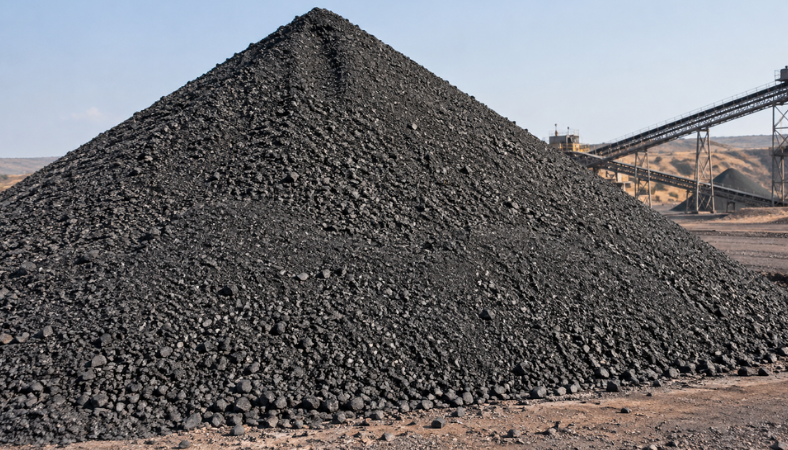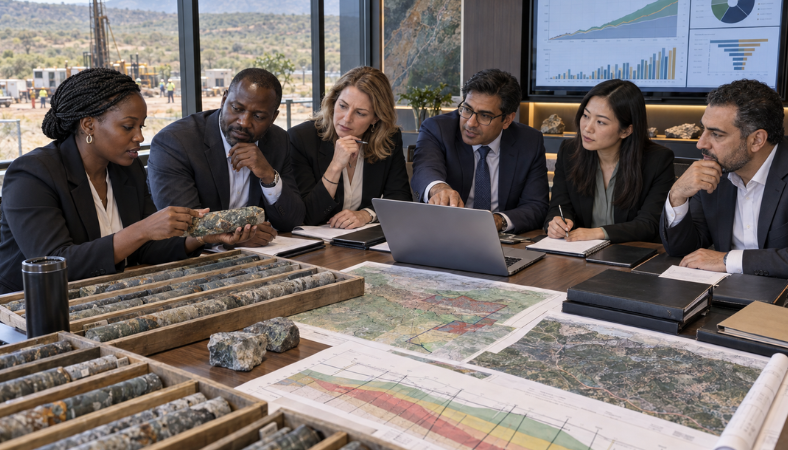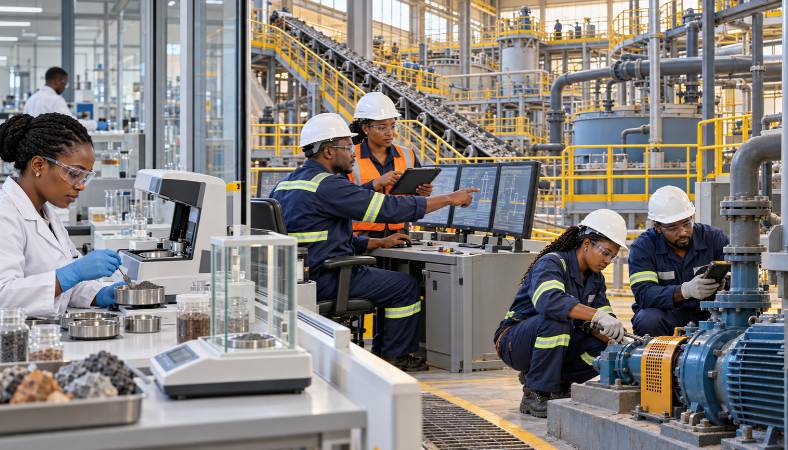
A mineral deposit can support more than the people who extract it. Processing that material locally can create work for plant operators, laboratory technicians, electricians, transporters and equipment suppliers. Turning the resulting products into cables, components or fabricated metal goods can extend the opportunity into manufacturing.
This is the employment potential of mineral beneficiation in Africa: building businesses and capabilities around the continent’s mineral resources. The African Union’s Africa Mining Vision places these connections at the centre of its development approach, linking mining with local industry, services and wider economic opportunity. African Union
Realising that potential takes more than installing machinery. Lasting jobs depend on commercially viable plants, skilled workers, reliable infrastructure and buyers for the products being made.
What mineral beneficiation means for African economies
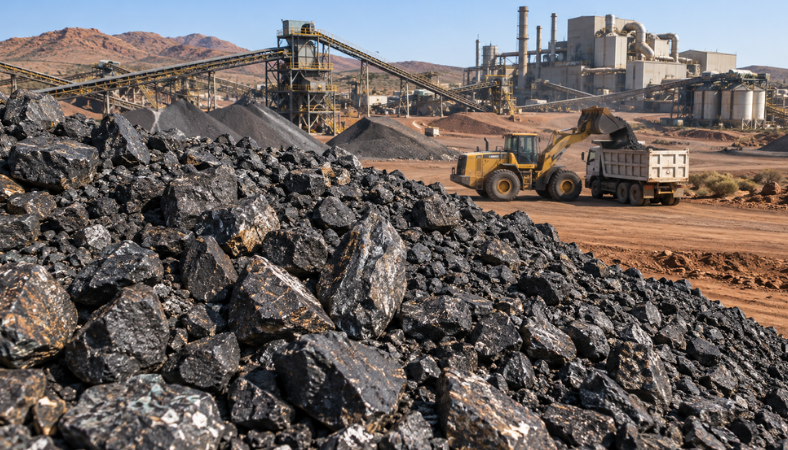
In its narrower technical sense, beneficiation upgrades mined material, for example by separating valuable minerals from unwanted rock. In industrial policy, the term is often used more broadly to cover further processing, smelting and refining. Manufacturing goods from the resulting metals and materials extends the chain into downstream industry.
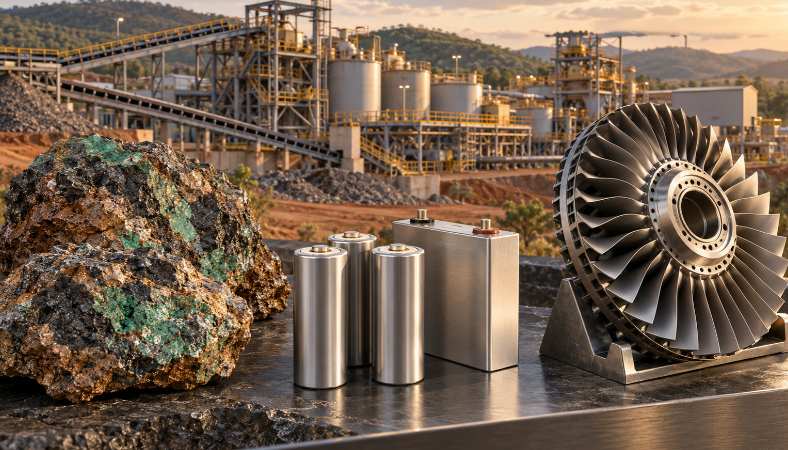
The stages differ by commodity. Chromite can be processed into concentrate and smelted into ferrochrome for steelmaking. Copper can progress from concentrate to refined metal and then to wire or cable. Lithium-bearing minerals require additional chemical conversion before they can supply battery-material production.
Each stage creates a different set of business requirements and possible occupations. The International Energy Agency identifies beneficiation, materials production and clean-energy manufacturing as distinct opportunities for African industrial development. IEA
Processing plants create jobs with different skills
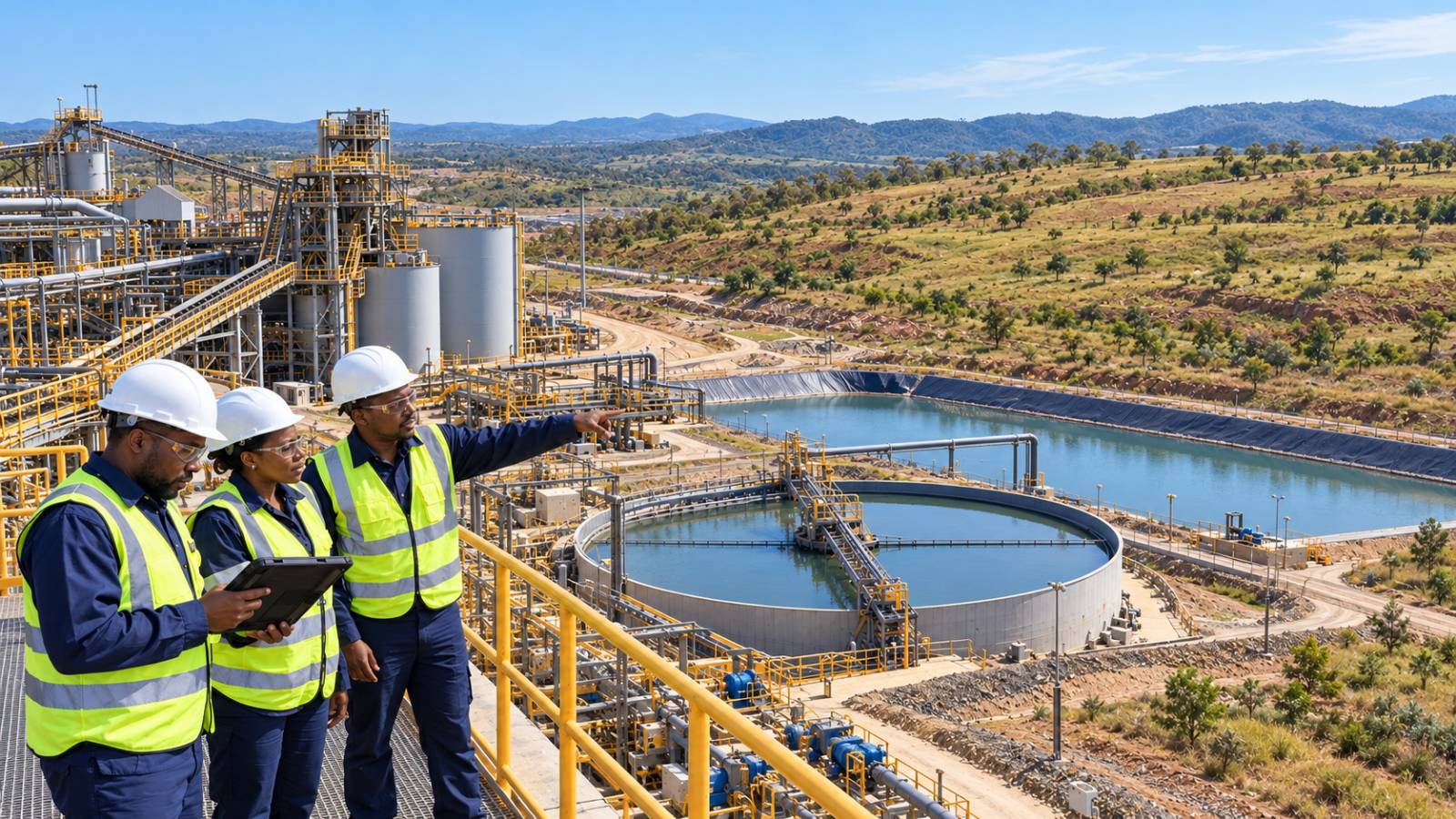
A processing project can generate employment before production begins. Site preparation, civil works, structural fabrication, electrical installation and equipment assembly can create contracts for construction and engineering businesses. Commissioning then requires teams to test equipment and bring the plant into operation.
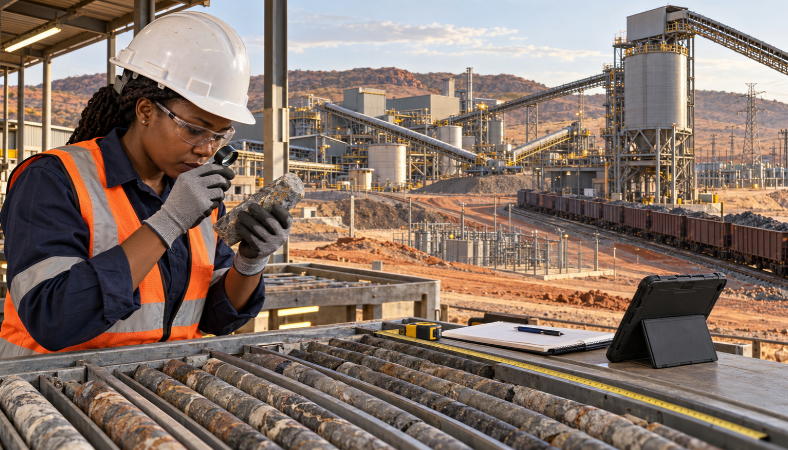
Once production starts, the staffing needs change. Depending on the process, operating roles can include plant attendants, control-room operators, metallurgists, chemical engineers, samplers, laboratory technicians and maintenance artisans. Water management, environmental monitoring and quality assurance also require competent personnel.
Construction employment should be reported separately from permanent operating jobs. A project may employ a large workforce while being built and a smaller team once commissioned. A useful employment assessment therefore considers the duration, skills and local recruitment potential of each role, alongside the total headcount.
Local suppliers can spread the employment benefits
A plant’s purchases create opportunities for businesses beyond its own payroll. Pumps need servicing, conveyors need replacement parts, electrical systems need maintenance and products need transport. Depending on the operation, local firms may also supply workwear, packaging, fabrication, catering and cleaning services.
These are often called backward linkages: the businesses supplying goods and services into mining and processing. Forward linkages connect processed materials to manufacturers, while related infrastructure and technical services can support other sectors. The UN Economic Commission for Africa identifies such connections as important routes for local entrepreneurs to benefit from mineral development. United Nations Economic Commission for Africa
For project owners, practical supplier development can include publishing procurement needs early, helping qualified SMEs meet technical standards and using contract sizes they can realistically deliver. Predictable payment terms also matter because a small supplier must finance materials and wages before receiving payment.
Manufacturing can extend jobs beyond the processing stage
Refined materials can support additional industries where costs, skills and market demand make production competitive. Copper offers a clear example. Wire drawing, cable manufacture and electrical-equipment production each require capabilities beyond mineral extraction, including machine operation, product testing, fabrication and industrial sales.
In its May 2026 discussion of mineral-led development, the World Bank highlighted opportunities for Zambia to build industries around copper, including wires, cables and transformers. It also identified domestic suppliers as an important channel for employment creation. These are opportunities to develop, rather than a guarantee that every proposed factory will succeed. blogs.worldbank.org
Similar opportunities can arise in metal fabrication, jewellery, industrial components and battery materials. The appropriate next step depends on the material being produced, customer specifications and the competitiveness of the local manufacturing operation.
Skills development turns investment into local careers
Processing facilities require people who can diagnose faults, control product quality and operate equipment safely. Training should therefore begin before commissioning and continue as the plant develops. Apprenticeships, technical-college partnerships and supervised workplace learning can help local workers qualify for increasingly specialised roles.
The employment strategy should also make these pathways accessible to women and young people. Entry-level recruitment becomes more valuable when workers can progress into skilled maintenance, laboratory work, supervision and technical management. The International Labour Organization’s Africa Skills Hub emphasises inclusive skills systems, employer engagement and lifelong learning. International Labour Organization
More advanced ambitions, including battery-component production, electronics testing or semiconductor design, require their own technical programmes and commercial partners. Mineral processing can contribute to a stronger industrial base, while those industries need additional capabilities in engineering, research, quality control and manufacturing.
How SMEs can participate in mineral beneficiation
SMEs can enter the value chain through processing, equipment services, logistics and specialised supply. For a small miner, the immediate opportunity may be to produce a consistent concentrate that meets a buyer’s specification. For an engineering business, it may be maintaining processing machinery or manufacturing replacement components.
Where metallurgical testing supports the approach, modular equipment can allow capacity to expand in stages. Shared facilities or toll processing, where a plant treats another producer’s material for a fee, may also offer access to equipment without each miner building a complete operation. These options require compatible feed material, available capacity, transparent sampling and clear commercial agreements.
The practical lesson is to match the investment to a proven processing need and an identifiable customer. Smaller equipment can reduce the initial funding requirement, but operating costs, maintenance, working capital and product quality still determine whether the business can sustain employment.
Beneficiation policies need workable implementation
Several African governments are encouraging domestic processing through mineral policies and export controls. Namibia’s restrictions announced in 2023 covered specified unprocessed critical minerals and were intended to encourage local beneficiation. The applicable requirements depend on the mineral and the product being exported. IEA
Zimbabwe’s 2026 lithium measures similarly linked the resumption of concentrate exports to quotas and commitments to establish domestic lithium sulphate processing. Reporting in September highlighted uncertainty over whether planned facilities could meet the January 2027 timetable. This illustrates the need to align policy ambitions with construction schedules, financing and available processing capacity. Reuters
Processing requirements vary across jurisdictions and commodities. They should not be presented as a continent-wide obligation to smelt every mineral or manufacture finished technology products. Effective implementation needs clear product definitions, realistic transition arrangements and infrastructure that allows compliant operations to compete.
Commercial viability determines whether jobs last
Beneficiation can raise a product’s selling value while also increasing its production costs. Power, reagents, water, maintenance, finance and transport all affect the economics. Higher export revenue alone does not demonstrate a profitable plant or a sustainable employment model.
Some processing activities are highly automated and capital intensive. Their wider employment contribution may depend substantially on local suppliers and the manufacturers using their output. World Bank analysis of African industrialisation stresses the importance of connecting large producers with domestic firms, improving productivity and developing skills around industrial activity. blogs.worldbank.org
For developers seeking investment, a credible proposal should explain the feed supply, processing route, expected recovery, product specification and route to market. It should also account for commissioning, working capital and the effect of changes in power costs or commodity prices. Demonstrating these fundamentals strengthens the case for both investment and durable jobs.
Environmental performance belongs in the same operating plan. Water management, emissions control, safe waste handling and rehabilitation require funding and expertise throughout the project’s life. OECD guidance identifies environmental due diligence across mineral supply chains as a continuing responsibility, including impacts that can persist after operations cease. OECD
Regional cooperation can support larger markets
Mineral-based industries can develop across borders. A resource-producing area may connect with processing capacity, equipment suppliers and manufacturing customers in neighbouring economies. Reliable transport, electricity links and compatible product standards can make those relationships more practical.
This regional approach is consistent with the Africa Mining Vision’s emphasis on integrating mining into industrial and trade policy. It gives countries a way to build on complementary strengths while helping local firms reach a larger customer base. African Union
Measuring success beyond tonnes exported
The employment impact of mineral beneficiation in Africa should be measured through sustained operating jobs, local supplier contracts, wages, training outcomes and commercially successful manufacturing. Temporary construction work remains valuable, but it is one part of the development picture.
For policymakers, miners and entrepreneurs, the goal is to connect mineral resources with productive businesses that can keep operating and keep hiring. That means selecting viable processing opportunities, developing local skills and giving capable African suppliers a practical route into the market.
Explore machinery, processing plants and commissioning opportunities through AFRINOMICS Plant & Equipment.