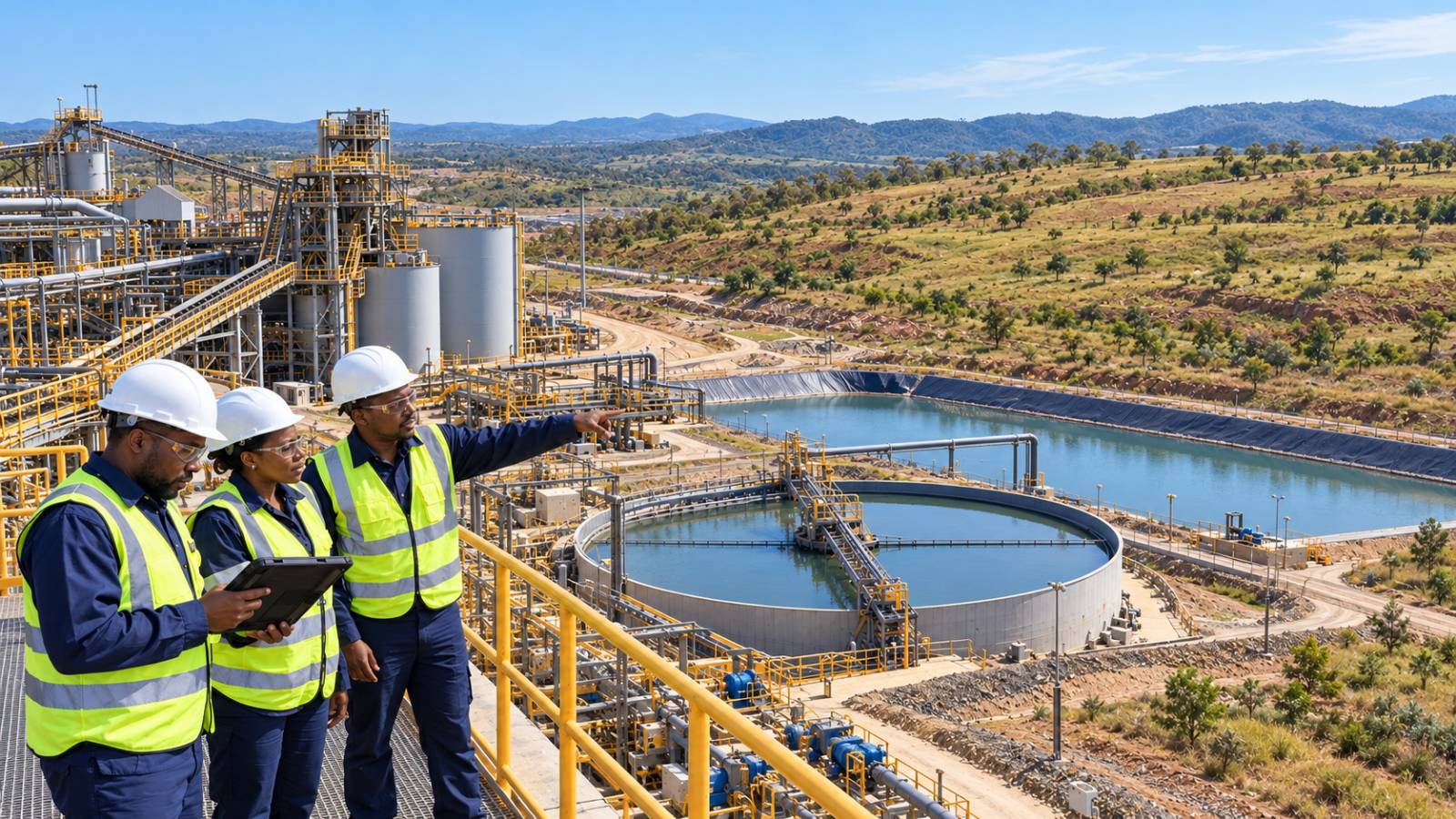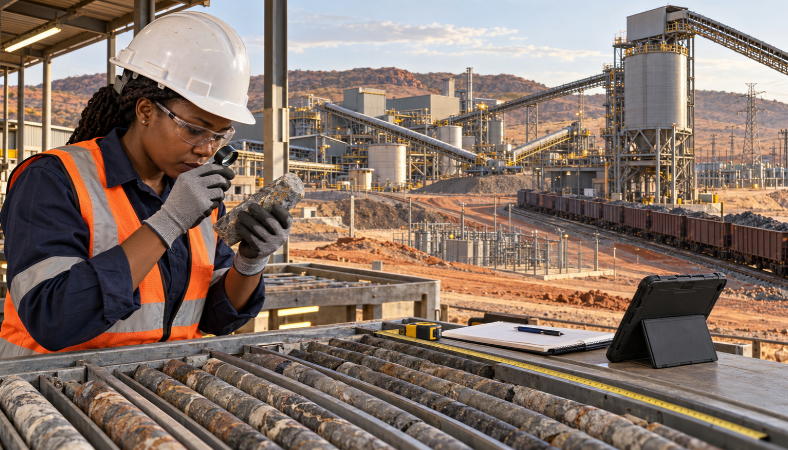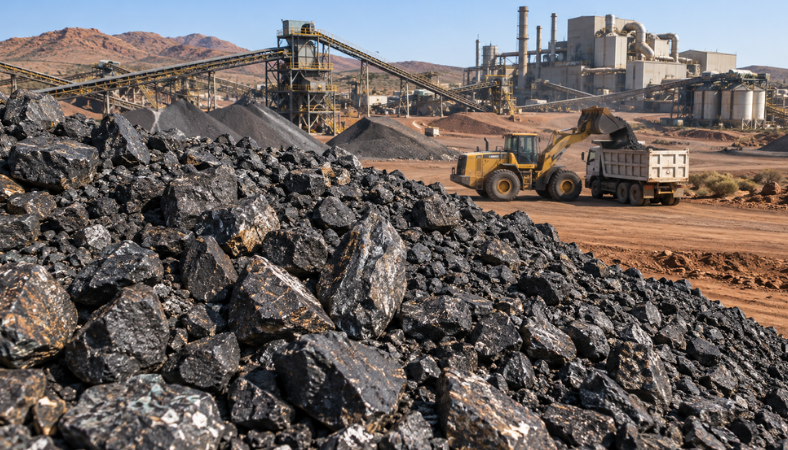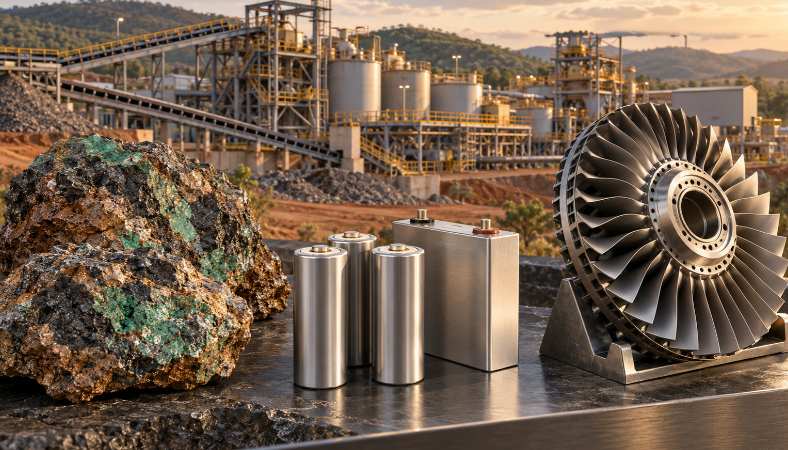
Cobalt connects African mining to rechargeable batteries, aircraft engines and advanced manufacturing. The Democratic Republic of the Congo dominates its mined supply, giving the country considerable strategic importance. Yet cobalt’s value requires a qualification: it is essential to several established technologies, while widely used alternatives already eliminate it from some batteries. Africa’s opportunity depends on understanding both that continuing demand and the technologies changing it.
A smartphone battery and an aircraft turbine appear to belong to different industrial worlds. One stores electrical energy in a small space. The other operates under demanding mechanical and thermal conditions. Cobalt contributes to materials used in both, illustrating why its importance extends beyond the electric vehicle market.
For African producers, the commercial question reaches further than how much cobalt can be mined. It concerns which products can be made from that cobalt, who can manufacture them competitively and how much economic value remains in the producing country.
Why Cobalt Matters to Modern Technology
Cobalt is a metallic element extracted from cobalt-bearing minerals. In several rechargeable battery chemistries, it forms part of the cathode material, the positive electrode during discharge. Its contribution to the material’s electrochemical properties helps manufacturers achieve useful combinations of energy density and performance. Reducing its content can require changes to the cathode’s composition and structure.
Cobalt-containing cathodes include lithium cobalt oxide and nickel-based combinations incorporating cobalt. These materials serve different markets, including portable electronics and electric vehicles. However, cobalt alone does not make a battery safe. Safety and durability depend on the complete cell chemistry, manufacturing quality, thermal management and operating conditions.
Outside batteries, cobalt is used in high-performance alloys, including superalloys for turbine engines. Its role in demanding industrial applications gives it a market beyond vehicle electrification and renewable energy storage.
Does Every Electric Vehicle Need Cobalt?
No. Lithium iron phosphate, commonly called LFP, is a commercially established lithium-ion battery chemistry that does not require cobalt in its cathode. Its expansion is a major reason claims that all electric vehicles depend on cobalt are inaccurate.
In 2024, LFP accounted for nearly half of the global electric vehicle battery market, measured by battery capacity installed in vehicles sold. This demonstrates that cobalt substitution is already occurring at substantial scale. Nickel-based batteries retain advantages for certain applications, but manufacturers can choose between chemistries with different costs and performance characteristics.
The same distinction matters when evaluating energy storage and digital infrastructure. An investment case should identify the actual equipment and battery chemistry involved. Growth in artificial intelligence, renewable energy or vehicle sales cannot simply be converted into a fixed increase in cobalt demand.
The 2026 global critical minerals outlook recognises this technological shift: the expansion of LFP has moderated longer-term cobalt demand expectations. Cobalt remains strategically important, but future consumption depends partly on which technologies gain market share.
Why the Democratic Republic of the Congo Matters So Much
Published market estimates place the Democratic Republic of the Congo’s share of global mined cobalt at approximately 73% in 2025. Indonesia ranked second at around 14%. These figures describe annual mined supply, rather than ownership of global reserves or the volume available for immediate export.
This concentration creates exposure to developments within a single producing country. Changes in export permissions, transport availability, operating conditions or investment policy can affect buyers far beyond Central Africa. Diversifying supply requires commercially viable projects, processing capacity and time.
Africa’s cobalt industry nevertheless extends beyond the DRC. Zambia produces cobalt alongside its much larger copper industry. Madagascar also produces cobalt, while Morocco has both cobalt mining and refining activity. Their smaller scale does not remove their commercial relevance, particularly for buyers seeking additional sourcing options.
The DRC’s dominance is therefore substantial without being an absolute monopoly. That distinction matters when assessing both its negotiating position and the competitive response of other producing nations.
The Copper–Cobalt Connection
Much of the world’s cobalt is recovered as a byproduct of copper or nickel production. The Central African Copperbelt is particularly important because of its copper–cobalt deposits, while other producing regions obtain cobalt from different geological systems.
For the DRC and Zambia, this creates a connection between two major industrial supply chains. Copper serves electrical applications, while recovered cobalt can enter battery materials and other specialised products. However, individual deposits vary: a copper project should not be assumed to contain commercially recoverable cobalt.
The byproduct relationship also complicates investment decisions. A project’s cobalt output may depend on the economics of the principal metal, the mine plan and the ability of the processing circuit to recover cobalt efficiently.
For investors, the implication is that a cobalt price forecast is insufficient on its own. A copper–cobalt opportunity needs a combined assessment of both metals, including grades, recovery, operating costs and saleable products. Where cobalt recovery requires additional equipment or chemical treatment, that expenditure must be justified by the expected incremental revenue.
Africa Already Processes Cobalt, but the Industrial Gap Remains
The common claim that the DRC simply exports its cobalt as raw rock overlooks existing processing activity. Its industrial operations produce substantial quantities of cobalt in hydroxide and other intermediate forms. These products represent processing beyond extraction, although they are not equivalent to finished battery materials.
This distinction changes the industrial challenge. The next opportunity may involve improving recovery, removing additional impurities, producing a specified chemical product or supplying qualified material to a cathode manufacturer.
Cobalt hydroxide, cobalt sulphate, refined cobalt metal and a finished battery cell are different commercial products. Each has its own specifications, customers and production requirements. Moving between these stages requires technical capability and a viable market.
It is therefore misleading to describe all value addition as “smelting”. A proposed battery-material project needs a processing route designed for its feedstock and intended product. Purchasing a furnace does not establish the ability to supply battery-grade cobalt chemicals.
Mining Dominance Does Not Equal Refining Dominance
China accounted for an estimated 79% of global refined cobalt production in 2025, according to the same published market assessment. The contrast with the DRC’s mining position reveals two separate points of concentration within the supply chain.
A buyer can diversify the origin of mined material while remaining dependent on a narrow group of refining locations. Conversely, building a refinery in another country does not eliminate dependence on imported feedstock.
This is why mineral security involves more than access to deposits. It also concerns processing equipment, chemical inputs, operating expertise, product qualification and dependable transport. The 2026 critical minerals assessment identifies technology, equipment and accumulated industrial knowledge as important constraints on supply-chain diversification.
For African economies, downstream development could retain more industrial activity and create specialised employment. However, the selling price of a refined product should not be confused with the profit available to its producer. Refining adds costs, financing requirements and operational risks as well as value.
Export Controls Show the Power—and Limits—of Concentrated Supply
The DRC replaced its 2025 cobalt export suspension with a quota-based system effective from 16 October 2025. The framework established limits on outbound volumes and provided for subsequent adjustments. This demonstrated the country’s ability to influence the availability of cobalt in international markets through export policy.
The 2026 global critical minerals outlook identifies the DRC’s export restrictions as a significant factor reshaping the cobalt supply outlook. This illustrates an important distinction: material may exist in the ground, at a mine or in inventory without being available for a buyer’s required delivery date.
For traders, legal export availability must therefore be assessed separately from production capability. A supplier may have material but lack the permissions or allocation required to ship it.
For policymakers, restricting exports presents a commercial balancing act. Greater control can strengthen negotiating power, but industrial development still requires viable projects and customers. A policy that changes product availability does not, by itself, create the technical and financial conditions for competitive domestic manufacturing.
Why Railways and Ports Feature in Mineral Diplomacy
The competition to secure mineral supply extends into infrastructure. The Lobito Corridor is an example, linking the industrial ambitions of the DRC and Zambia with Atlantic access through Angola. Its development programme includes rail improvements, a planned Zambia–Angola connection, trade facilitation and support for economic activity along the route.
European and United States participation reflects the corridor’s importance to regional trade and international supply chains. Official descriptions also identify agriculture, energy, skills and local enterprise among the intended beneficiaries. It should therefore not be reduced to an assumed exchange of infrastructure for ownership of mineral reserves.
For mineral businesses, the practical questions concern available capacity, tariffs, border procedures, reliability and delivery times. Announced infrastructure should be distinguished from operating services that a project can contract today.
The development test is equally practical: whether improved connectivity supports processing and local businesses as well as outbound mineral shipments.
Building Battery Materials Requires More Than Mineral Access
A cobalt deposit can provide an advantage to a nearby processing project, but proximity alone cannot establish competitiveness. A proposed facility must demonstrate that it can obtain suitable feedstock, operate reliably and consistently meet customer specifications.
For a cobalt chemical plant, investors should investigate the required purification process, recovery losses, power and water supply, chemical consumption, waste treatment and laboratory capability. The customer qualification process also needs attention: producing material is different from obtaining approval to supply it into a demanding manufacturing chain.
These requirements help explain why moving directly from mining to complete battery manufacturing can be difficult. Chemical refining, precursor production, cathode manufacture, cell production and battery-pack assembly are distinct businesses.
An appropriate strategy may focus first on a commercially justified intermediate step. The relevant question is which stage can operate competitively, attract dependable demand and build capabilities that support later expansion.
The DRC–Zambia Battery Partnership
The DRC and Zambia have pursued a joint programme to develop a regional battery and electric vehicle value chain. A framework agreement for associated special economic zones was signed in March 2023, and a technical review of the transboundary project’s prefeasibility work took place in April 2024.
The initiative has also included work to prepare smaller businesses and financial institutions for participation. A September 2025 workshop addressed enterprise capabilities and financing opportunities, while a February 2026 publication continued to describe the DRC’s ambitions for battery manufacturing and industrial zones.
These developments establish an industrial programme. They do not establish that every proposed facility has been financed, constructed or commissioned.
For potential investors, the next assessment should concern a specific project: its site, permits, engineering, funding, utility connections and customers. Regional cooperation can improve the setting for investment, but each facility still needs a workable commercial model.
What Mineral Buyers and Investors Should Check
A cobalt transaction begins with identifying exactly what is being offered. Product form, cobalt content, moisture, impurities, assay procedures and delivery terms all influence value. A tonne of cobalt-bearing material is not a tonne of contained cobalt, and contained cobalt is not necessarily the quantity for which a buyer pays.
Consider a purely illustrative shipment of 1,000 dry metric tonnes of an intermediate product grading 30% cobalt. It contains 300 tonnes of cobalt. If a hypothetical contract credits 90% of that contained metal, the payable quantity is 270 tonnes before applying the agreed price and other contractual adjustments. These assumptions illustrate the calculation; they are not quoted market terms.
A mine investment requires additional evidence. Resource estimates, recoverability, operating costs, title, liabilities and expansion requirements determine whether an attractive geological story can become a profitable operation. The model should also test weaker prices and changes in battery demand.
For a processing investment, the central issue is the margin between the cost of obtaining and converting feedstock and the achievable revenue from qualified output. Forecasts should allow for commissioning delays, rejected material, working capital and periods when the facility operates below its intended capacity.
Responsible Sourcing Is Part of Commercial Quality
Cobalt sourcing requires attention to labour conditions, human rights, corruption and environmental performance. Due-diligence research on the DRC has also identified connections between industrial and artisanal supply chains, challenging the assumption that the two can always be treated as entirely separate.
Buyers should assess the actual supply chain and the effectiveness of its controls. Documentation, traceability, site-level evidence and appropriate responses to identified problems matter more than broad assurances about a product’s origin.
For producers seeking durable commercial relationships, credible sourcing practices should be treated as part of the product offering alongside quality, delivery and price.
Africa’s Opportunity Is to Build Around Its Mineral Strength
Cobalt gives the DRC a significant position in global industry, while Zambia and other African producers contribute to a wider regional opportunity. Turning that position into lasting economic gains requires reliable infrastructure, competitive processing, technical skills and customers willing to purchase the resulting products.
Technological change makes this work more urgent and more selective. Cobalt-free batteries are expanding, while established cobalt applications continue to require dependable supply. A successful industrial strategy must respond to both realities.
For businesses exploring cobalt sourcing and mineral trade, AFRINOMICS’ Minerals Exchange offers a starting point for reviewing mineral supply opportunities and buyer requirements. A clearly defined product, verified documentation and workable delivery terms provide the foundation for a credible transaction.