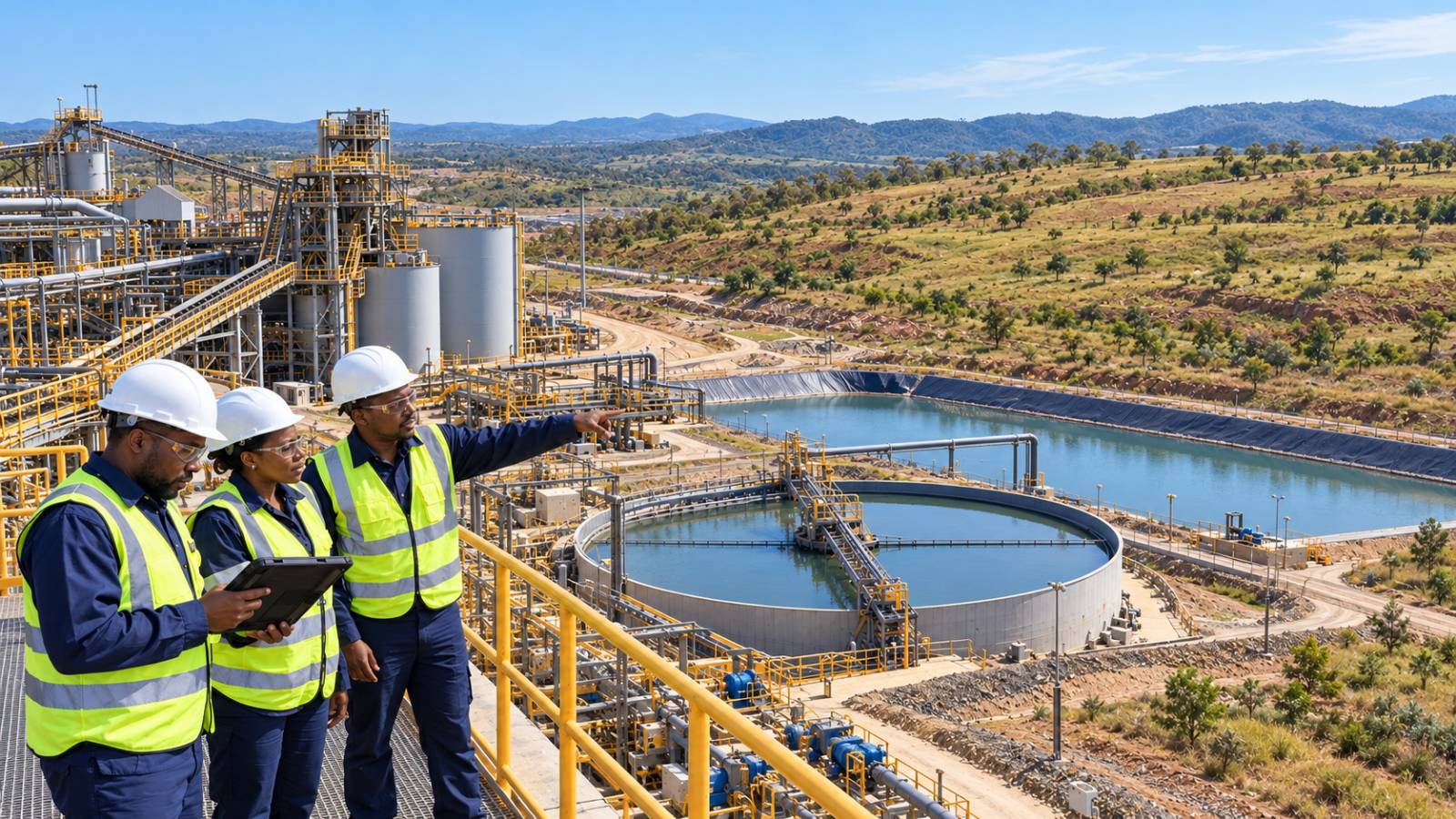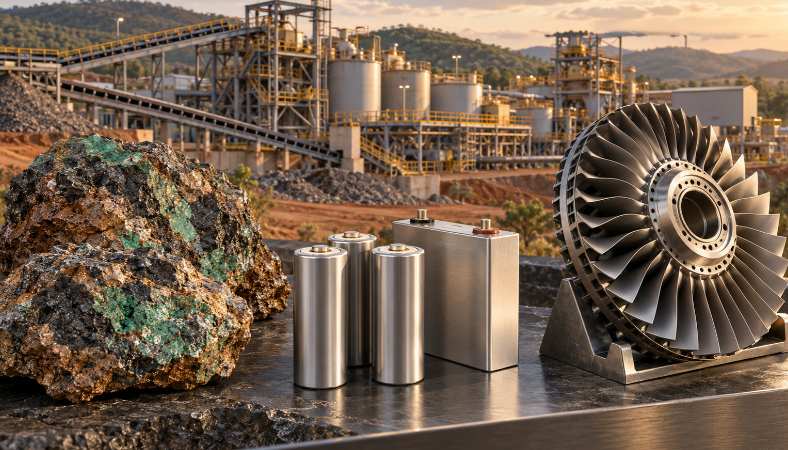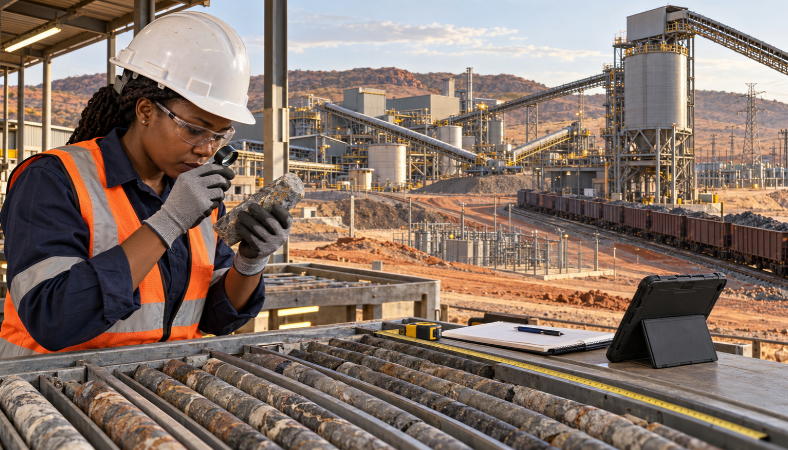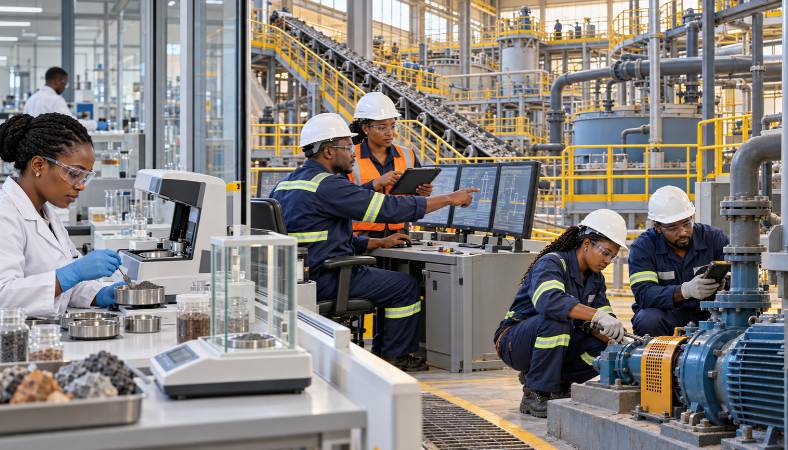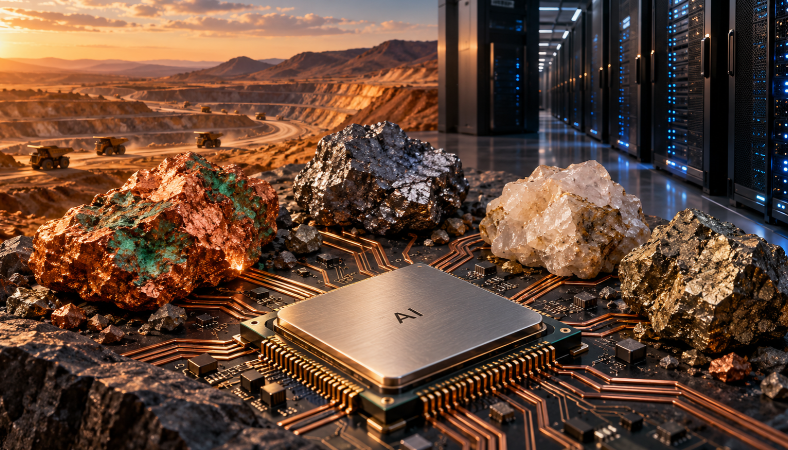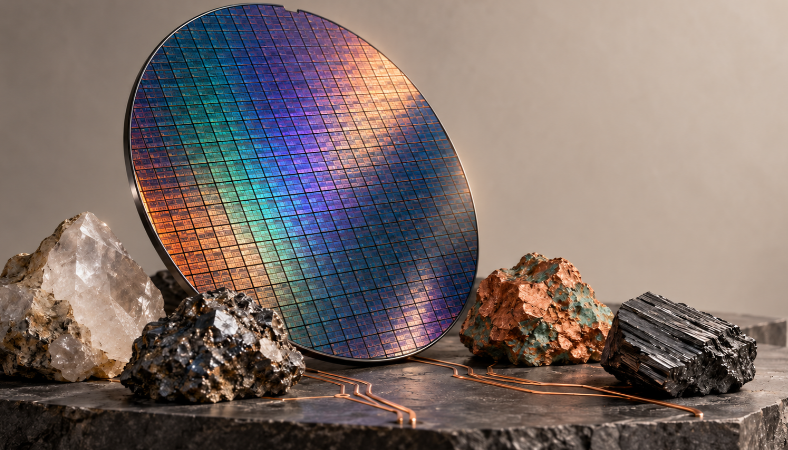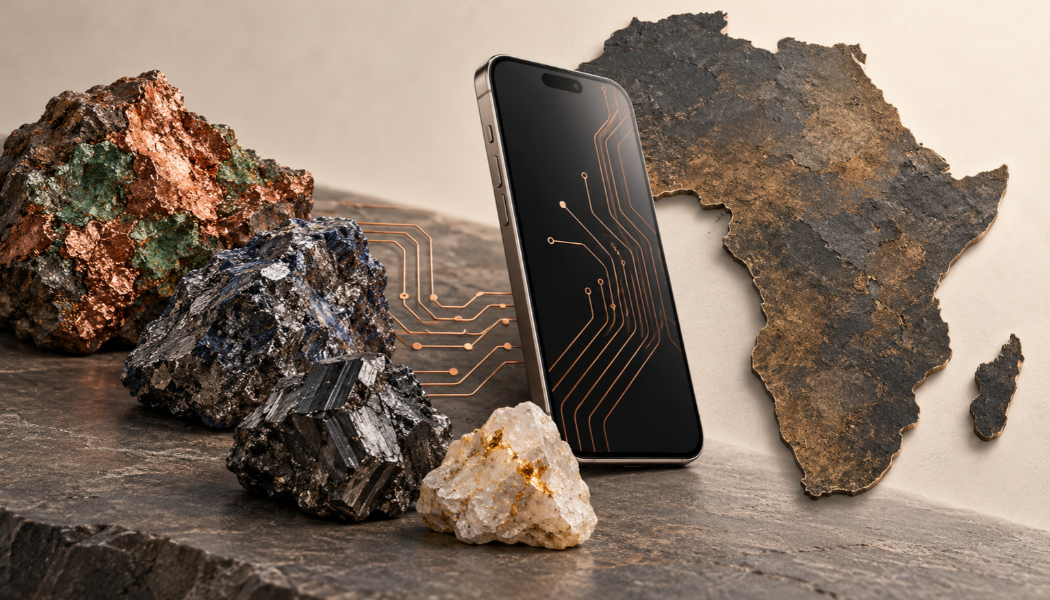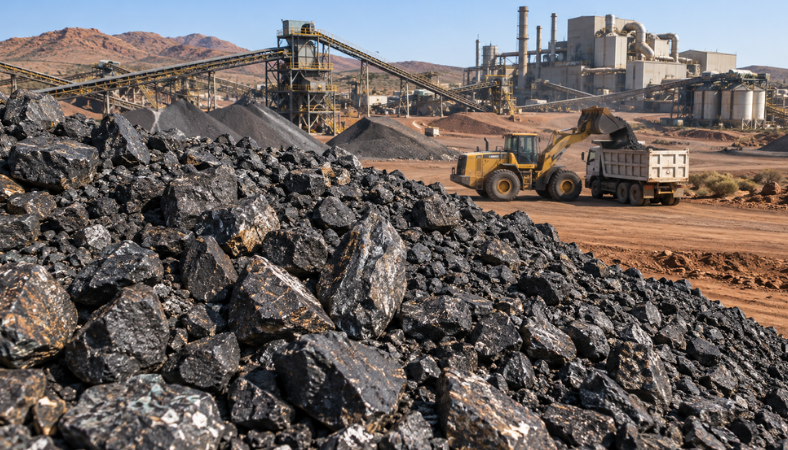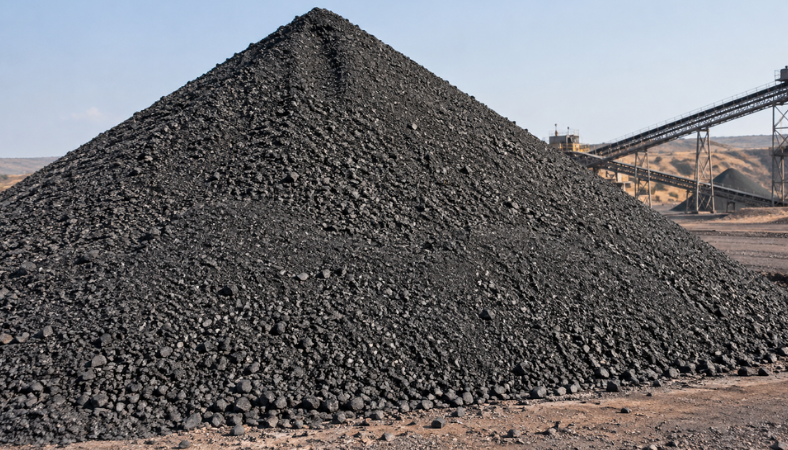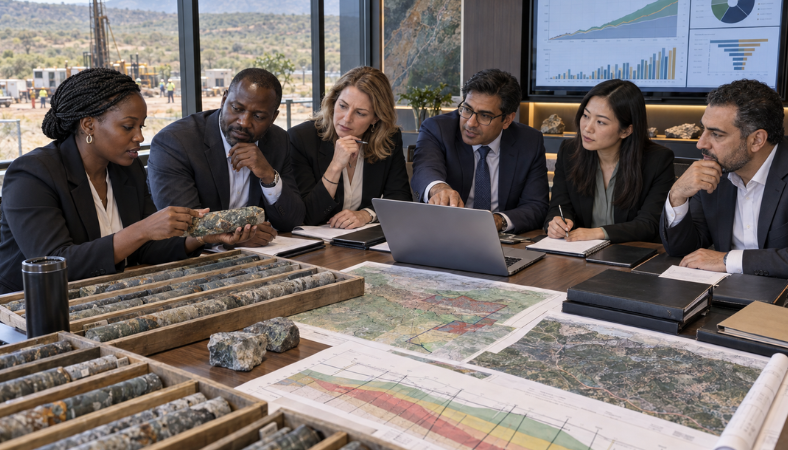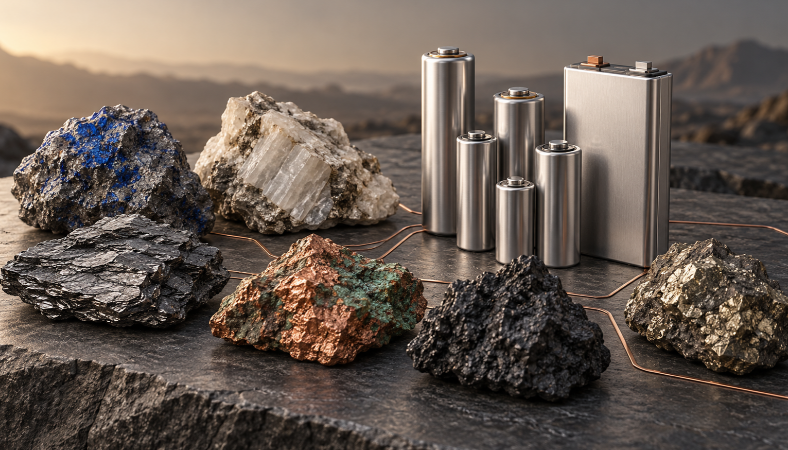
Africa’s battery mineral opportunity extends from copper and cobalt in the Democratic Republic of the Congo to lithium in Zimbabwe and graphite in Mozambique, Madagascar and Tanzania. These resources connect the continent’s mining industry to electric vehicles, rechargeable electronics and renewable energy storage. Their commercial importance reaches beyond the mine gate: manufacturers need reliable supplies of precisely processed materials.
For African economies, the challenge is to turn mineral production into a broader industrial base. Concentration plants, chemical refineries, testing laboratories and manufacturing facilities can each capture additional value. The International Energy Agency identifies mineral beneficiation as a major opportunity for the continent, provided countries can overcome infrastructure, technology and financing constraints. Source: African mineral value chains.
Which African minerals are used in batteries?
Critical battery minerals in Africa include lithium, cobalt, graphite, manganese and nickel. Copper supports both battery construction and the electrical infrastructure around it. Their roles vary by battery design, making chemistry an essential part of any assessment of mineral demand.
Nickel-manganese-cobalt batteries, commonly called NMC batteries, use those metals in their cathodes. Lithium iron phosphate, or LFP, batteries use a different cathode chemistry without nickel or cobalt. Both belong to the lithium-ion family and commonly use graphite-based anodes. The growth of LFP therefore changes the balance of demand across minerals; it does not remove the need for mineral extraction and processing. Source: Battery chemistries and supply chains.
Cobalt and copper: The DRC and Zambia’s strategic role
The Democratic Republic of the Congo remains central to global cobalt supply. The U.S. Geological Survey estimates that it accounted for approximately 75% of world cobalt mine production in 2024. This is a measure of annual output, distinct from the country’s share of mineral reserves. Cobalt is used in several lithium-ion cathode formulations, although manufacturers are also developing and deploying chemistries that reduce or eliminate its use. Sources: DRC mineral production and cobalt in battery cathodes.
The Central African Copperbelt, spanning southern DRC and northern Zambia, also gives the region a major role in electrification. Copper carries current through battery components, vehicle wiring, charging equipment and power networks. Its market consequently extends well beyond any single battery chemistry. Sources: Copperbelt geology and critical mineral applications.
The DRC already produces refined copper and processed cobalt intermediates. Its next industrial opportunities build on this existing activity, including further chemical conversion and production to demanding customer specifications. Describing the country solely as an exporter of untreated ore overlooks processing already taking place. Source: DRC mining and processing.
Lithium: Zimbabwe and a wider African resource base
Zimbabwe is an established African lithium production hub. Its output expanded substantially during 2023 and 2024 as mines and processing facilities entered operation or increased production. Lithium-bearing minerals such as spodumene and petalite underpin this industry, with concentrates providing feedstock for further processing. Source: Zimbabwe lithium production.
Lithium-bearing pegmatite deposits are also documented in Mali, Namibia, Ghana and the DRC. However, geological resources, economically recoverable reserves and operating mine output describe different things. The presence of a large deposit does not establish that a country can deliver commercial volumes today. Source: Lithium pegmatite resource dataset.
For the battery supply chain, mineral concentration is an intermediate step. Lithium concentrates require further chemical processing to produce compounds such as battery-grade lithium carbonate or lithium hydroxide. This creates opportunities for African processing investment, while adding requirements for chemical expertise, dependable utilities and consistent product quality. Source: Lithium processing and supply.
Graphite: Connecting African mines to battery anodes
Mozambique, Madagascar and Tanzania are established African natural graphite producers. Each appears in the USGS production record for 2024, placing East and Southern Africa within an important alternative supply base for this battery material. Sources: Mozambique, Madagascar and Tanzania.
Graphite concentrate is not a finished anode material. Natural graphite typically undergoes particle sizing and shaping, purification and coating before it can meet battery specifications. These stages influence performance, processing costs and the amount of saleable material recovered. Ore quality matters, but so does the ability to demonstrate a repeatable manufacturing process. Source: Natural graphite processing research.
African producers also compete with synthetic graphite. Mozambique’s 2024 production difficulties, which included operating interruptions and competition from synthetic material, show why a strong resource base does not guarantee uninterrupted output or commercial success. Source: Mozambique graphite industry.
Manganese and nickel: Established producers and future supply
South Africa was the world’s leading manganese producer in 2024. Gabon and Ghana were also major producers, while Côte d’Ivoire contributed a smaller share of global output. These are existing mining industries with potential relevance to battery supply chains, rather than an entirely new group of emerging producers. Sources: South Africa, Gabon, Ghana and Côte d’Ivoire.
Much of the manganese industry serves steelmaking. Supplying batteries requires additional processing into high-purity products, including manganese sulphate for relevant cathode chemistries. Africa’s manganese advantage therefore creates a processing opportunity, but ore production alone does not establish battery-material manufacturing capacity. Sources: Manganese uses and battery-grade manganese supply.
Madagascar and South Africa have documented nickel mining and refining activity. Tanzania also hosts significant development potential, including the Kabanga nickel project, which remained in development in its July 2026 reporting. Planned production should therefore be distinguished from available supply. The suitability of nickel products for batteries depends on subsequent refining and chemical conversion. Sources: Madagascar nickel production, South African nickel processing and July 2026 project disclosure.
Moving from mineral extraction to battery-grade processing
Africa’s value chain challenge is to expand the range and depth of processing already under way. The continent has mines, concentrators, smelters and refineries, but its opportunities in battery chemicals and active materials remain unevenly developed. The IEA identifies spherical graphite, high-purity manganese sulphate and further copper and cobalt processing among potential areas for growth. Source: African beneficiation opportunities.
A concentrate plant, chemical refinery and battery cell factory have different technical and commercial requirements. Moving between these stages requires appropriate equipment, skilled workers, process knowledge and customers willing to qualify the output. Reliable electricity, water and reagent supply are equally important. The IEA’s 2026 assessment highlights these capability gaps as major obstacles to diversifying mineral processing. Source: Processing capacity and supply diversification.
For project developers, this points towards a practical approach: define the intended product and customer specification before selecting the processing route. A plant’s value depends on its ability to deliver consistent, accepted material at a competitive cost.
Export policies are encouraging local beneficiation
Zimbabwe’s lithium policy illustrates the push for more domestic processing. Following an export suspension in February 2026, conditions reported in April linked the resumption of concentrate shipments to quotas and commitments to establish local lithium sulphate plants. Reporting in September highlighted uncertainty over whether planned facilities could meet the January 2027 timetable. These developments should be understood as an evolving policy framework. Sources: April 2026 export conditions and September 2026 processing update.
Namibia’s restrictions announced in 2023 on specified unprocessed critical minerals similarly sought to encourage domestic beneficiation. Such measures can influence where processing investment occurs, but they do not by themselves establish battery-grade production or cell manufacturing. Commercial plans need to reflect the applicable mineral, product category and current export permissions. Source: Namibia beneficiation policy record.
Jobs, communities and environmental responsibilities
Expanded battery mineral production can support employment, local procurement, public revenue and infrastructure. More processing can also create demand for laboratory technicians, metallurgists, maintenance specialists and chemical engineers. Realising these benefits requires investment in skills and supplier development alongside physical plant. The IEA identifies local value creation and employment as important potential gains from African industrial development. Source: African industrial opportunities.
Environmental impacts require attention throughout a project’s life. Mining and processing can affect water availability, water quality, land and biodiversity, while tailings and waste facilities can require monitoring long after extraction ends. Water recycling, effective waste management, rehabilitation planning and meaningful community engagement should therefore be built into project design and operating budgets. Source: Environmental due diligence in mineral supply chains.
Where artisanal and small-scale mining is present, responsible sourcing also needs to account for livelihoods. Formalisation, safer working conditions and access to legitimate markets can support improvements. Treating all small-scale production as inherently unacceptable can undermine those goals. Source: Responsible artisanal and small-scale mining.
Africa’s next battery mineral opportunity
International partnerships reflect the strategic importance of these resources. The European Union has established raw-material partnerships with African countries including Namibia, the DRC and Zambia. Their commercial impact will depend on the delivery of processing capacity, infrastructure, skills and investment, rather than the signing of agreements alone. Source: International raw-material partnerships.
Recycling will increasingly complement mining, but the available supply of used batteries limits how quickly recovered materials can meet growing demand. Many recently deployed electric vehicle and storage batteries will remain in service for years. Primary extraction, more efficient processing and recycling will therefore all shape future supply. Source: Battery recycling outlook.
For Africa, the strongest industrial opportunity lies in connecting mineral resources with dependable processing, transparent sourcing and lasting local capabilities. Success will be measured in the quality of products delivered, the competitiveness of operations and the benefits retained in producing economies.
Explore African mineral opportunities through the AFRINOMICS Minerals Exchange.