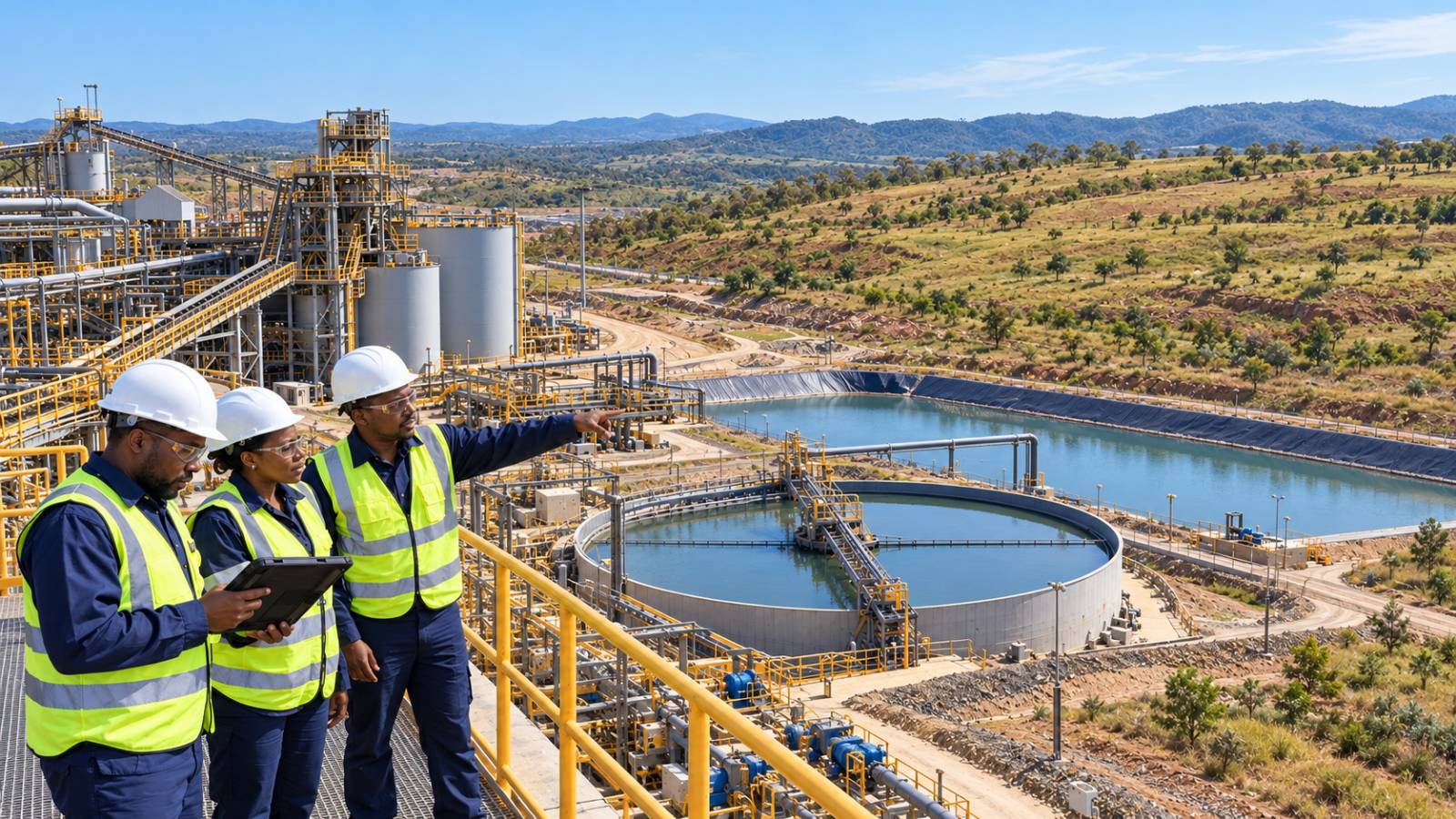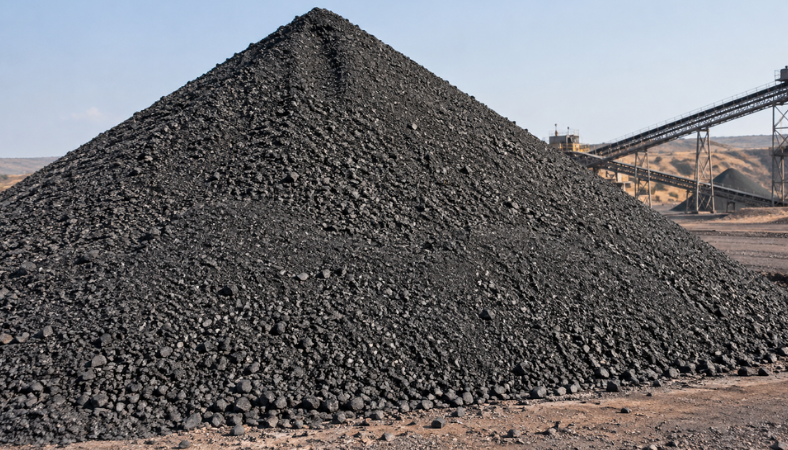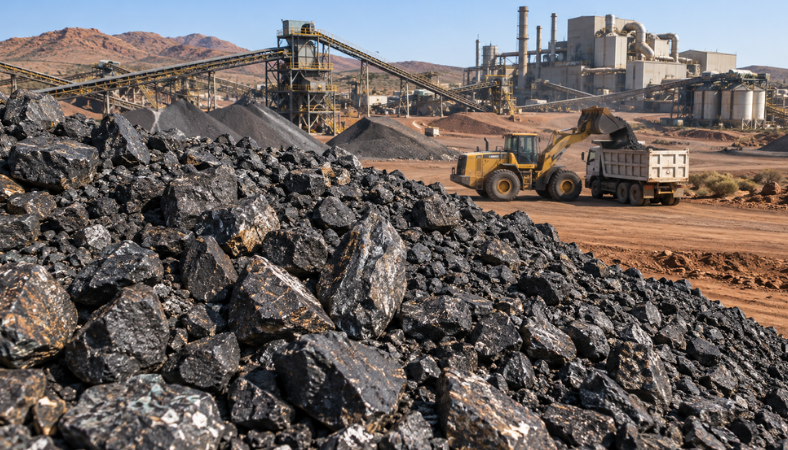
South Africa and Zimbabwe are the top chrome producers in Africa, with South Africa leading by a substantial margin. Madagascar and Sudan contribute on a smaller scale, broadening the continent's supply base. Together, these countries illustrate the range of African chrome mining, from large mineral districts to smaller deposits serving regional and international markets. Source: British Geological Survey.
Chrome matters because of its connection to steelmaking. Chromium helps stainless steel resist corrosion and contributes to the performance of industrial alloys. The mineral chromite is the principal source of chromium, while ferrochrome provides a major route for introducing it into stainless steel. Source: U.S. Geological Survey.
For buyers, miners and investors, understanding African chrome production means looking beyond national rankings. Ore quality, processing requirements, electricity availability and transport costs help determine whether a mineral deposit can support reliable, competitive supply.
Which countries produce the most chrome in Africa?
The British Geological Survey's World Mineral Production 2020–2024 reports approximately 22.92 million tonnes of chromium ores and concentrates for South Africa in 2024, compared with an estimated 2.45 million tonnes for Zimbabwe. In this dataset, South Africa's output was roughly nine times Zimbabwe's.
The same table records an estimated 129,000 tonnes for Madagascar and 3,000 tonnes for Sudan. Madagascar's entry is based on exports, so it should not be interpreted as a measured mine-production total. The figures establish the scale of the regional market, but their reporting definitions matter when comparing countries. Source: British Geological Survey, chromium table, printed page 12.
South Africa: Africa's largest chrome producer
South Africa's chrome industry is closely associated with the Bushveld Igneous Complex. Its mining and processing activities include dedicated chromite extraction and chrome recovery alongside platinum-group metals, commonly known as PGMs. The U.S. Geological Survey identifies South Africa as the world's leading chromium producer in 2024. Source: U.S. Geological Survey, South Africa review.
How the UG2 reef contributes to chrome supply
The Upper Group 2 reef, usually called UG2, connects part of South Africa's chrome supply to platinum mining. Chromite is recovered from UG2 material at several PGM operations, including through the treatment of processing tailings. This creates an additional source of chrome alongside dedicated chromite mines. Source: U.S. Geological Survey.
The commercial implication is that feed availability deserves close attention. Where chrome recovery depends on PGM operations, changes in mining schedules or processing activity can affect the material available for beneficiation. A supply assessment should establish the source of the feed, expected recovery and consistency of the final product.
Why processing economics matter
A large mining industry does not guarantee low-cost ferrochrome production. The USGS's 2024 review identifies power instability, elevated electricity tariffs and water scarcity as constraints on South African smelting. These pressures show why mining output and downstream processing performance must be assessed separately. Source: U.S. Geological Survey.
Zimbabwe: a major chrome producer along the Great Dyke
Zimbabwe is Africa's next major chrome producer after South Africa. The Great Dyke is an important chrome mining region, with the USGS documenting alluvial chromite extraction and concentrate production in areas including Chinyikwa, Ngezi and Lalapanzi in Midlands Province. The country also produces ferrochrome, giving it a role in both mineral supply and alloy processing. Source: U.S. Geological Survey, Zimbabwe review.
Zimbabwean chrome opportunities should be evaluated at deposit level. The key questions concern the geometry of the ore body, recoverable grade, mining method and amount of saleable product that processing can deliver. National mineral potential does not establish the economics of an individual operation.
For smaller miners and processing projects, a workable route to market is equally important. Product specifications, access to a suitable plant, transport arrangements and payment terms should be established before production targets are translated into revenue forecasts.
Madagascar: a smaller contributor with varied chromite geology
Madagascar adds geological diversity to African chrome supply. Research published in Ore Geology Reviews in 2014 found that several investigated chromite deposits were consistent with a layered-intrusion origin, while the Befandriana deposit displayed contrasting characteristics. This supports evaluating individual deposits rather than treating the country's chromite occurrences as geologically identical. Source: University of Milan research record.
Its smaller market presence does not eliminate commercial opportunities. A suitable ore product can still attract interest where its quality, available volume and delivery terms match a buyer's requirements. However, historical geological research cannot establish whether a particular mine is currently producing or has material available for sale.
For prospective buyers, current assays, evidence of operating activity and a credible shipment plan provide a stronger basis for evaluation than broad claims about national ore quality.
Sudan: a smaller part of Africa's chrome supply
Sudan appears in the British Geological Survey's chromium production series at a much smaller scale than South Africa and Zimbabwe. Its inclusion demonstrates a contribution to African supply, but national estimates do not establish current stock availability or the operating condition of a specific project. Source: British Geological Survey.
Any proposed transaction requires project-specific evidence of ore quality, lawful ownership, production activity and a workable delivery route. Claims of high-grade material should be supported by representative sampling and laboratory results for the actual product being offered.
Chrome beneficiation and ferrochrome production: what is the difference?
Chrome beneficiation upgrades mined material into a more suitable ore product or concentrate by separating useful minerals from unwanted material. Ferrochrome production involves a further smelting stage that converts chromite into an alloy containing chromium and iron. These are different activities with different equipment, operating costs and product markets.
The distinction matters when comparing production figures. A tonne of chrome ore is not equivalent to a tonne of concentrate or ferrochrome. Likewise, installed plant capacity does not establish actual annual output, and annual output does not establish the volume available for a new buyer.
For African mining projects, the appropriate processing route depends on the deposit and the intended customer. An ore-upgrading plant and a ferrochrome smelter require separate technical and commercial assessments. Additional processing creates a viable opportunity only where the resulting product can cover the cost of conversion and delivery.
What buyers should check when sourcing African chrome
Start with a clear product specification. Establish whether the offer concerns lumpy ore, concentrate or ferrochrome, and whether the assay reports chromium oxide, written as Cr₂O₃, or elemental chromium. Confirm the required chromium-to-iron ratio, particle size, moisture and impurity limits with the intended customer.
Next, assess delivery capability. Verify the source of the material, the authority to sell it, the sampling procedure and the evidence supporting the proposed monthly volume. A stockpile photograph or national production ranking cannot establish whether a particular consignment meets the buyer's requirements.
For processing investments, examine how recovery, electricity, water, transport and payment timing affect operating cash flow. Export permissions and beneficiation requirements also need country-specific checks against the rules applicable to the product and shipment concerned.
Explore AFRINOMICS Minerals Exchange for mineral supply and buyer requirements, with product specifications, origin and delivery terms clearly defined.