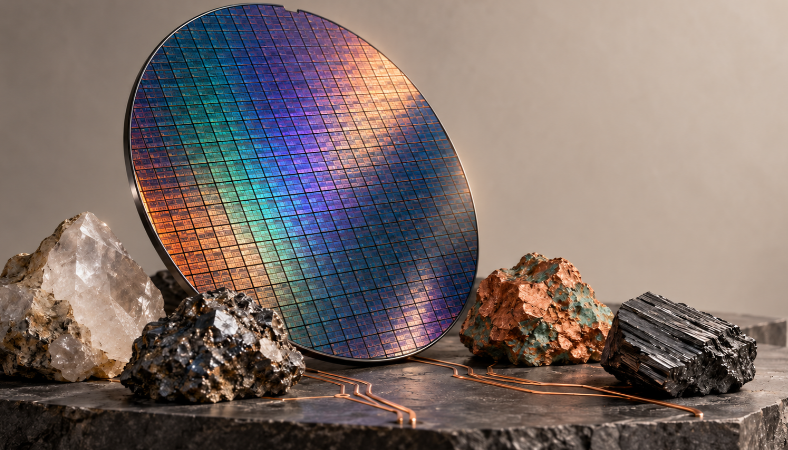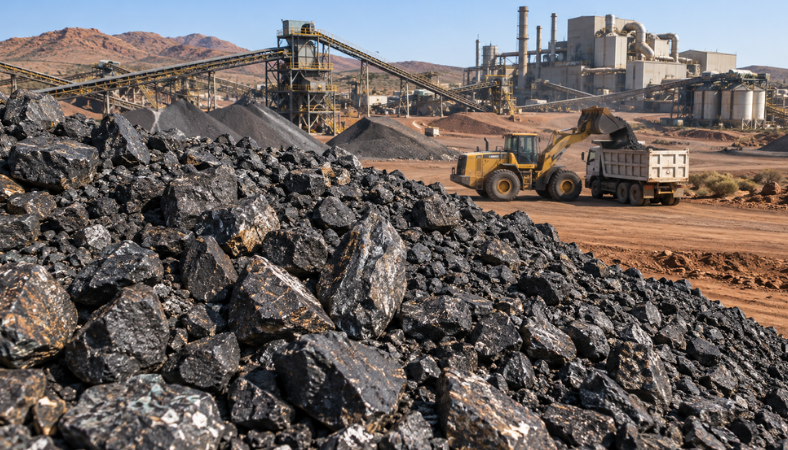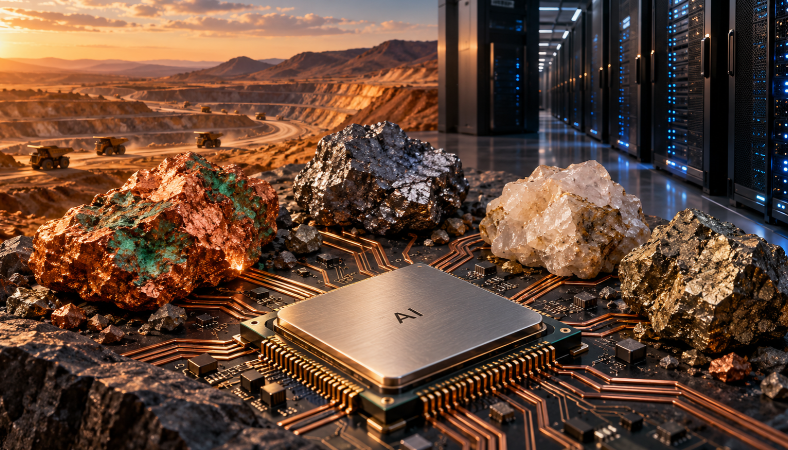
An AI assistant answers a question in seconds. Behind that response, processors perform calculations, networks move information and electrical systems keep servers running. This digital experience depends on physical infrastructure built from metals and minerals.
Africa supplies several of the materials involved in that infrastructure. Copper and cobalt from Central Africa, platinum group metals from Southern Africa, and other strategically important resources connect African mining to the machinery behind artificial intelligence. The opportunity extends through mineral processing, electrical equipment, specialised materials and the energy systems supporting data centres.
The scale of the infrastructure expansion is substantial. In its 2026 outlook, the International Energy Agency projects that global data-centre electricity consumption will rise from approximately 485 terawatt-hours in 2025 to 950 terawatt-hours in 2030. That forecast covers all data centres; electricity consumption at AI-focused facilities is projected to triple over the same period. IEA
Copper: The electrical foundation of AI infrastructure
Copper creates one of the clearest connections between African mining and the AI economy. Its electrical conductivity makes it useful in power cables, electrical distribution equipment, circuit boards and connections within computing systems. Data centres also depend on the wider electricity networks that deliver power to their sites. The IEA identifies copper among the materials required for data-centre construction and expansion. IEA
The Democratic Republic of the Congo and Zambia occupy an important position through the Central African Copperbelt. This mineral-rich region supports an established mining industry serving international manufacturing and infrastructure markets. According to the U.S. Geological Survey, the DRC accounted for approximately 13% of global mined copper production in 2024. www.usgs.gov
For African producers, AI adds another source of demand to a copper market already serving construction, transport, electricity networks and industrial machinery. The commercial implication is broader than supplying technology hardware: developments in power generation, grid connections and electrical equipment also influence the opportunity.
Cobalt: A specialised role in advanced chip manufacturing
The DRC is also the world’s leading cobalt producer. USGS estimates put its share of global cobalt mine production at approximately 75% in 2024. This production share should be distinguished from mineral reserves and from the amount ultimately consumed by AI-related industries. U.S. Geological Survey
Cobalt has a direct semiconductor connection. Selected chip-manufacturing processes use it in contacts, interconnects and thin layers associated with copper wiring. These structures help move electrical signals through increasingly compact chips. Documented manufacturing technology combines cobalt and ruthenium in a thin liner that enables more effective copper wiring at advanced dimensions. appliedmaterials.com
This application gives cobalt strategic relevance to computing, but does not establish AI as its dominant market. Nor does cobalt mined in the DRC move directly into a processor. Refining, purification, chemical preparation and component manufacturing stand between mineral extraction and semiconductor production.
Germanium: Connecting African geology to optical communications
AI infrastructure must move information as well as process it. Germanium contributes to optical communications through its use in telecommunications fibre glass, and it also has applications in specialised semiconductor devices. These uses connect the material to the communications systems supporting the digital economy. U.S. Geological Survey
Africa has a documented geological connection. USGS identifies Tsumeb in Namibia and Kipushi in the DRC as historically important germanium-producing deposits. However, historical production and mineral occurrence do not establish that a country is currently a major commercial supplier. Recoverable quantities, operating facilities and processing economics must be assessed separately. U.S. Geological Survey
Because germanium is commonly recovered as a by-product of other mineral processing, its development can depend on the capabilities of zinc and related metallurgical operations. For African projects, evaluating such by-products can reveal opportunities that a focus on the main commodity alone might overlook. U.S. Geological Survey
Gallium: Why processing capacity matters as much as geology
Gallium-based semiconductor materials have applications in communications and power electronics. Gallium nitride, for example, can support efficient power conversion, making it relevant to the electrical systems associated with advanced computing. U.S. Geological Survey
Gallium is generally recovered during the processing of other materials, particularly bauxite and zinc-bearing feedstocks. Consequently, possessing those resources does not automatically create a commercial gallium industry. Recovery facilities, suitable feed material and further purification are essential parts of the supply chain. U.S. Geological Survey
This distinction matters for Africa’s industrial strategy. The IEA identifies the concentration of gallium refining as a vulnerability for data-centre supply chains. African opportunities should therefore be assessed through technically viable recovery and refining projects, rather than broad claims that mineral deposits alone guarantee a role in AI hardware production. IEA
Rare earths: Supporting magnets and data storage
Rare earth elements have specific applications within the equipment supporting the digital economy. Neodymium-based permanent magnets, for example, are used in hard disk drives. Rare earth magnets also serve selected motors and electricity-generation technologies, creating connections between computing equipment and its supporting energy systems. Department of Energy
African rare earth development opportunities include deposits and projects in countries such as Angola, Malawi, Tanzania and Uganda. Their development stages vary, and projected output should not be treated as existing supply. USGS has identified projects across these jurisdictions as potential contributors to future African production. pubs.usgs.gov
For developers, the relevant commercial question extends beyond the size of a deposit. Buyers need particular elements in usable forms. Producing a mineral concentrate, separating individual rare earths and manufacturing magnets require different facilities and expertise.
Platinum group metals: Small quantities with specialised functions
South Africa and Zimbabwe are important producers of platinum group metals. Within this group, ruthenium provides a particularly relevant connection to advanced computing through its use in selected chip-wiring technologies. South Africa also has established ruthenium production and exports. U.S. Geological Survey
Research continues into ruthenium as a conductor for extremely narrow interconnects, where electrical resistance becomes a major design challenge. Experimental results reported in 2025 demonstrated progress in manufacturing such structures. These developments illustrate the importance of specialised materials without implying that every platinum group metal is essential to every AI processor. imec
AI’s power demand expands the mineral opportunity
AI infrastructure requires electricity generation, grid capacity, cooling and reliable power delivery. Battery storage can also help manage interruptions and rapid changes in electrical demand. The IEA’s 2026 analysis identifies increasingly powerful server racks and fluctuating AI loads as challenges for electricity equipment and storage systems. IEA
These requirements create additional connections to African battery minerals. Zimbabwe produces lithium, while Mozambique, Madagascar and Tanzania contribute natural graphite. Their relevance depends on the storage technologies selected and the processing required to turn mineral products into battery materials. www.usgs.gov
Battery chemistry matters. Lithium iron phosphate batteries do not require nickel or cobalt in their cathodes, while other lithium-ion chemistries do. Data-centre expansion therefore cannot be translated into equal demand growth for every battery mineral. IEA
The electricity supply picture is similarly diverse. Data centres draw on power systems containing different combinations of renewables, nuclear energy and fossil fuels. Their growth can encourage clean-energy investment, but renewable electricity cannot be assumed to power every new facility. IEA
Global competition is increasing Africa’s strategic relevance
Access to minerals, processing technology and reliable transport routes forms part of the wider competition over industrial supply chains. China is an important destination for Congolese copper and cobalt, while the European Union has established raw-material partnerships with African countries including Namibia, the DRC, Zambia and South Africa. These relationships span multiple industries, including energy and advanced manufacturing. U.S. Geological Survey
For African governments, the practical question is what these relationships deliver domestically. Infrastructure, skills, processing capacity and dependable market access can strengthen the economic contribution of mining. Agreements become more valuable when commitments translate into operating facilities and capabilities that remain in producing countries.
Building African processing capacity for the AI supply chain
Africa already has mineral-processing industries on which to build. The DRC produces refined copper, while South Africa has extensive metallurgical capabilities. Further industrial development can extend these foundations into additional refined products, specialised materials and manufacturing inputs. U.S. Geological Survey
The IEA identifies beneficiation and materials production as opportunities for African economies to capture more value from mineral resources. Realising that potential requires reliable energy, technical skills, infrastructure and competitive operations. A processing plant creates lasting value when it consistently produces material that customers will buy. IEA
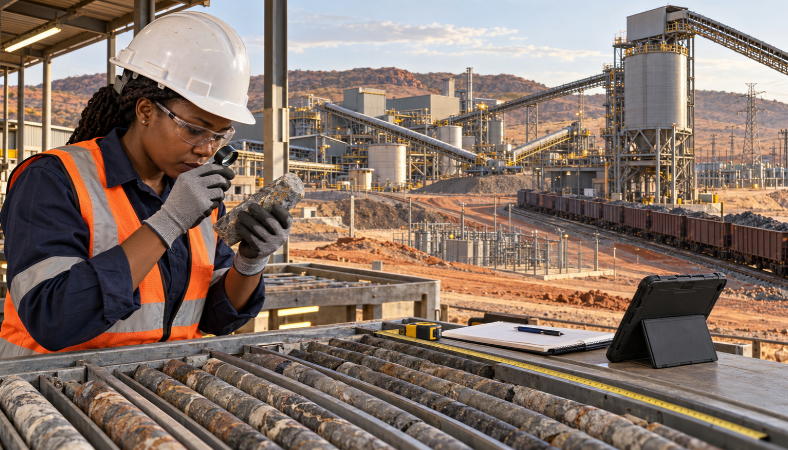
For project developers, this suggests a clear sequence: establish the resource, test the processing route, define the saleable product and secure the utilities and commercial relationships needed for operation. Commissioning should demonstrate recovery, product quality and dependable performance under real operating conditions.
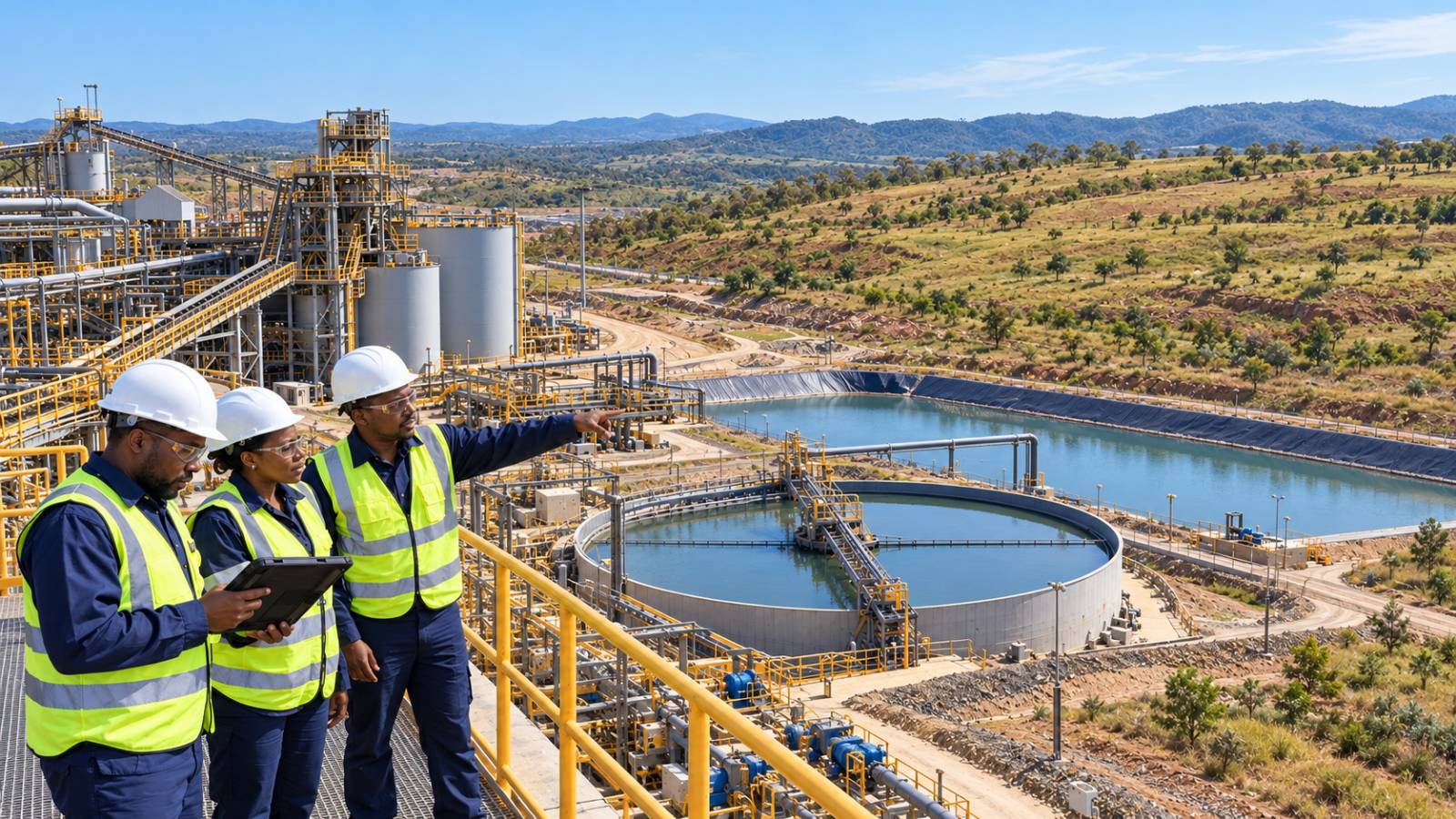
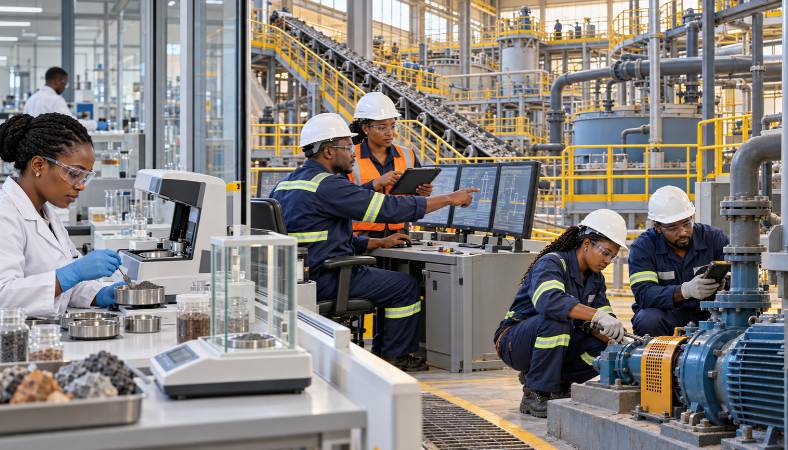
The opportunities extend to African businesses supplying laboratory services, plant and equipment, maintenance, logistics and technical training. These activities can deepen local participation as mining and processing operations develop.
Turning mineral strength into industrial capability
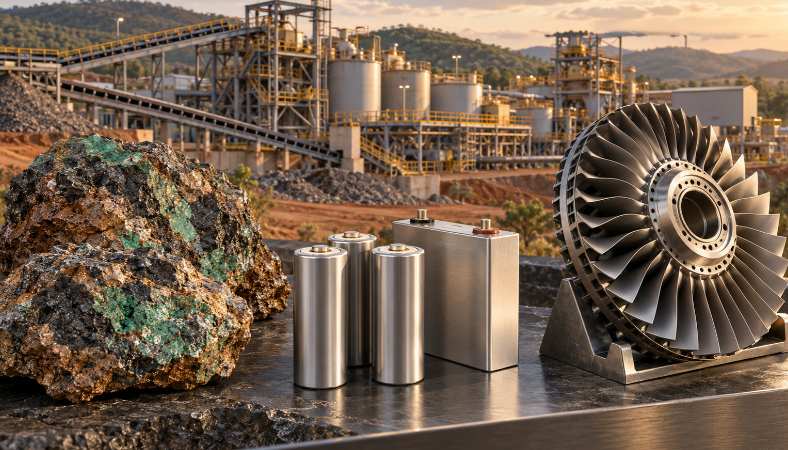
African minerals are connected to AI through several distinct routes: copper delivers electricity, selected metals enable sophisticated electronics, optical materials support communications, and battery minerals contribute to storage systems.
The strongest development strategy recognises these differences. Bulk commodities need efficient production and transport; specialised materials demand precise processing and customer qualification. Both require dependable infrastructure and sustained technical capability.
For Africa, the opportunity is to convert its mineral position into a stronger role in the industries building and powering the AI economy.
Explore African mineral opportunities through the AFRINOMICS Minerals Exchange.